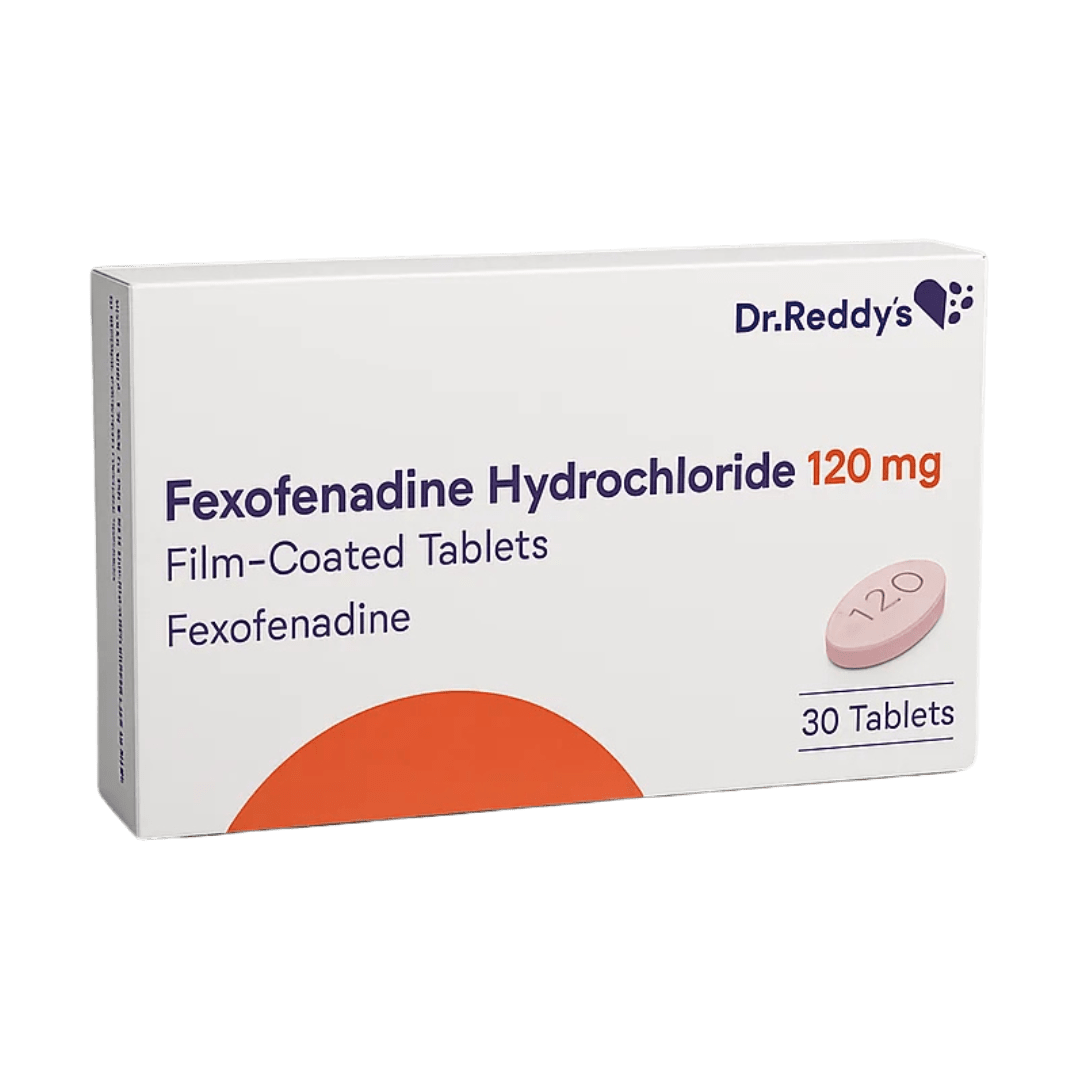
Fexofenadine 120 mg & 180 mg Tablets for Hay Fever and Hives
Please collect the medicine from the pharmacy when it is ready.

Fastest delivery:
Order by 2:00pm
-

Quick, Discreet & Free Delivery
Swift, discreet, and cost-free delivery! Arrives as quickly as the next working day.
-

100% UK-based pharmacy
Our team of doctors and prescribers, and our support staff, are all UK-based.
-

Free support and advice
We're on hand to offer free support and advice by email and telephone (Mon - Fri 09:00 - 18:00).
-

We’re rated 4.9 out of 5
Based on over 700+ reviews collected on Google & Trustpilot
Description
What is Fexofenadine?
Fexofenadine is an antihistamine medicine used to treat hay fever and hives caused by idiopathic urticaria. It contains Fexofenadine Hydrochloride as the active ingredient. When pollen enters the body, it blocks histamine from binding to its receptors, preventing symptoms like runny & itchy nose, sneezing, watery eyes, and more.
How Does Fexofenadine Treat Hay Fever?
Pollen from trees, grasses, flowers, and weeds is all around us. While harmless to most people, these tiny particles can trigger an allergic reaction in those with hay fever.
When people with pollen allergies are exposed to it, the immune system sees it as a threat and releases a chemical called histamine. Common symptoms include sneezing, itchy nose, and watery eyes.
Fexofenadine Hydrochloride works by binding itself to the H1 receptors in the body, making them unavailable for histamine.
So even if your body still releases histamine, it can’t cause symptoms. As a result, Fexofenadine helps you breathe and feel better.
When to Start Taking It?
For best results, start taking Fexofenadine a few days before your usual hay fever symptoms begin, especially during high pollen seasons.
Taking it early allows the medication to block histamine receptors before your body reacts to pollen. For people with predictable seasonal allergies, a daily dose is effective during heavy-pollen months.
For unpredictable flare-ups, you can start taking it as soon as mild symptoms appear.
How Long Does It Last?
Fexofenadine provides all-day relief with just one daily tablet. There is no need for multiple doses.
If your hay fever symptoms persist despite using Fexofenadine, speak to your doctor or pharmacist for additional options.
What Symptoms Does It Treat?
Hay Fever (Seasonal Allergic Rhinitis) Symptoms:
-
Persistent sneezing, especially in the mornings
-
Itchy or runny nose
-
Nasal congestion or stuffiness
-
Post-nasal drip (mucus running down your throat)
-
Itchy, red, or watery eyes (allergic conjunctivitis)
-
Tickly or irritated throat
-
Fatigue or tiredness caused by poor sleep due to symptoms
Hives (Chronic Urticaria) Symptoms:
-
Raised, red bumps or welts on the skin
-
Intense itching (can worsen at night)
-
Swelling in lips, eyelids, or hands
-
Warm and painful skin
-
Discomfort that disrupts sleep or daily activities
Doses
Fexofenadine Hydrochloride comes in two doses: 120 mg and 180 mg.
120 mg is usually used for hay fever (treats sneezing, itchy/watery eyes, runny or blocked nose).
180 mg is used for chronic urticaria. It treats skin allergies such as red, raised, itchy patches and swelling.
Warnings
Do not give this medicine to children under 12 unless recommended by a healthcare professional. This medicine is intended for use in adults and older children only.
Do not take Fexofenadine Hydrochloride if:
-
You are allergic or hypersensitive to fexofenadine or any of the other ingredients listed in the product.
-
You have a history of allergic reactions to other antihistamine medications.
Do not exceed the recommended dose. Taking more than the advised amount will not improve your symptoms and may increase the risk of side effects.
Consult your doctor or pharmacist before using Fexofenadine if:
-
You have kidney or liver problems
-
You are pregnant
-
You are breastfeeding, as fexofenadine may pass into breast milk.
-
You are taking indigestion remedies (antacids), especially those containing aluminium or magnesium. These can affect how well fexofenadine is absorbed. Make sure to wait at least 2 hours between taking fexofenadine and antacids.
-
You have a history of heart disease, as high doses of antihistamines may affect the heart rhythm.
-
You are taking any other prescription or over-the-counter medications, including herbal or vitamin supplements.
Should You Take Precautions while Driving and Using Machines?
Fexofenadine is a non-drowsy antihistamine, meaning it’s less likely to cause sleepiness compared to older allergy medicines. Most people can take it without any problems affecting their concentration.
However, a small number of people may still experience dizziness, tiredness, or blurred vision, especially when they first start the medicine or take it with alcohol or other medications.
Important: Everyone reacts differently. If you're unsure how Fexofenadine affects you, take your first dose when you don’t need to drive, just to be safe.
Directions
The directions for both hay fever and hives are the same for Fexofenadine Hydrochloride:
-
Take a tablet once a day.
-
Recommended for individuals aged 12 and above.
-
Don’t chew or crush it. Swallow the tablet whole with a glass of water.
-
For best results, take the tablet before eating, as food can slow down how quickly it starts working.
-
Try to take it at the same time every day to stay consistent and keep symptoms under control.
-
Take the missed tablet as soon as possible, unless your next scheduled dose is approaching.
-
If you miss a dose, it’s better to skip it. Don’t take two tablets at the same time.
Always read the leaflet inside the packaging and follow the advice given by your doctor or pharmacist.
Can I Take Fexofenadine With Fruit Juices?
Fruit juices can reduce fexofenadine absorption, so take it with water for best effect.
This happens because natural compounds in fruit juices can block proteins in your gut that help Fexofenadine enter your bloodstream.
If you've recently had juice, wait at least 2 hours before taking your medicine.
Ingredients
What Are The Ingredients?
The active ingredient used is Fexofenadine Hydrochloride. It is responsible for relieving symptoms of both skin and seasonal allergies.
Other ingredients may include:
-
Maize starch: it helps the tablet break down in the digestive system
-
Magnesium stearat: a lubricant that prevents ingredients from sticking
-
Croscarmellose sodium: aids in fast tablet disintegration
-
Povidone: used to hold ingredients together
-
Hypromellose: part of the film coating
-
Macrogol (polyethylene glycol): improves texture and absorption
-
Titanium dioxide (E171): provides the white colour
-
Iron oxide pigments
Is Fexofenadine Safe for People With Food or Drug Allergies?
Fexofenadine is commonly used in the UK for hay fever and hives (urticaria) and is generally considered safe for most people, including those with food or drug allergies.
Drug Allergies:
But in case you have a known allergy to fexofenadine or other antihistamines, you should avoid it. Allergic reactions to fexofenadine are rare but could include rash, swelling, or difficulty breathing. It is always a good idea to consult with your doctor if you had reactions with previous medicines.
Food Allergies:
Fexofenadine also doesn't typically interact with food allergies. But if your hives are triggered by specific foods, fexofenadine may help manage symptoms but won’t address the underlying food allergy. Consult your physician or clinician to better assess your situation.
Side Effects
Are There Any Side Effects?
Most people do not experience any problems, but like all medicines, Fexofenadine may cause side effects in some people. These may include:
Common side effects:
-
Headache
-
Drowsiness (though it’s classed as non-drowsy)
-
Nausea
-
Dizziness
Rare side effects:
-
Swelling of the face, lips, tongue, or throat
-
Difficulty breathing
-
Severe allergic reaction (anaphylaxis)
If you experience any serious symptoms or signs of an allergic reaction, stop taking the medicine and seek medical help immediately.
FAQs
Can I take two fexofenadine 180 mg?
No,you should only take one 180 mg tablet once a day, unless a doctor tells you otherwise. Taking two in a single day won’t generally cause serious harm, but doing so regularly may suppress your immune response or lead to side effects. Always stick to the recommended dose.
What is fexofenadine?
Fexofenadine is a non-drowsy antihistamine used to relieve allergy symptoms like sneezing, runny nose, itchy eyes, and hives. It blocks the effects of histamine, a chemical your body produces during allergic reactions. It’s commonly used for hay fever and skin allergies.
What is fexofenadine hydrochloride used for?
This medicine is commonly used to manage allergic conditions including seasonal rhinitis, persistent hives, sneezing, and irritation in the eyes or nose. It works by blocking histamine to reduce allergic reactions without causing drowsiness in most people.
Can you buy fexofenadine over the counter?
Yes, you can buy 120 mg fexofenadine tablets without a prescription in the UK. In December 2020, the MHRA reclassified this dose from Prescription-Only Medicine (POM) to General Sales List (GSL), However, the 180 mg dose still requires a prescription.
Does fexofenadine make you drowsy?
Fexofenadine is classed as a non-drowsy antihistamine. Most people don’t feel sleepy when taking it. However, a small number of users may still experience mild drowsiness or fatigue. Avoid alcohol and other sedatives while taking it to reduce the risk of feeling sleepy.
How long does fexofenadine take to work?
Fexofenadine usually starts to work within 1 to 2 hours after taking it. You may notice relief from allergy symptoms like sneezing or itching within that time. For some people, it may take a bit longer to feel the full effect.
Can You Take Fexofenadine with Piriton?
It's not recommended to take both at the same time. Both are antihistamines (Fexofenadine is non-drowsy, Piriton is sedating), so combining them offers no extra benefit and may increase side effects like drowsiness, dry mouth, or mood changes. Always consult your doctor or pharmacist first.
Can I take cetirizine and fexofenadine together?
Generally, you shouldn’t take both cetirizine and fexofenadine at the same time, as they’re both antihistamines. Doubling up doesn’t improve results and may increase side effects like drowsiness or dry mouth. Only use both under medical supervision if recommended for severe allergic conditions.
How long does fexofenadine stay in your system?
Fexofenadine has a half-life of about 14 hours, meaning it can stay in your system for up to 24–36 hours after a single dose. However, its effect usually wears off after about 24 hours, which is why it’s typically taken once daily.
Can fexofenadine cause weight gain?
Weight gain is not a common side effect of fexofenadine. Unlike some older antihistamines, fexofenadine is less likely to affect appetite or metabolism. If you notice unusual weight changes while taking it, speak to your doctor to rule out other causes.
Can you take Fexofenadine when pregnant?
Use of fexofenadine during pregnancy is not typically recommended without medical advice. While no major risks have been found, there isn’t enough research to confirm it’s completely safe. Always speak to your GP or midwife before taking it during pregnancy.
Does Fexofenadine make you tired?
Fexofenadine is considered a non-drowsy antihistamine, meaning it’s less likely to make you feel sleepy than traditional allergy medications. However, a small number of people may still feel slightly tired or sluggish. If you notice drowsiness, avoid driving or using heavy machinery and talk to your doctor.