Finasteride Price Comparison UK: 1mg Packs and Delivery
Compare finasteride prices for 1mg tablets in the UK. See 28- and 84-tablet packs with prescription and delivery charges.
A receding hairline is one of the most commonly noticed and least openly discussed changes a person can experience — and for many men, it begins earlier and progresses more rapidly than they expected. The good news is that understanding what causes a receding hairline, identifying it early, and accessing the right treatment promptly gives you the best possible chance of slowing or halting progression and, in many cases, achieving meaningful regrowth. A receding hairline is almost always a sign of androgenetic alopecia — commonly known as male pattern baldness — a genetically driven, hormonally mediated process that is progressive without treatment but highly responsive to intervention when caught early. Waiting and watching is the approach that consistently produces the worst outcomes; acting promptly when you first notice hairline recession is what produces the best. At The Care Pharmacy, our prescribing team supports patients across the UK with clinically appropriate hair loss treatments through a straightforward, confidential online consultation — no in-person appointment required.
Knowing what to do next is the hardest part — get in touch with our team if you have questions, or complete our online consultation to find out which hair loss treatment is right for you.
Quick Answer
A receding hairline is almost always caused by androgenetic alopecia — male pattern hair loss — a genetically inherited condition in which hair follicles are progressively miniaturised by the hormone dihydrotestosterone (DHT), leading to a gradual recession of the hairline from the temples inward. It is progressive without treatment, but two clinically proven prescription treatments — finasteride and minoxidil — can significantly slow or halt the progression and, particularly when started early, produce meaningful regrowth. Finasteride works by blocking the enzyme that converts testosterone to DHT, reducing follicle miniaturisation at the root cause, while minoxidil works topically to increase blood flow and follicle activity at the scalp surface. The earlier treatment is started, the more hair there is to protect — waiting until significant recession has already occurred reduces the regrowth potential considerably. Our prescribing team can assess your hair loss and recommend the most clinically appropriate treatment following a confidential online consultation.
A receding hairline refers to the progressive movement of the hairline away from the forehead — typically beginning at the temples, where hair thins and retreats, creating the characteristic M-shaped or V-shaped pattern associated with male pattern baldness. It is distinct from diffuse thinning across the top of the scalp, though the two often occur together as androgenetic alopecia progresses.
Hairline recession is a normal biological process for a significant proportion of men — estimates suggest that approximately 50% of men will experience some degree of androgenetic alopecia by the age of 50, with recession often beginning in the late teens or early twenties for those with a strong genetic predisposition. It is less common in women but does occur, typically presenting as a diffuse widening of the parting rather than the frontal recession characteristic of male pattern loss.
The psychological impact of a receding hairline should not be underestimated. Research consistently links hair loss to reduced self-esteem, increased social anxiety, and a measurable impact on quality of life — particularly for younger men who experience significant recession before the age of 30. The emotional significance of acting on hair loss is as valid a reason to seek treatment as any purely cosmetic one.
Understanding the cause of a receding hairline is the essential first step — because the cause determines the treatment, and the most common cause responds well to established prescription interventions.
Androgenetic alopecia (male pattern baldness) — the primary cause
The overwhelming majority of receding hairlines in men are caused by androgenetic alopecia. This is a genetically inherited sensitivity of hair follicles to dihydrotestosterone (DHT) — a potent androgen hormone derived from testosterone by the enzyme 5-alpha-reductase. When follicles are sensitive to DHT, repeated DHT exposure causes them to progressively miniaturise — producing thinner, shorter, and less pigmented hairs with each successive growth cycle, until the follicle eventually becomes dormant and stops producing visible hair.
The genetic predisposition to follicle DHT sensitivity can be inherited from either parent, and the severity and timing of hair loss does not follow a simple pattern — two brothers with the same parents can have very different hair loss trajectories. Early onset (before 25) is generally associated with more significant eventual loss if untreated.
Other causes worth knowing about
While androgenetic alopecia is responsible for the vast majority of hairline recession, other causes can produce hair loss that mimics or accompanies it:
Androgenetic alopecia is classified using the Norwood Scale — a seven-point system that describes the progressive stages of male pattern hair loss from a normal hairline (Type I) to complete baldness (Type VII). The scale is the standard clinical tool for assessing severity and guiding treatment decisions.
Treatment is most effective at Types II–IV. By Types V–VII, the follicles in affected areas have typically been dormant for too long to respond meaningfully to medical treatment, and surgical options such as hair transplantation are the primary clinical route.
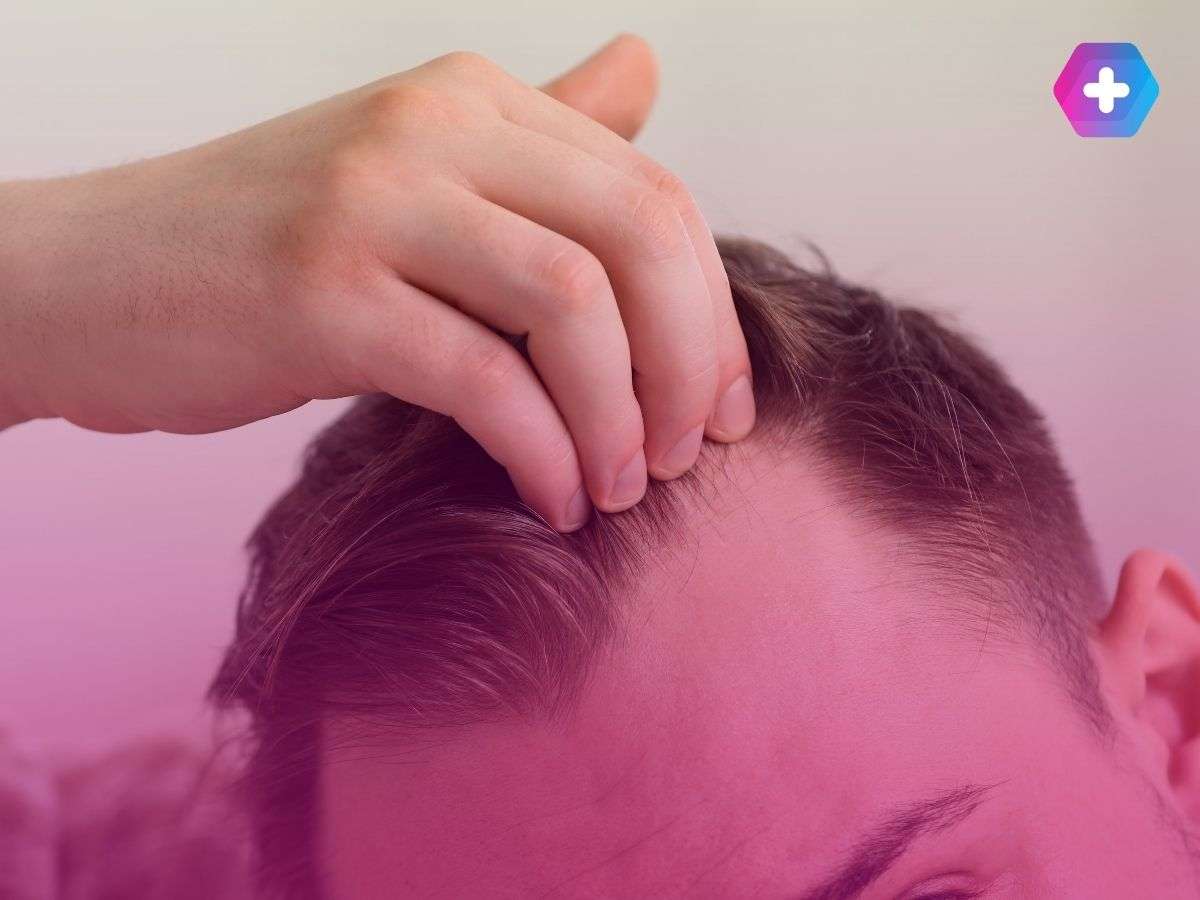
Identifying a receding hairline early — before significant progression has occurred — is the single most important factor in determining treatment outcomes. The following are the earliest and most reliable indicators that a hairline may be beginning to recede:
Two prescription treatments have the strongest and most consistent clinical evidence for receding hairline treatment — finasteride and minoxidil — and they are most effective when used together and started early.
Finasteride (oral, once daily)
Finasteride is a 5-alpha-reductase inhibitor — it blocks the enzyme responsible for converting testosterone to DHT, reducing scalp DHT levels by approximately 70% and removing the primary hormonal driver of follicle miniaturisation. It is taken as a 1mg oral tablet once daily and is the most clinically effective single treatment available for androgenetic alopecia.
Clinical trial data shows that finasteride halts hair loss progression in approximately 86% of men, with visible regrowth occurring in approximately 65% of patients at two years of consistent use. Results are dose-dependent on duration — the medication must be taken continuously for results to be maintained; stopping treatment results in the return of DHT-driven progression within six to twelve months.
Finasteride is generally well tolerated. The most discussed side effects — sexual side effects including reduced libido, erectile dysfunction, and ejaculatory changes — occur in a minority of patients (approximately 2–4% in clinical trials) and are reversible on stopping the medication. All patients should discuss the side effect profile with their prescriber before starting.
Minoxidil (topical, once or twice daily)
Minoxidil is a vasodilator applied directly to the scalp that increases blood flow to hair follicles, prolongs the growth phase of the hair cycle, and stimulates follicle activity. Unlike finasteride, it does not address the hormonal cause of hair loss — it works by optimising the environment for follicle function. This makes it a valuable complement to finasteride rather than an equivalent alternative.
Available as a solution or foam in 2% and 5% concentrations, minoxidil is applied once or twice daily to dry scalp and left to absorb. The 5% concentration is generally preferred for men with established hair loss. As with finasteride, continuous use is required to maintain results — stopping minoxidil leads to the loss of any hair gained within three to six months.
Combination therapy
The combination of finasteride and minoxidil is more effective than either treatment used alone — finasteride addresses the underlying hormonal cause while minoxidil optimises follicle function at the scalp surface. For patients with a receding hairline who want the best available clinical outcome, combination therapy is the most evidence-supported approach.
The table below compares the most commonly used treatments for a receding hairline to help you understand which options may be most appropriate for your circumstances:
The single most important message in this entire guide is this: the earlier you begin treatment for a receding hairline, the better your outcomes will be. This is not simply a commercial message — it is a clinical fact rooted in the biology of how androgenetic alopecia progresses.
Hair follicles that are in the early stages of miniaturisation — producing thinner, shorter hairs but still active — respond significantly better to finasteride and minoxidil than follicles that have been dormant for years. When a follicle has been fully miniaturised and dormant for an extended period, it loses the ability to respond to medical treatment. This is why patients who begin treatment at Norwood Types II–III consistently achieve better outcomes than those who wait until Types V–VI.
The practical implication is clear: if you have noticed early changes at your hairline — temple thinning, increased shedding, or a hairline that looks different in photographs from two years ago — this is the moment to act. Not in six months when the recession is more obvious. Now.
The question patients most often ask is “how do I know if what I’m seeing is really hair loss?” The honest answer is that a clinical assessment — which our prescribing team can provide through a brief online consultation — is more reliable than self-assessment. Our team can review your hair loss history, family history, and current presentation and give you a clinical picture of what you are dealing with and what is most likely to be effective.
Getting started is simpler than most patients expect — complete our online consultation today and our prescribing team will assess your suitability for treatment promptly and confidentially.
The following questions are the ones our team hears most frequently from patients who have noticed their hairline changing and want to know what to do next:
Yes — particularly when treatment is started early and the follicles in the affected area are still active rather than fully dormant. Finasteride and minoxidil together have the strongest evidence for regrowth at the hairline, with clinical trial data showing visible regrowth in the majority of patients at one to two years of consistent use.
Hairline recession can begin at any point after puberty — some men begin to notice early changes in their late teens or early twenties, while others do not experience significant recession until their thirties or beyond. The timing and rate of progression is largely genetically determined, with earlier onset generally associated with more significant eventual loss if untreated.
Finasteride has been used clinically for hair loss since the 1990s and has an extensive safety record accumulated over decades of widespread use. Long-term use is considered clinically appropriate for most patients — the medication must be taken continuously to maintain its benefits, and regular prescriber reviews help ensure ongoing suitability throughout treatment.
Most patients notice that hair loss progression has slowed or halted within three to six months of starting finasteride, with visible regrowth typically becoming apparent at twelve months or beyond with consistent daily use. It is important to persist through the first six months — during which results may not yet be visible — as discontinuing treatment prematurely is one of the most common reasons patients conclude that finasteride has not worked for them.
Stress does not cause androgenetic alopecia, but it can trigger telogen effluvium — a temporary diffuse shedding of hair that can accelerate or unmask underlying genetic hair loss in susceptible individuals. If hair loss coincides with a period of significant physical or psychological stress, addressing the stress and giving the hair cycle time to recover is an important part of the clinical picture alongside any prescription treatment.
Yes — minoxidil applied to the hairline and temples can produce meaningful improvement in hair density and coverage, particularly when combined with finasteride as part of a comprehensive treatment approach. It works by prolonging the hair growth phase and improving follicle blood supply, producing thicker and more numerous hairs in treated areas when used consistently.
A receding hairline is not something you simply have to accept — it is a treatable, clinically understood condition with two well-evidenced prescription treatments that work, particularly when started early. The biology of androgenetic alopecia means that time is genuinely one of the most important variables in treatment outcomes: the sooner treatment begins, the more there is to protect and the greater the potential for regrowth.
Patients who do best are not necessarily those who start the most aggressive treatment — they are those who act promptly when they first notice change, who commit to treatment consistently over the long term, and who access clinical support rather than trying to assess and manage a progressive condition on their own.
At The Care Pharmacy, our pharmacist-led prescribing team is here to make that clinical support as accessible as possible. A confidential online consultation, a prompt clinical assessment, and access to clinically appropriate treatment — all without a GP appointment, a waiting room, or an in-person discussion about hair loss that many patients find a barrier to seeking help.
Every question about your hair loss options deserves a clear and clinically informed answer — get in touch with our prescribing team, or complete our online consultation to find out which hair loss treatment is right for you.
This article was written by Pharmacy Mentor and clinically reviewed by Mohammed Ismail Lakhi, MPharm, MRPharm, Superintendent Pharmacist at The Care Pharmacy. Mohammed is registered with the General Pharmaceutical Council (GPhC registration number 2072815) and leads clinical governance across The Care Pharmacy’s weight management services.
Last reviewed: July 2026
Disclaimer: This article is for general information only and is not a substitute for individual medical advice. Always consult a qualified prescriber before starting any prescription weight loss treatment.

Medically reviewed by
Superintendent Pharmacist


Compare finasteride prices for 1mg tablets in the UK. See 28- and 84-tablet packs with prescription and delivery charges.
Finasteride vs Propecia: compare ingredients, cost and safety, then discuss your hair loss treatment options with The Care Pharmacy.
Learn how to approach finasteride treatment online in the UK, including private prescription rules, suitability checks, side effects and Care Pharmacy’s hair loss route.
Creatine is one of the most popular supplements for gym performance, strength, and recovery. It is widely used by people who want to train harder and build muscle. However, a common concern keeps coming up online: does creatine cause hair loss? At The Care Pharmacy, we support patients with regulated hair loss treatment and professional […]
If you are noticing a receding hairline, thinning at the crown, or more shedding than usual, it is natural to start looking for solutions that genuinely work. One of the most common questions we hear through our online consultations is: does finasteride work, and can it actually stop hair loss or help bring hair back? […]
Hair loss is a common concern for many people, particularly men experiencing androgenetic alopecia. Two of the most well known and clinically supported treatments are finasteride and minoxidil. A frequent question we receive at The Care Pharmacy is whether these treatments can be used together, and if doing so improves results. This Q and A […]