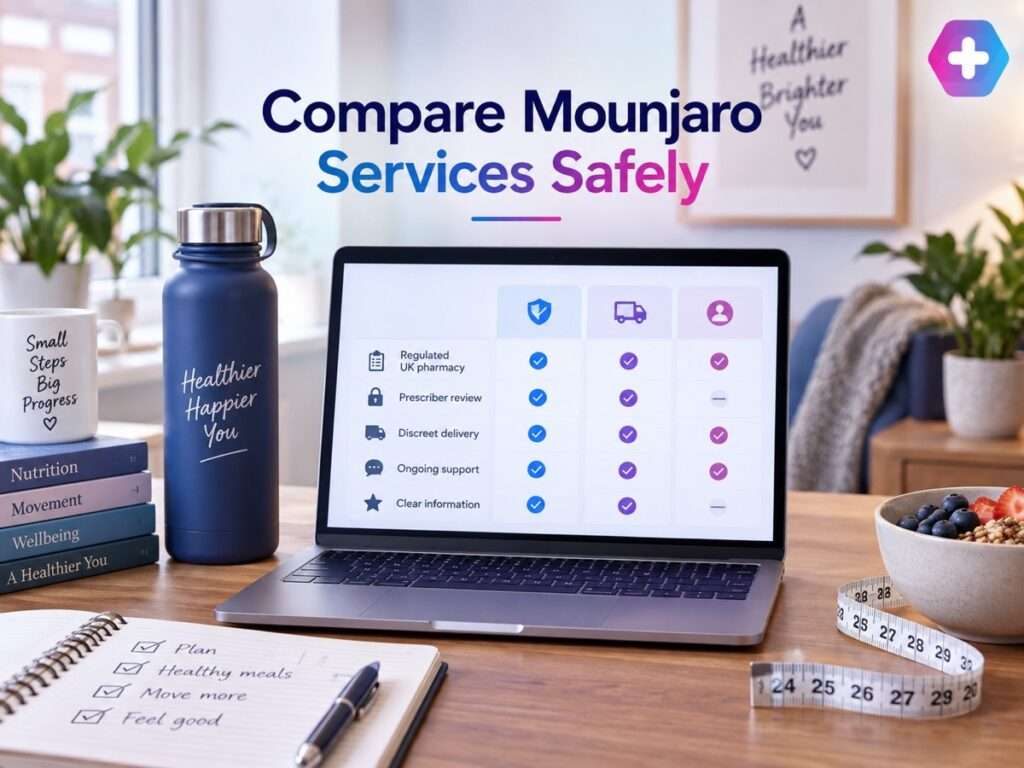
Compare Providers: Simple Online Pharmacy Mounjaro
Compare private Mounjaro providers safely, including Simple Online Pharmacy, Care Pharmacy, prescribing checks, cost factors and switching support.
Mounjaro is designed to be increased gradually, but dose escalation is not automatic. Many people assume that if weight loss slows down, the answer is simply to move up to the next dose. In reality, plateaus are common and do not always mean you need a higher strength.
If you are unsure when to increase Mounjaro dose for weight loss, our prescribing team can review your progress and guide you safely. Before making any changes, get in touch so we can assess your current dose, results, and side effects properly. Alternatively, complete our online consultation form to determine whether you are eligible for weight-loss medication.
This guide explains how dose escalation works, what a plateau really means, and how to decide whether increasing your Mounjaro dose is the right step.
Mounjaro treatment usually follows a structured pathway:
The starter dose is not intended for significant weight loss. It allows your body to adjust and helps reduce side effects. Most weight loss becomes more noticeable from 5 mg upwards.
However, moving up doses should always be guided by:
A plateau happens when your weight stabilises after an initial period of loss. This can feel frustrating, but it is a normal part of the process.
Common reasons for plateaus include:
A plateau does not automatically mean the medication has stopped working.

You may consider increasing your dose if:
Dose increases are most beneficial when your body has fully adjusted and you are tolerating treatment well.
Increasing too soon can worsen side effects and may not improve results.
You should not increase your dose if:
In some cases, staying on the same dose for longer produces better long-term outcomes.
Before escalating, it is worth reviewing your routine. Small adjustments can often restart progress.
Consider the following:
Often, plateaus reflect lifestyle drift rather than medication failure.
Even if the scales are not moving dramatically, look for other positive indicators:
Weight loss is not always linear. Progress may show in measurements or body composition before scale changes.
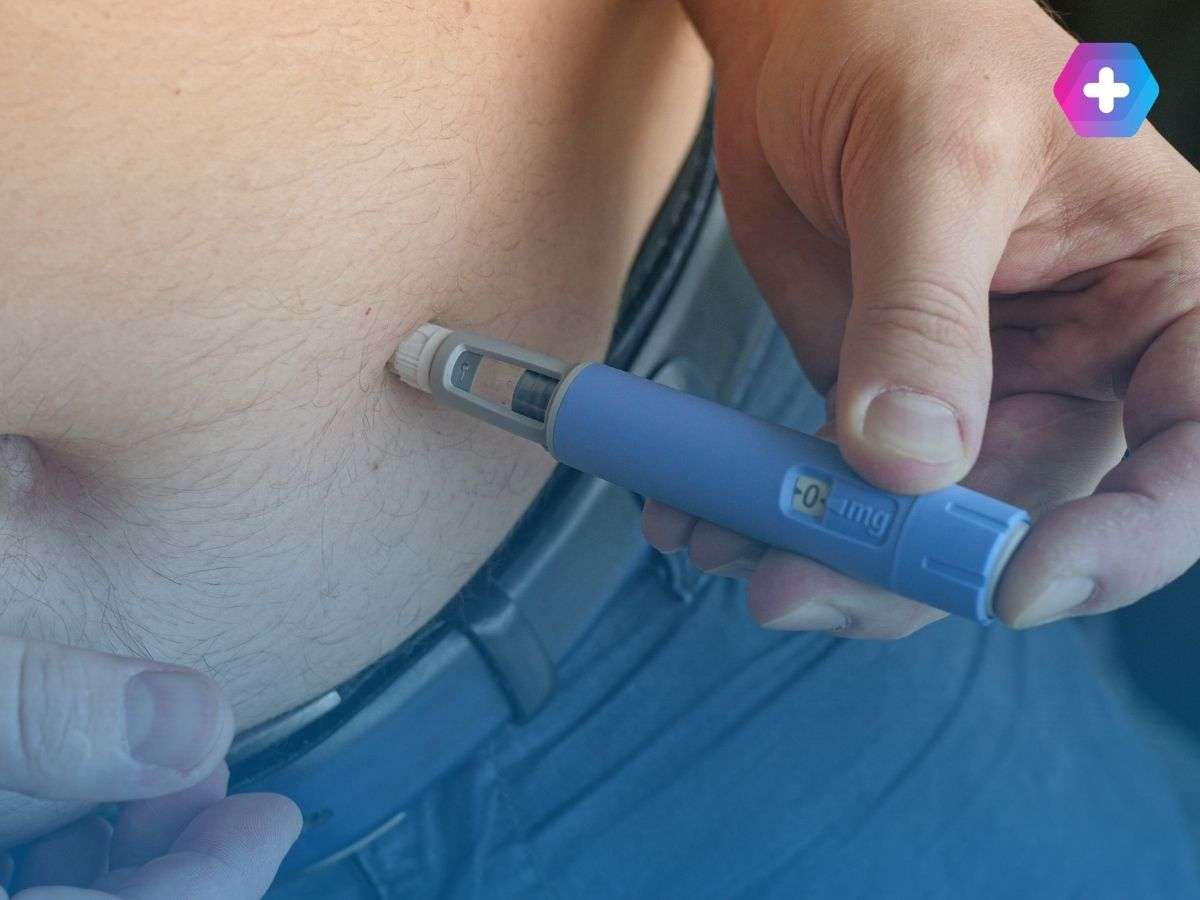
Understanding when to increase Mounjaro dose for weight loss requires clinical oversight. Each patient responds differently, and what works for one person may not suit another.
A proper review considers:
Dose escalation should support steady progress, not create unnecessary discomfort.
Typically, each dose is taken for at least four weeks. Some patients remain on a dose longer if they are achieving good results and tolerating it well.
The 2.5 mg dose is a starter dose. While some appetite reduction may occur, significant weight loss usually begins at 5 mg or higher.
If you are on 15 mg and experiencing a plateau, the focus should shift to lifestyle optimisation rather than further dose increases. A clinical review is recommended. We can also guide you if you are thinking about switching to a different medication.
Not necessarily. Higher doses can improve appetite control but may also increase side effects. Sustainable weight loss depends on overall calorie balance and consistency.
Short-term plateaus are common and can last one to three weeks. If you are still experiencing appetite suppression and maintaining healthy habits, your weight may begin to shift again without changing your dose. A true plateau is usually defined as no measurable change over several weeks despite consistent diet and activity. If you are unsure, a clinical review can help determine the next safest step.
It is common to notice temporary side effects after moving up a dose, particularly nausea, bloating, or changes in bowel habits. These usually settle within a few weeks as your body adjusts. If symptoms are mild, staying on the new dose and focusing on smaller meals and hydration may help. However, if side effects are persistent or severe, contact your prescriber. In some cases, remaining on a lower dose for longer may be more appropriate than continuing to escalate.
Knowing when to increase your Mounjaro dose for weight loss is about finding the right balance. A plateau does not always require escalation, and increasing too quickly can create unnecessary side effects.
At The Care Pharmacy, every consultation is reviewed individually to ensure your treatment plan remains safe and effective. If you are unsure whether to move up a dose or adjust your strategy, reach out for guidance and personalised support.
This blog was written in collaboration with Pharmacy Mentor.

Medically reviewed by
Superintendent Pharmacist


Compare private Mounjaro providers safely, including Simple Online Pharmacy, Care Pharmacy, prescribing checks, cost factors and switching support.
Compare private Mounjaro providers safely, including The Family Chemist, Care Pharmacy, pricing checks, prescribing standards and switching support.
Weight Loss Guide, The Care Pharmacy Foundayo Myths vs Facts: What UK Patients Should Actually Know Foundayo (orforglipron) has just been authorised by the MHRA. Here is what is genuinely established, what is being misread online, and what to expect as the tablet reaches UK prescribers. Explore Weight Loss Treatment at The Care Pharmacy […]
Weight Loss Guide, The Care Pharmacy Weight Loss London: Comparing Every Route Before You Choose An honest comparison of the NHS, private in-clinic, and online pharmacy routes to medically supported weight loss in London, including which treatments are available and who qualifies. Explore Weight Loss Treatment at The Care Pharmacy If you are based in […]
If you are researching weight loss options and trying to decide between gastric sleeve surgery and prescription weight loss medication, the decision is rarely as straightforward as it might first appear — and cost is only one of the factors worth considering carefully. Gastric sleeve surgery (sleeve gastrectomy) is a permanent surgical procedure that removes […]
Thinking of switching your weight loss treatment to The Care Pharmacy? Moving providers doesn’t mean restarting. This guide covers how switching works, what happens to your dose, what to bring, First Dose Video Supervision, transparent pricing for Mounjaro, Wegovy and Saxenda, and how to compare providers safely before you make the move.