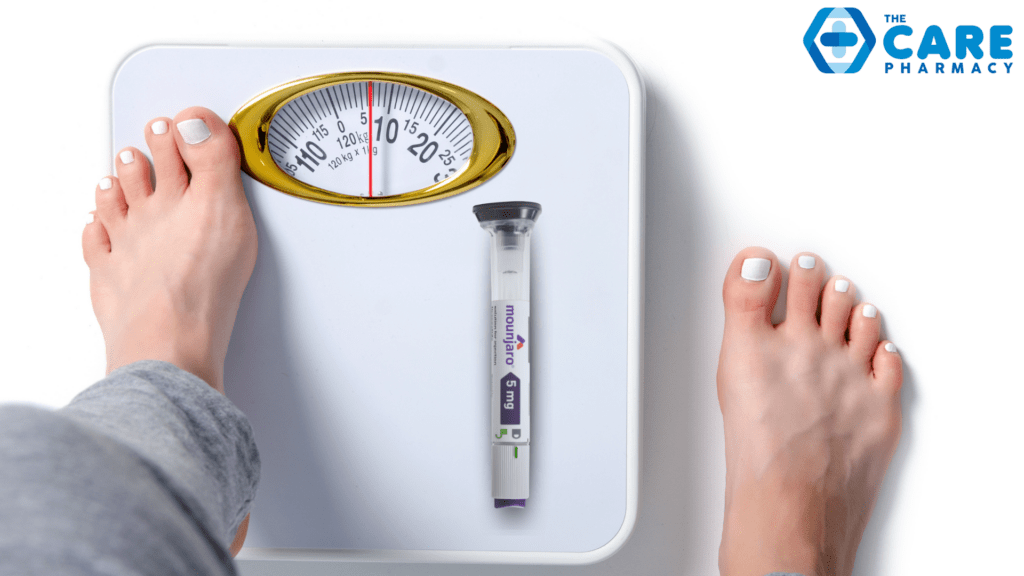
If you have just started Mounjaro or are about to begin treatment, knowing where and how to inject correctly is one of the most practically important things you can learn — and it is something that the patient information leaflet alone does not always cover with enough clarity. Mounjaro is administered as a once-weekly subcutaneous injection, meaning it is injected into the fatty tissue just beneath the skin rather than into a muscle or vein, and the site you choose affects both comfort and the consistency of absorption. The three approved injection sites are the abdomen, the outer thigh, and the upper arm — each with its own practical considerations depending on your body composition, lifestyle, and personal comfort with self-injection. Getting your injection technique right from the start makes the process significantly more comfortable, reduces the risk of injection site reactions, and ensures the medication is absorbed consistently week to week. At The Care Pharmacy, our prescribing team is here to support you throughout your Mounjaro journey — and that includes making sure you feel confident and informed at every stage of treatment.
Getting started is straightforward — get in touch with our team with any questions about your treatment, or complete our online consultation to find out whether Mounjaro or another weight loss treatment is right for you.
Start Your Consultation
Quick Answer
The three approved sites for Mounjaro injection are the abdomen (stomach area), the outer thigh, and the upper outer arm — all areas where there is sufficient subcutaneous (under-skin) fatty tissue to allow safe and effective delivery of the medication. The abdomen is generally considered the most practical and accessible site for most patients, particularly for self-injection, as it is easy to pinch the skin and delivers consistent absorption. The thigh is a good alternative and particularly useful for patients who prefer to inject while seated, while the upper arm is most practically used when another person is administering the injection. Rotating between sites and between different areas within the same site is clinically important — injecting into the same spot repeatedly causes localised tissue changes that can impair absorption and cause discomfort. For patients who are uncomfortable with self-injection or who would prefer to avoid injections entirely, alternatives such as the oral Wegovy tablet are worth exploring through a clinical consultation.
The Three Approved Mounjaro Injection Sites
Mounjaro is a subcutaneous injection — meaning it is delivered into the layer of fatty tissue that sits just beneath the skin. This is different from an intramuscular injection (which goes into muscle) or an intravenous injection (into a vein). Subcutaneous injections are generally less painful, easier to self-administer, and appropriate for the auto-injector pen that Mounjaro comes in.
The three body areas approved for Mounjaro injection are:
- The abdomen — specifically the fatty tissue of the stomach area, avoiding the two-inch circle directly around the navel
- The outer thigh — the front or outer part of the thigh, avoiding the inner thigh and knee area
- The upper outer arm — the fatty tissue of the back or outer upper arm, typically used when another person is administering the injection
All three sites are considered clinically equivalent in terms of Mounjaro absorption — meaning the medication reaches the bloodstream at comparable rates and concentrations regardless of which site you use. The choice between them therefore comes down to practical factors: accessibility, comfort, the amount of subcutaneous tissue available, and personal preference.
Why rotating injection sites matters
Injecting Mounjaro into the exact same spot every week causes a localised tissue reaction called lipodystrophy — a change in the structure of the fatty tissue beneath the skin that can result in hardened lumps, indentations, or patches of altered skin texture. Beyond the cosmetic concern, lipodystrophy at the injection site can impair the consistent absorption of Mounjaro, leading to unpredictable medication levels and potentially reduced effectiveness.
Rotation should happen at two levels: rotating between the three approved body areas from week to week, and rotating to a different spot within the same area each time you return to it. A simple system — such as working clockwise around the abdomen or alternating thighs — makes this easier to maintain consistently.
Injecting into the Abdomen
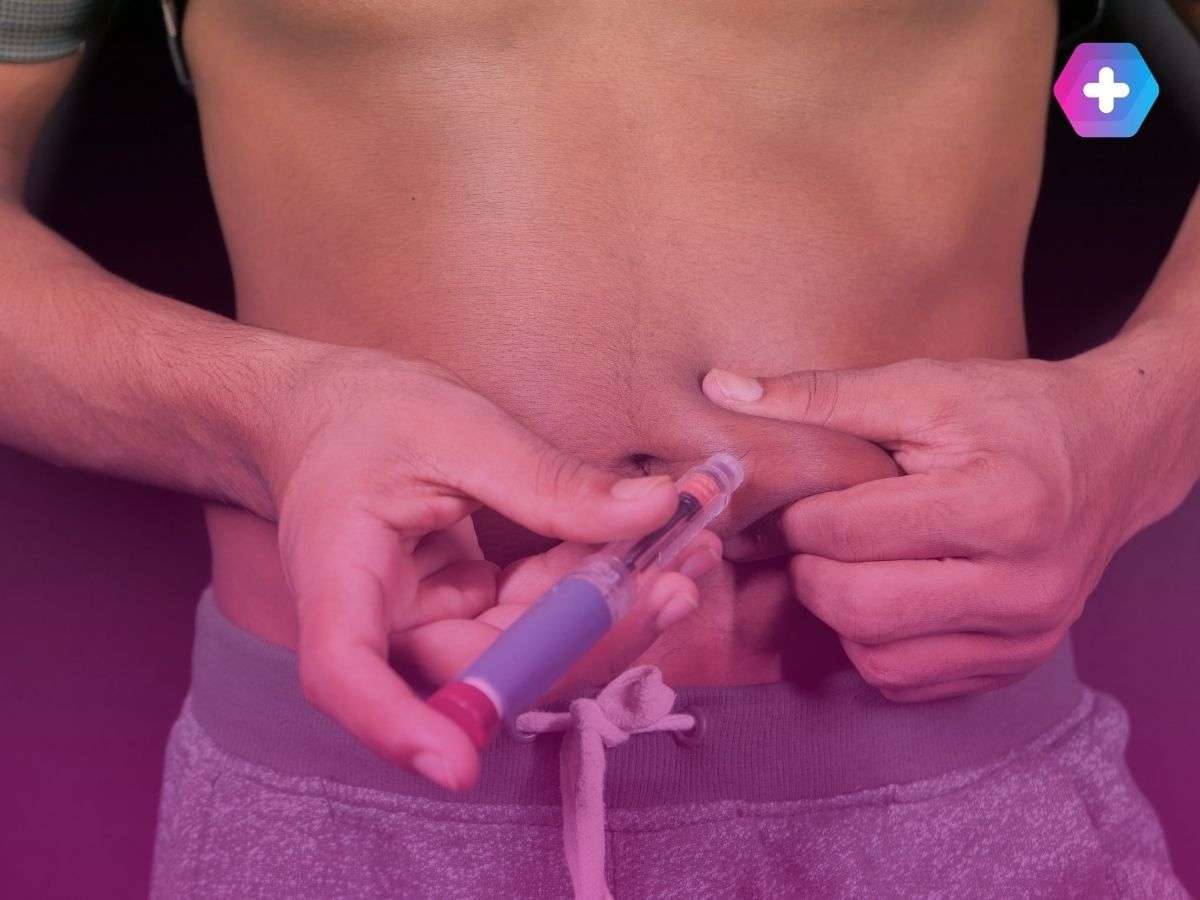
The abdomen is the most commonly used and generally the most practical injection site for Mounjaro self-administration. It offers the largest surface area of subcutaneous tissue among the three approved sites, making it the easiest to access consistently and the most forgiving in terms of site rotation.
Where exactly on the abdomen:
- The lower abdomen — the area below the navel and above the pubic area — is often the most comfortable and accessible zone
- The upper abdomen and the sides of the abdomen (the flanks) are also appropriate
- Avoid the two-inch (approximately 5cm) circle directly surrounding the navel — the skin here is thicker and less suitable for subcutaneous injection
- Avoid any areas where the skin is scarred, bruised, tender, or shows signs of lipodystrophy from previous injections
Practical advantages of the abdominal site:
- Easy to see and access without assistance
- Large surface area allows extensive rotation within the site
- Easy to pinch an adequate fold of skin for injection
- Generally well tolerated in terms of pain and post-injection discomfort
Considerations:
Some patients find abdominal injections more uncomfortable immediately after eating — a full stomach can make the area feel more sensitive. Injecting before a meal or several hours after eating is often more comfortable. Patients who have had abdominal surgery should discuss appropriate injection sites with their prescriber, as scar tissue can affect absorption.
Injecting into the Thigh
The outer thigh is the second most commonly used injection site and is particularly practical for patients who prefer to inject while sitting down — making it easy to access and stabilise the injection area with the thigh resting flat.
Where exactly on the thigh:
- The front or outer section of the thigh — roughly the middle third between the knee and the hip
- Avoid the inner thigh — the skin here is thinner and more sensitive, and the area is more prone to bruising
- Avoid injecting near the knee joint or at the very top of the thigh near the hip
- Alternate between left and right thighs on successive weeks to allow adequate recovery time at each site
Practical advantages of the thigh site:
- Easy to inject while seated — useful for patients with limited dexterity or those who find standing injection more difficult
- Comfortable and stable — the thigh does not move around during injection in the way that some other areas might
- Good option for patients who have limited abdominal subcutaneous tissue or who find abdominal injection uncomfortable
Considerations:
Some patients with less subcutaneous tissue on the thigh — particularly those who are more muscular or who have lost significant weight — may find the thigh a less comfortable site, as there is less fatty tissue to inject into. In these cases, the abdomen is generally preferable.
Injecting into the Upper Arm
The upper outer arm is the third approved injection site for Mounjaro. It is the least commonly used for self-injection because it is the most difficult to access without assistance — reaching around to inject into the back of your own arm while maintaining proper technique is challenging for most patients.
Where exactly on the upper arm:
- The outer or back of the upper arm — the fatty tissue over the triceps area
- Avoid the inner arm and the area near the elbow or shoulder joint
- Alternate between left and right arms on successive weeks
When the upper arm site is most practical:
- When another person — a partner, family member, or carer — is administering the injection
- For patients who have developed lipodystrophy at abdominal or thigh sites and need to give those areas a longer recovery period
- As part of a three-site rotation strategy for patients who want to spread injection exposure as widely as possible
Considerations:
Patients attempting self-injection into the upper arm should practise the technique carefully, as an improper angle or insufficient subcutaneous tissue can result in an intramuscular injection, which is more painful and may cause bruising. Using a mirror or asking for assistance is strongly recommended for this site.
Comparing the Three Injection Sites
The table below summarises the key practical differences between the three approved Mounjaro injection sites to help you identify which is most appropriate for your circumstances:
| Feature |
Abdomen |
Outer Thigh |
Upper Arm |
| Ease of self-injection |
Excellent |
Good |
Difficult without assistance |
| Surface area for rotation |
Largest |
Moderate |
Limited |
| Best position for injection |
Standing or lying down |
Seated |
Seated with assistance |
| Subcutaneous tissue availability |
Generally good in most patients |
Variable — less in lean patients |
Variable — less in lean patients |
| Best for |
Most patients — first choice for self-injection |
Patients who prefer seated injection |
Patients who have assistance with injection |
| Absorption equivalence |
Clinically equivalent |
Clinically equivalent |
Clinically equivalent |
Step-by-Step Injection Technique
Correct technique is as important as correct site selection. The following steps reflect best practice for Mounjaro self-injection and apply across all three approved sites.
- Prepare your injection area. Clean the injection site with an alcohol swab and allow it to dry fully before injecting — injecting into wet skin can introduce bacteria and cause stinging.
- Remove the pen from the fridge 30 minutes before use. Injecting cold medication is more uncomfortable. Allowing the pen to reach room temperature significantly reduces injection discomfort at the site.
- Check the pen before use. Confirm that the medication is clear and colourless (or slightly yellow), that the expiry date has not passed, and that the pen has not been dropped or damaged.
- Pinch the skin. Use your non-dominant hand to pinch a fold of skin at the injection site — this lifts the subcutaneous tissue away from the muscle beneath and makes it easier to deliver a subcutaneous rather than intramuscular injection.
- Position the pen at 90 degrees to the skin. Hold the pen firmly against the pinched skin at a right angle. Do not angle the pen.
- Press and hold. Press the button on the pen firmly and hold it in place for the full duration indicated in your pen’s instructions — typically around ten seconds — to ensure the full dose is delivered.
- Remove the pen smoothly. Lift the pen away from the skin without rubbing the injection site, as rubbing can cause bruising and local irritation.
- Dispose of the pen safely. Place the used pen in a sharps disposal container immediately after use. Never recap the pen and never place it in household waste.
Common Injection Mistakes and How to Avoid Them
These are the errors our prescribing team most commonly hears about from patients — knowing them in advance helps you avoid them from your very first injection:
- Injecting in the same spot every week: The most common mistake. Always rotate both between sites and within sites. Consider keeping a simple injection log — noting the date, site, and specific area within that site — to make rotation automatic rather than relying on memory.
- Injecting cold medication: Taking the pen straight from the fridge and injecting immediately causes unnecessary discomfort. Allow at least 30 minutes at room temperature before every injection.
- Not holding for long enough: Releasing the pen too quickly before the full dose has been delivered is a common cause of underdosing. Hold firmly for the full duration stated in the instructions for your specific pen.
- Injecting through clothing: Never inject through clothing. Always expose the skin directly and clean the site with an alcohol swab before injecting.
- Rubbing the site after injection: Rubbing immediately after injecting causes local irritation and can increase bruising. Simply remove the pen, apply gentle pressure if needed, and leave the area alone.
- Injecting into scarred, bruised, or lipodystrophic tissue: Injecting into already-damaged tissue impairs absorption and worsens the local changes. Always inspect the site before injecting and choose a healthy, unaffected area.
- Disposing of pens incorrectly: Used Mounjaro pens contain needles and must be disposed of in a sharps container. Most pharmacies will provide sharps bins and accept used sharps for safe disposal.
Now that you know how to inject correctly, find out what Mounjaro or Wegovy could achieve for your body. Enter your height and weight below to see your personalised weight loss estimate:
What If You Do Not Like Injections?
For some patients, the prospect of weekly self-injection is a significant barrier to starting Mounjaro — whether due to needle phobia, anxiety about the technique, or simply a strong personal preference for oral medication. This is a completely valid concern and one that is worth addressing directly rather than dismissing.
If injections feel like an obstacle, there are practical options worth knowing about:
- Auto-injectors reduce technique anxiety: Mounjaro uses a pre-filled auto-injector pen that covers the needle completely before, during, and after injection — many patients with needle phobia find that this design makes self-injection significantly more manageable than they expected, as they never need to see the needle at all.
- Technique confidence builds quickly: The majority of patients who are anxious about injection before their first dose find that their confidence increases significantly after the first two or three injections, once they understand exactly what to expect and have practised the process.
- Ask for support from your prescribing team: Our team is here to talk you through the technique, answer your questions, and help you feel as prepared as possible before your first injection. Get in touch if injection anxiety is something you would like to discuss.
- Consider Wegovy as an oral alternative: For patients who genuinely cannot manage or do not want weekly injections, Wegovy (semaglutide) is now available as an oral tablet — the first GLP-1 weight loss medication in pill form to receive MHRA approval in the UK. It contains the same active ingredient as the Wegovy injection and offers a genuinely injection-free alternative for patients who are eligible. Complete our online consultation to find out whether the Wegovy tablet or another alternative is appropriate for your circumstances.
Frequently Asked Questions
These are the questions patients most commonly ask our prescribing team about Mounjaro injection sites and technique:
Does it matter which site I inject Mounjaro into?
All three approved sites — the abdomen, outer thigh, and upper arm — are clinically equivalent in terms of Mounjaro absorption, meaning the medication reaches the bloodstream at comparable rates regardless of which site you choose. The choice between sites therefore comes down to practical factors such as accessibility, comfort, the amount of subcutaneous tissue available, and whether you are self-injecting or receiving assistance.
Where is the least painful place to inject Mounjaro?
Pain tolerance varies between individuals, but most patients report that the abdomen is the most comfortable site for Mounjaro self-injection — particularly the lower abdomen, where subcutaneous tissue is generally more abundant. Allowing the pen to reach room temperature for 30 minutes before injecting, pinching the skin properly, and choosing a clean, unaffected area all significantly reduce injection discomfort regardless of the site chosen.
Can I inject Mounjaro in my stomach?
Yes — the abdomen (stomach area) is one of the three approved injection sites for Mounjaro and is generally considered the most practical for self-injection. The specific area to use is the fatty tissue of the abdomen, avoiding the two-inch circle directly surrounding the navel, and rotating to a different spot within the abdomen each week.
How often should I rotate my Mounjaro injection site?
You should rotate your injection site every week — both between the three approved body areas and within each area. Injecting into the same spot repeatedly causes lipodystrophy, a localised tissue change that impairs absorption and can create visible lumps or indentations in the skin.
What happens if I accidentally inject Mounjaro into muscle?
An intramuscular injection of Mounjaro — particularly if it happens occasionally rather than consistently — is unlikely to cause serious harm, but it may cause increased pain, bruising, and local inflammation at the site. To reduce the risk of intramuscular injection, always pinch the skin before injecting and hold the pen at a 90-degree angle to the skin surface.
Can I inject Mounjaro into my thigh?
Yes — the outer thigh is one of the three approved injection sites for Mounjaro and is a good option, particularly for patients who prefer to inject while seated. Use the front or outer section of the thigh in the middle third between the knee and hip, and alternate between left and right thighs on successive weeks.
Injecting with Confidence on Your Weight Loss Journey
Knowing where and how to inject Mounjaro correctly is one of the most practically important things you can do to get the most from your treatment. The abdomen is the most accessible and widely used site for the majority of patients, the thigh is an excellent alternative for seated injection, and the upper arm works best when assistance is available. Rotating between sites and within sites every week is non-negotiable — it protects the tissue, ensures consistent absorption, and keeps your injection experience as comfortable as possible throughout your treatment course.
For patients who are anxious about injections or who would prefer to avoid them entirely, the oral Wegovy tablet now offers a genuinely injection-free alternative that is worth discussing during a clinical consultation. The right treatment is not always the most potent one — it is the one you can use confidently and consistently, week after week.
At The Care Pharmacy, our pharmacist-led prescribing team is here to support you at every stage of your weight loss journey — from choosing the right medication to feeling confident about the practicalities of using it. Whether you are about to start Mounjaro or are already in treatment and have questions about your technique, our team is here to help.
Our team is ready when you are — reach out with any questions, or complete our online consultation to find out which weight loss treatment is right for you.
Ready to start your Mounjaro treatment?
Begin a free, confidential online consultation with our pharmacist-led team. Mounjaro, Wegovy, and other prescription weight loss treatments available following assessment.
Start Your Consultation
This article was written by Pharmacy Mentor and clinically reviewed by Mohammed Ismail Lakhi, MPharm, MRPharm, Superintendent Pharmacist at The Care Pharmacy. Mohammed is registered with the General Pharmaceutical Council (GPhC registration number 2072815) and leads clinical governance across The Care Pharmacy’s weight management services.
Last reviewed: July 2026
Disclaimer: This article is for general information only and is not a substitute for individual medical advice. Always consult a qualified prescriber before starting any prescription weight loss treatment.
Medically reviewed by
Mohammed Lakhi
Superintendent Pharmacist