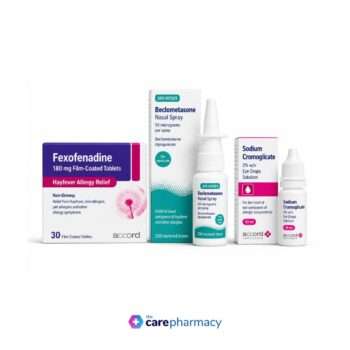


Fexofenadine 120mg or 180mg is a non-drowsy antihistamine used to relieve symptoms of allergic reactions such as hay fever and chronic urticaria. During an allergic response, the body releases histamine, which causes symptoms like sneezing, itching, watery eyes and a runny nose. Fexofenadine works by blocking the effects of histamine, helping to reduce these uncomfortable symptoms and improve daily comfort.
It is commonly recommended for adults and children over a certain age who experience seasonal allergies triggered by pollen, as well as year-round allergies caused by dust mites, mould or pet dander. It can also help manage chronic urticaria, a long-term skin condition that causes raised, itchy rashes. By controlling symptoms such as sneezing, blocked or runny nose, itchy eyes and skin irritation, Fexofenadine can support better sleep, concentration and overall wellbeing, particularly during peak allergy seasons.
Fexofenadine is classed as a second-generation antihistamine, meaning it is less likely to cause drowsiness compared to older antihistamines. Most people can take it without feeling sleepy, making it suitable for those who need to remain alert for work, study or driving. It usually begins to work within about an hour and can provide relief for up to 24 hours. The dose and frequency depend on the condition being treated and individual needs.
Although generally well tolerated, some people may experience mild side effects such as headache, nausea, dizziness or dry mouth. These effects are usually temporary. If you notice persistent symptoms or signs of a serious allergic reaction, such as difficulty breathing, seek medical advice promptly. Before starting Fexofenadine, speak to a healthcare professional if you have kidney problems, are taking other medications, are pregnant or breastfeeding, or have a history of heart rhythm issues.
For best results, take Fexofenadine exactly as directed and avoid exceeding the recommended dose. While it can significantly reduce allergy symptoms, it is also helpful to limit exposure to known triggers where possible. If your symptoms continue or worsen despite treatment, consult a healthcare professional to review your management plan and ensure the most appropriate approach for your needs.