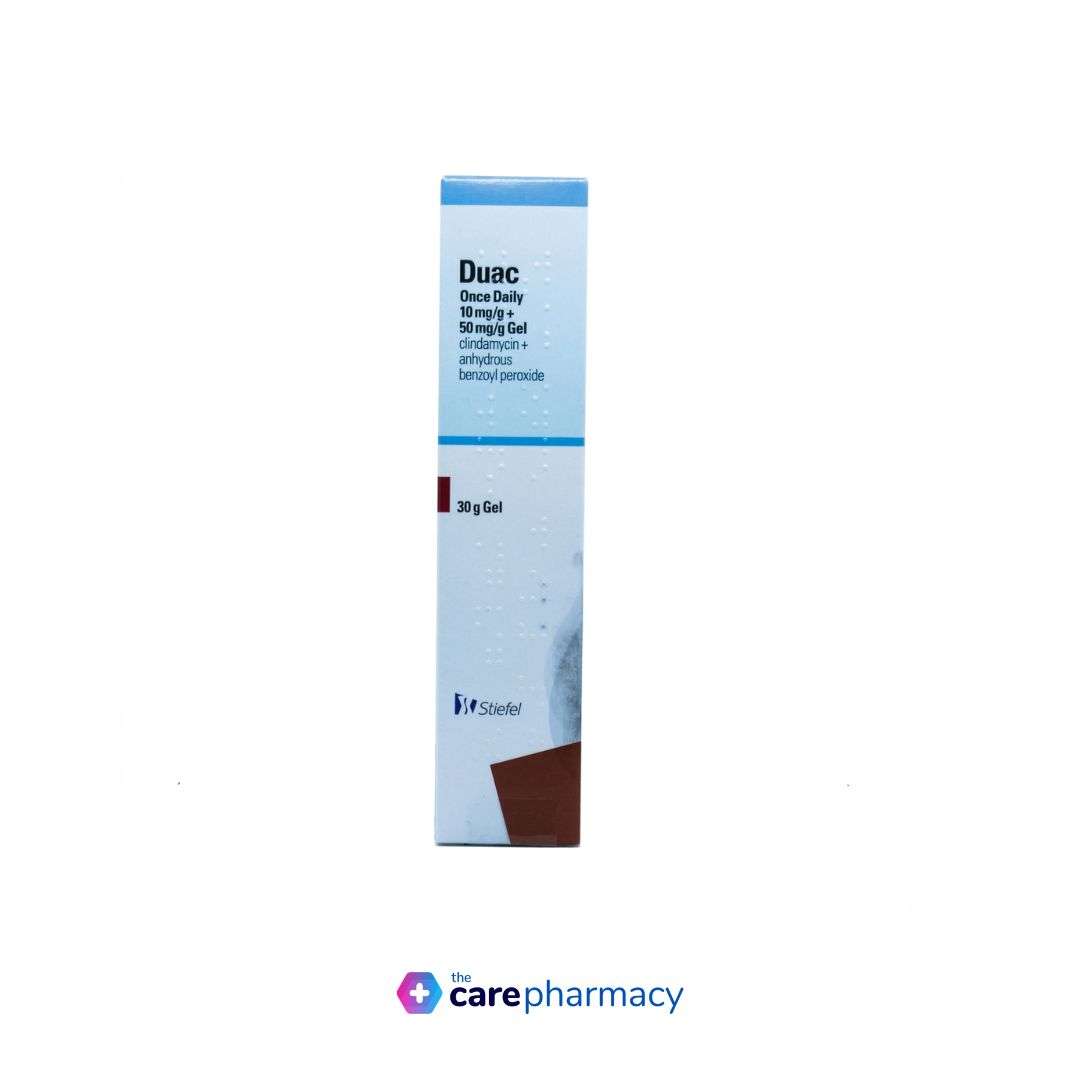
Duac

Price range: £29.99 through £43.99

Duac Once Daily Gel 1% / 5% (30g) A clinically proven acne treatment combining clindamycin 1% and benzoyl peroxide 5% to tackle breakouts effectively. This dual action gel works to eliminate acne-causing bacteria, reduce inflammation, and prevent new spots from forming for clearer, healthier skin. Designed for once daily application as prescribed, it absorbs quickly for a comfortable, non-greasy finish. Suitable for mild to moderate acne.

  • ✔ 30g or 60g tube (approx. 1 to 2 months supply)
  • ✔ Fast acting dual treatment formula
  • ✔ Prescription treatment for acne

Start your treatment today with expert approval and guidance.

Request Treatment

icon-1

Type of medicine

Topical antibiotic gel used to treat mild to moderate acne in adults and adolescents aged 12 and over.

icon-2

Active Ingredient

Clindamycin and benzoyl peroxide – an antibiotic and antimicrobial combination that kills acne-causing bacteria, reduces inflammation, and helps to unblock clogged pores.

icon-3

Effective within

Visible improvements can generally be expected within 4 to 8 weeks of regular daily application, with the skin continuing to improve with ongoing use.

icon-4

Works by

Targeting acne-causing bacteria with its antibiotic properties, reducing inflammation, and clearing blocked pores to help resolve existing breakouts and prevent new ones from developing.

icon-5

Side effects

Frequently reported side effects include skin dryness, redness, peeling, itching, and a mild burning or stinging sensation in the areas where the gel has been applied.

icon-6

Not Suitable For

Not recommended for individuals with broken, sunburned, or significantly irritated skin, those who have a known allergy to clindamycin or benzoyl peroxide, or anyone with a history of inflammatory bowel disease.

Duac is a prescription topical gel formulated to treat mild to moderate acne in adults and adolescents aged 12 and over.  Combining two active ingredients – clindamycin and benzoyl peroxide – it works to eliminate acne-causing bacteria, calm inflammation, and clear blocked pores.  By addressing multiple causes of acne simultaneously, it helps to resolve existing breakouts and reduce the likelihood of new ones developing.

This treatment may be a suitable option for those dealing with persistent spots, redness, or inflammatory acne, especially where previous single-ingredient treatments have not delivered adequate results.  As with all prescription medications, consulting a healthcare professional is essential to confirm that Duac is appropriate for your individual skin type and needs.

Your prescriber will take into account your skin sensitivity and any other treatments or medications you are currently using before recommending Duac.  The gel should be applied in a thin layer to clean, dry skin once daily, preferably in the evening before bed.  Contact with the eyes, lips, and nostrils should be avoided, and hands should be washed thoroughly before and after each application.  It is also worth noting that Duac has the potential to bleach fabrics, towels, and bedding.  Daily use of a moisturiser and broad-spectrum sunscreen is advisable, as the treatment may increase the skin’s sensitivity to sunlight.

During the initial weeks of use, some individuals may experience dryness, redness, peeling, or mild stinging as the skin adjusts to the treatment.  These effects are generally short-lived.  If symptoms persist or worsen, it is important to seek advice from your doctor.

Duac provides a clinically recognised approach to achieving clearer skin.  With consistent and correct use, it can become a straightforward and effective addition to your skincare routine.  A healthcare professional can guide you in determining whether this treatment is the right fit for you.

How should I take Duac Gel?

A thin layer of Duac should be applied once daily to clean, dry skin, preferably during the evening before bed.  It is important to follow the instructions provided by your healthcare professional or consult the patient information leaflet for comprehensive guidance.  Avoid applying the gel to any skin that is broken, sunburned, or irritated, and ensure the area around the eyes, lips, and nose is not affected.  Please be aware that Duac has the potential to bleach fabrics and bedding, so allowing the gel to dry completely before any contact with materials is advised.  Adding a daily moisturiser and sunscreen to your skincare routine is recommended, as this treatment may heighten the skin’s sensitivity to sunlight.  If you have any concerns about using Duac or experience any unwanted effects, do not hesitate to contact your prescriber.

What ingredients are in Duac Gel?

Duac contains two active ingredients, clindamycin and benzoyl peroxide, working in combination to address the root causes of acne.  In addition to these, the gel incorporates several inactive ingredients such as carbomer, glycerol, and purified water, which contribute to the texture and stability of the formulation.  For a comprehensive list of all ingredients, always consult the patient information leaflet provided with your medication, particularly if you have any known allergies or sensitivities.  If you have any questions or concerns about what the product contains, seek advice from your healthcare professional prior to commencing treatment.

Warnings and precautions

Duac may not be suitable for all skin types or conditions.  Consulting a healthcare professional before beginning treatment is strongly advised, particularly if you have sensitive skin, eczema, or any pre-existing skin conditions.  Using Duac alongside other topical acne treatments or exfoliating products is not recommended, as this could lead to heightened irritation or unwanted reactions.  Limiting sun exposure during treatment is important, as the gel may increase the skin’s sensitivity to UV light.  Any severe or persistent reactions should be brought to the attention of a prescriber without delay.  Under no circumstances should Duac be applied to skin that is broken, sunburned, or significantly irritated.  Throughout the course of the treatment, adhering carefully to the application instructions and dosage guidance provided by your healthcare provider is essential.

What are side effects of Duac Gel?

Duac has the potential to cause side effects, ranging from mild to more notable reactions.  Among the most frequently reported effects are dryness, redness, peeling, and a mild stinging or burning sensation, which tend to be most pronounced during the early stages of treatment.  Certain individuals may also experience itching or heightened sensitivity in the areas where the gel has been applied.  In rare circumstances, more serious reactions may develop, including significant swelling, blistering, or a considerable increase in skin irritation.  Any severe or long-lasting symptoms should be treated as a reason to seek prompt medical attention.  Before starting or stopping Duac, speaking with a healthcare professional is vital to ensure the treatment is safe and appropriate for your particular skin type and condition.

How do I store Duac Gel?

Prior to opening, Duac should be stored in a refrigerator between 2°C and 8°C, and below 25°C once opened.  Keeping the gel completely out of reach of children and pets is absolutely essential at all times.  Humid environments such as bathrooms, or locations close to heat sources, are not appropriate places to store this product.  Retaining Duac in its original packaging and ensuring the cap is kept tightly closed after each use will help to protect it from contamination and deterioration.  For any further questions relating to storage, your pharmacist or prescriber will be able to provide guidance.

Duac is used to treat acne by reducing bacteria, clearing pores, and calming inflamed skin.
Most people start to see results from Duac within 2 to 4 weeks of daily use.
Yes, moisturising daily can help reduce dryness and keep your skin barrier healthy.
Yes, Duac is a prescription-only gel and should be used under medical supervision.
Yes, Duac may bleach clothing, pillowcases, and towels. Let it dry fully before contact with fabric.