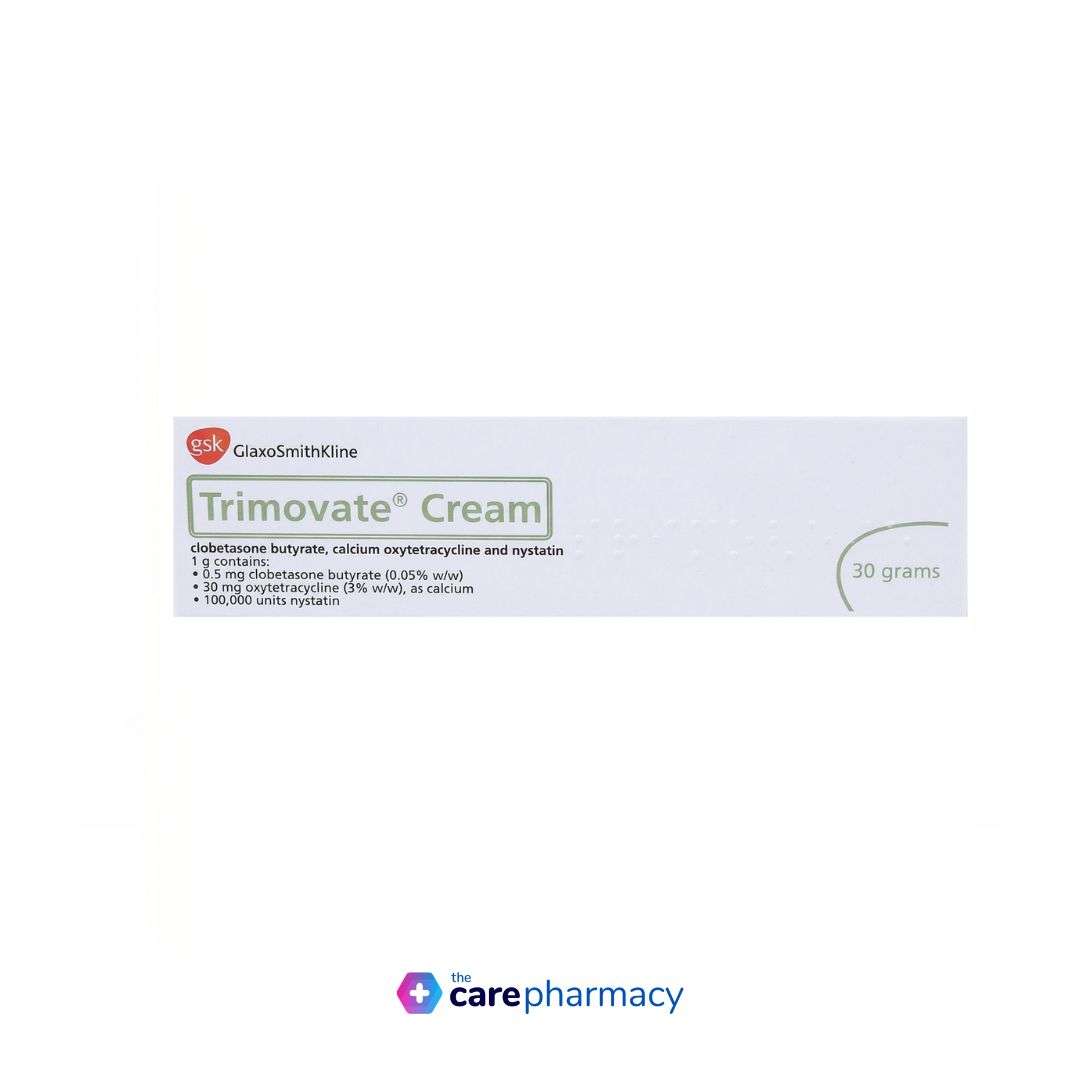
Trimovate Cream

£26.99

Trimovate Cream (30g) A clinically proven prescription triple-action cream combining a corticosteroid, antifungal, and antibacterial in a single formulation, designed to treat skin conditions complicated by infection.  Trimovate works by simultaneously reducing inflammation, relieving itching and redness, and fighting both bacterial and fungal infections – making it a powerful all-in-one solution for eczema, psoriasis, and dermatitis flare-ups where infection is present.

Formulated for application to affected areas of the body as directed by your prescriber.

  • ✔ 30g tube
  • ✔ Triple-action formula – steroid, antifungal, and antibacterial in one
  • ✔ Relieves itching, redness, and inflammation fast
  • ✔ Prescription-strength treatment for infected skin conditions

Start your treatment today with expert approval and guidance.

Request Treatment

icon-1

Type of medicine

Non-steroidal anti-inflammatory drug (NSAID) used for short-term relief of pain and inflammation, including period pain, dental pain, and muscle aches.

icon-2

Active ingredient

Mefenamic acid, an NSAID that reduces pain and inflammation by blocking prostaglandins in the body.

icon-3

Effective within

Starts working within 30 to 60 minutes, with stronger relief developing over the next few hours.

icon-4

Works by

Reducing the production of prostaglandins, helping to ease pain, swelling, and inflammation.

icon-5

Side effects

Common side effects include stomach pain, nausea, diarrhoea, or headache. Taking it with food may help reduce stomach discomfort.

icon-6

Not suitable for

Not suitable for individuals allergic to NSAIDs, or those with a history of stomach ulcers, bleeding disorders, or severe heart, kidney, or liver conditions.

Trimovate Cream is a targeted treatment designed for more complex skin conditions where inflammation is combined with infection. It is commonly prescribed when standard steroid creams alone are not enough, particularly in cases where the skin is irritated, sore, and affected by either fungal or bacterial involvement. This makes it a practical option for managing flare-ups that are not only uncomfortable but also at risk of worsening without the right treatment.

It is often used in areas where the skin is more prone to irritation and infection, such as skin folds or areas affected by ongoing friction and moisture. By addressing multiple causes at once, Trimovate helps simplify treatment, removing the need for separate creams and making it easier to manage symptoms consistently and effectively. This can be especially helpful for patients dealing with recurring or persistent skin issues.

One of the key advantages of Trimovate is its combined approach, allowing it to treat several aspects of a skin condition at the same time. Instead of only calming the surface symptoms, it works to manage the underlying factors that can delay healing or trigger repeated flare-ups. This makes it particularly useful for conditions where infection is contributing to prolonged discomfort or poor skin recovery.

Its formulation is designed to absorb easily into the skin, making it comfortable to apply and suitable for regular use as directed. This ease of use helps support consistent treatment, which is important for achieving the best possible outcome. By helping to restore balance to the skin while relieving irritation, Trimovate provides a reliable option for managing more challenging skin conditions.

Trimovate offers a convenient all-in-one approach, combining anti-inflammatory, antifungal, and antibacterial properties in a single treatment. This helps reduce redness, itching, and swelling while also targeting infections that may be present.

It is particularly beneficial for conditions where the skin barrier is compromised, as it not only soothes irritation but also helps prevent the condition from worsening. With its fast-absorbing texture and multi-action formula, Trimovate supports quicker symptom relief and makes ongoing skin management more straightforward and effective.

How should I use Trimovate Cream?

Trimovate Cream should be used exactly as directed by your healthcare professional or according to the instructions in the patient information leaflet. It is usually applied once or twice daily to the affected area, unless advised otherwise. Before applying, ensure the skin is clean and dry, then apply a thin layer of the cream and gently rub it in until fully absorbed. Wash your hands after use, unless you are treating your hands.

Avoid applying Trimovate to large areas of skin, broken or severely damaged skin, or sensitive areas such as the eyes unless instructed by your doctor. Do not cover the treated area with dressings unless advised. If you miss an application, apply it when you remember, but do not use extra to make up for a missed dose.

What ingredients are in Trimovate Cream?

Trimovate Cream contains three active ingredients: clobetasone butyrate (a corticosteroid), oxytetracycline (an antibiotic), and nystatin (an antifungal). Together, these ingredients help reduce inflammation while treating both bacterial and fungal infections.

In addition to the active ingredients, Trimovate also contains inactive components that help form and stabilise the cream. These may include liquid paraffin, white soft paraffin, cetostearyl alcohol, and other standard cream base ingredients.

Always check the patient information leaflet supplied with your product for a full and accurate list of ingredients, especially if you have allergies or sensitivities. If you have any concerns, speak to your pharmacist before using Trimovate Cream.

What are the side effects of Trimovate Cream?

Trimovate Cream may cause side effects, although many people use it without significant problems. Common side effects can include mild burning, stinging, or irritation at the application site, particularly when first applied.

With prolonged use, it may cause thinning of the skin, stretch marks, or increased sensitivity. Some people may also experience allergic reactions or worsening of the skin condition. Rarely, overuse may lead to systemic effects associated with corticosteroids.

If you notice any severe or unusual symptoms, or if your condition does not improve, seek medical advice promptly. Always use Trimovate as directed to reduce the risk of side effects.

Warnings and precautions

Trimovate Cream may not be suitable for everyone. Speak to a healthcare professional before using it if you have untreated skin infections, acne, rosacea, or if you are applying it to large areas of the body. Caution is also advised when using on the face, in skin folds, or for prolonged periods.

Because Trimovate contains a corticosteroid, excessive or long-term use may increase the risk of side effects such as skin thinning. The antibiotic component may also contribute to resistance if used unnecessarily or for extended periods. Always use the lowest effective amount and follow the instructions provided.

If you are pregnant, breastfeeding, or using other topical treatments, consult your pharmacist or GP before starting Trimovate. Seek medical advice if symptoms worsen or do not improve.

How should I store Trimovate Cream?

Store Trimovate Cream below 25°C in a dry place, away from direct heat and sunlight to maintain its effectiveness. Always keep the tube tightly closed after use and store it out of sight and reach of children. Do not use the cream after the expiry date printed on the packaging.

Trimovate Cream should not be applied to the eyes, face, or on broken or infected skin without your doctor's instruction.
Trimovate Cream may be used in children only under close supervision of a healthcare professional and generally for the shortest duration possible.
Trimovate Cream contains both an antifungal and an antibacterial ingredient, allowing it to treat inflamed skin where these infections may be present alongside inflammation.
Trimovate Cream should be applied thinly to the affected area once or twice daily, as directed by your healthcare provider.
Trimovate Cream is used to treat inflammatory skin conditions such as eczema, dermatitis, and certain infections that are unresponsive to milder treatments.