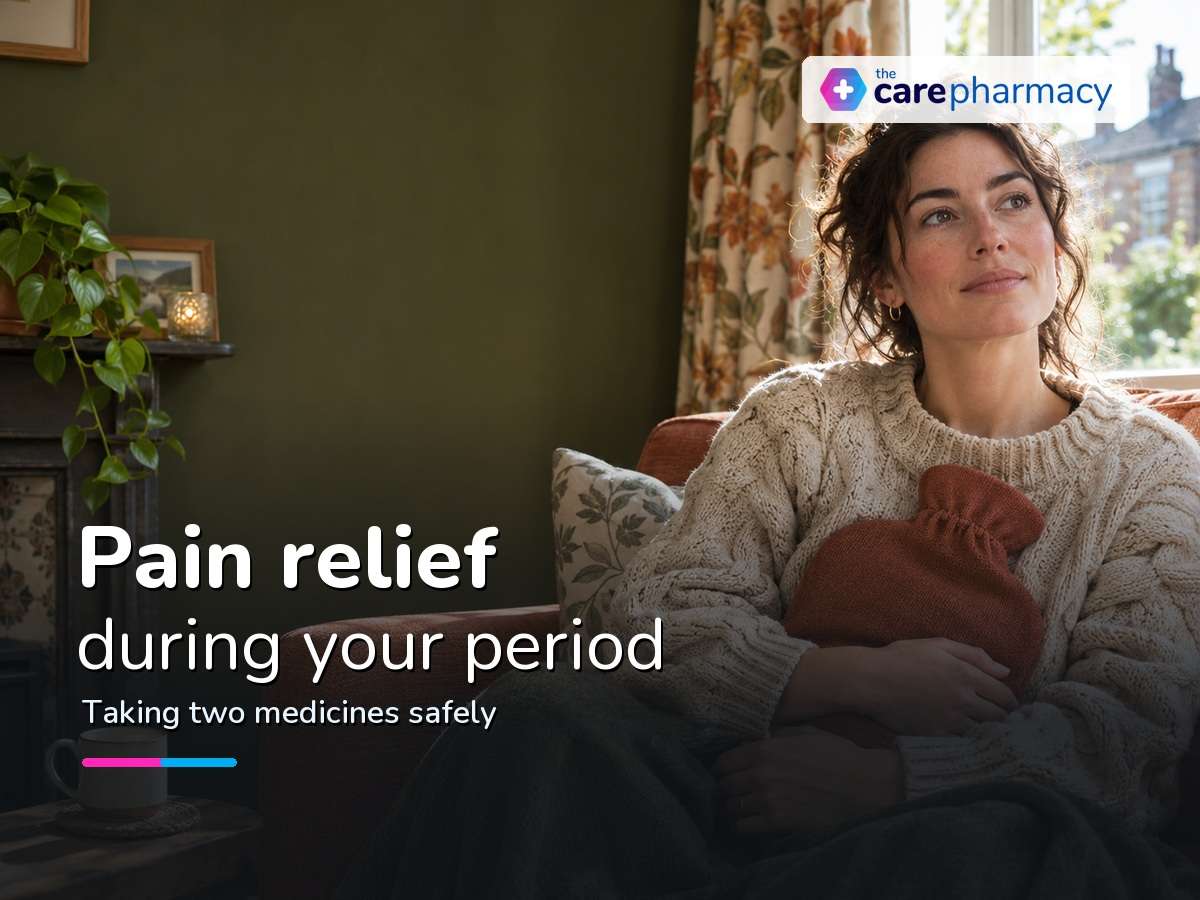
Taking paracetamol with mefenamic acid for period pain
You can usually take paracetamol with mefenamic acid if it’s been prescribed for your period pain. Check the ingredients in any other medicines you’ve taken today. Co-codamol and some cold and flu remedies already contain paracetamol, so taking extra could give you too much.
Check what you’ve already taken today
Ask your prescriber before adding ibuprofen or naproxen. They’re anti-inflammatory painkillers, just like mefenamic acid. Taking them together can increase the risk of stomach bleeding.
Start with the packets in front of you. Check the active ingredients on anything you’ve taken since yesterday, including a cold remedy, a night-time medicine or a stronger painkiller you had left over. A different name on the front of a packet can hide the same ingredient.
Plain paracetamol: follow the instructions on your pack or the dose your clinician gave you. Include any paracetamol you’ve already taken in the last 24 hours.
Co-codamol: this contains paracetamol and codeine. Ask a pharmacist before adding it to your treatment and avoid taking it with extra paracetamol.
Cold and flu remedies: read the ingredients each time. Two products from the same range can contain different painkillers.
If you’ve taken more paracetamol than the pack or leaflet says, get advice from NHS 111 straight away, even if you feel fine. Keep the packets to hand so you can say what you took and when. Too much paracetamol can harm the liver, and you may feel well at first. The NHS guide to paracetamol explains what to do.
Check the amount as well as the name. Paracetamol comes in tablets, capsules, liquids and powders you stir into water. They can contain different amounts. A sachet for a cold can count just as much as a tablet labelled for pain. If you can’t tell from the packet, take it to a pharmacy and ask someone to check it with you.
When to take paracetamol with mefenamic acid
There’s usually no need to leave a gap just because you’re taking paracetamol with mefenamic acid. Each medicine has its own instructions. Take mefenamic acid as prescribed, with or after food, and leave the time shown on your paracetamol pack between doses of paracetamol.
If you took paracetamol earlier in the day, check when that dose is due again. A dose of mefenamic acid in between doesn’t change the timing. It can help to make a quick note on your phone, especially if the pain has woken you and you can’t remember what you took before bed.
The NHS hospital guidance on pain relief explains why a suitable anti-inflammatory can be taken alongside paracetamol. If the timings on your packs differ from the advice you were given, phone the pharmacy that dispensed them. They can check your prescription and the particular packets you have.
Tell the pharmacist about your other medicines
A pharmacist can check the whole list at once. That includes things you only take now and then, such as migraine tablets, and anything a hospital has prescribed that may be missing from your GP record. It helps to bring the packets or a photo of the labels.
Ask before adding paracetamol if you weigh less than 50kg, have liver or kidney problems or have been told to avoid it or take a lower dose. If you take warfarin and expect to need paracetamol regularly, check with your pharmacist or anticoagulation team.
Mefenamic acid has its own safety checks. Tell the prescriber if you’ve had a stomach ulcer or bleeding from the stomach, have had wheezing after taking aspirin or ibuprofen, or take a medicine to prevent blood clots. Keep taking medicines prescribed for your heart or circulation unless the clinician looking after you tells you to change them. If you’re pregnant, think you might be or are trying for a baby, ask before taking mefenamic acid.
Stop taking mefenamic acid and get urgent medical advice if you vomit blood or have black, tar-like poo. If you develop diarrhoea while taking it, stop and contact your doctor. The patient leaflet for mefenamic acid lists other warning signs. Read the leaflet that came with your own tablets as well.
When period pain needs a GP appointment
Some people need a different plan from one month to the next. If your pain is getting worse, you’re bleeding much more than usual or you keep missing work because of your periods, make a GP appointment. Tell them what’s changed and how long it’s been happening. Pain during sex or when you pee or poo, or bleeding between periods, is also worth mentioning.
Pelvic or period pain that’s severe or worse than usual and hasn’t improved with painkillers needs urgent advice. Ask for an urgent GP appointment or call NHS 111. Keep the times and names of the medicines you’ve taken to hand so you can tell the person you speak to.
For a routine appointment, a few notes from your last two or three periods can help. Write down when the pain started, how many days it lasted and what you could still do. If you’re changing pads or tampons much more often than before, or waking up to change them, mention that too. The NHS has separate advice on period pain and heavy periods.
What else can help on a painful day?
A hot water bottle wrapped in a towel can help with cramps. Try a warm bath or gentle movement if that feels comfortable. If you’re using a heat pad, follow its instructions and keep a layer between the pad and your skin. Small things like taking a break from sitting or having a warm shower may make the day easier while you arrange advice.
When pain keeps coming back despite the plan you were given, take the boxes or a photo to your pharmacist or GP. Tell them if the medicine worked at first and wore off, or if it never helped. Those are different problems, and it’s useful for them to know which one you’re having. They may want to check how the medicine was taken, talk through a different option or look into why the pain is so strong.
You can also ask what to do next month, before your period starts. That’s easier than trying to remember the plan while you’re in pain. Ask the clinician to write down what you can use together, what to avoid and when to call back if you’re still struggling.
If the GP thinks the pain could be linked to a condition such as endometriosis, they may suggest an examination or arrange tests. Ask what you can take while you wait. Bring up heavy bleeding too, even if the tablets make the cramps manageable. A treatment that makes the pain easier to bear may leave the bleeding unchanged.
Questions about taking both medicines
Can I take paracetamol with mefenamic acid on an empty stomach?
Paracetamol tablets can usually be taken with or without food. Take mefenamic acid with or after food as directed on the prescription label or in your leaflet. Ask a pharmacist if nausea is making it hard to eat or take your medicine.
What if I’ve already taken ibuprofen today?
Before you take mefenamic acid, ask a pharmacist or your prescriber what to do. Tell them how much ibuprofen you took and when. They can also check whether a cold remedy or another painkiller you took contains an anti-inflammatory.
What if my cramps settle but the bleeding is still heavy?
Tell your GP if the bleeding is interfering with everyday life, you’re bleeding between periods, or you feel tired or short of breath. Ask what to do if it happens again. Bring details of any treatment you’ve already tried and how much it helped.
Ask about a period pain treatment review
If you’ve already had your period pain assessed and want to discuss an existing prescription, tell The Care Pharmacy what you take and how it’s working. Have the packets or a list of your medicines to hand. For new or worsening pelvic pain, follow the GP or NHS 111 advice above.
This guide gives general information. Ask a qualified healthcare professional about your own treatment.
Prescription medicines require a clinical assessment. The clinician may recommend a different treatment or an in-person appointment.
Clinical reviewer
Mohammed Ismail Lakhi, MPharm, is the Superintendent Pharmacist at The Care Pharmacy. He leads clinical governance and is registered with the General Pharmaceutical Council, registration number 2072815.
Weight Loss Guide, The Care Pharmacy Struggling With Weight in Menopause? Here’s When to Ask for Support If you’ve tried the usual advice and nothing seems to move the needle, that’s worth listening to. Here’s how to recognise the point where it makes sense to speak to a prescriber. Explore Weight Loss Treatment […]
The market for menopause supplements has expanded dramatically in recent years, and navigating it without a clear clinical framework can feel overwhelming. With dozens of products claiming to relieve hot flushes, improve sleep, support mood, and restore energy, knowing which supplements have genuine evidence behind them — and which are largely marketing — is one […]
Nitrofurantoin treats some lower urinary tract infections, such as cystitis. Check the strength and formulation on your label: modified-release and immediate-release products have different dosing instructions. Follow the directions for the medicine you were actually supplied. If you have burning when passing urine, urgency or lower abdominal discomfort, ask for an assessment. The Care Pharmacy […]
If you are considering norethisterone tablets to delay your period for a holiday, special occasion, religious event, or important life moment, our team at The Care Pharmacy is here to help. You can contact us or complete our online consultation form for discreet, professional advice from our UK-registered healthcare team. Women’s health deserves clarity, respect, […]
Emergency contraception is an important option when regular contraception has failed, been missed, or not been used. Many people searching online want clear answers about emergency contraceptive cost, what options are available in the UK, and how to access treatment safely and quickly. Understanding the differences between the available tablets can help you make an […]
Planning a holiday, a big event, or an important trip can be stressful enough without your period arriving at the worst possible time. If you have been considering a period delay pill, you are not alone. Period delay tablets are a popular option for people who want more control over their cycle for short-term plans, […]
To provide the best experiences, we use technologies like cookies to store and/or access device information. Consenting to these technologies will allow us to process data such as browsing behaviour or unique IDs on this site. Not consenting or withdrawing consent, may adversely affect certain features and functions.
Functional
Always active
The technical storage or access is strictly necessary for the legitimate purpose of enabling the use of a specific service explicitly requested by the subscriber or user, or for the sole purpose of carrying out the transmission of a communication over an electronic communications network.
Preferences
The technical storage or access is necessary for the legitimate purpose of storing preferences that are not requested by the subscriber or user.
Statistics
The technical storage or access that is used exclusively for statistical purposes.The technical storage or access that is used exclusively for anonymous statistical purposes. Without a subpoena, voluntary compliance on the part of your Internet Service Provider, or additional records from a third party, information stored or retrieved for this purpose alone cannot usually be used to identify you.
Marketing
The technical storage or access is required to create user profiles to send advertising, or to track the user on a website or across several websites for similar marketing purposes.