Retatrutide: Eli Lilly’s Triple-Agonist Weight Loss Injection Explained (May 2026 Update)
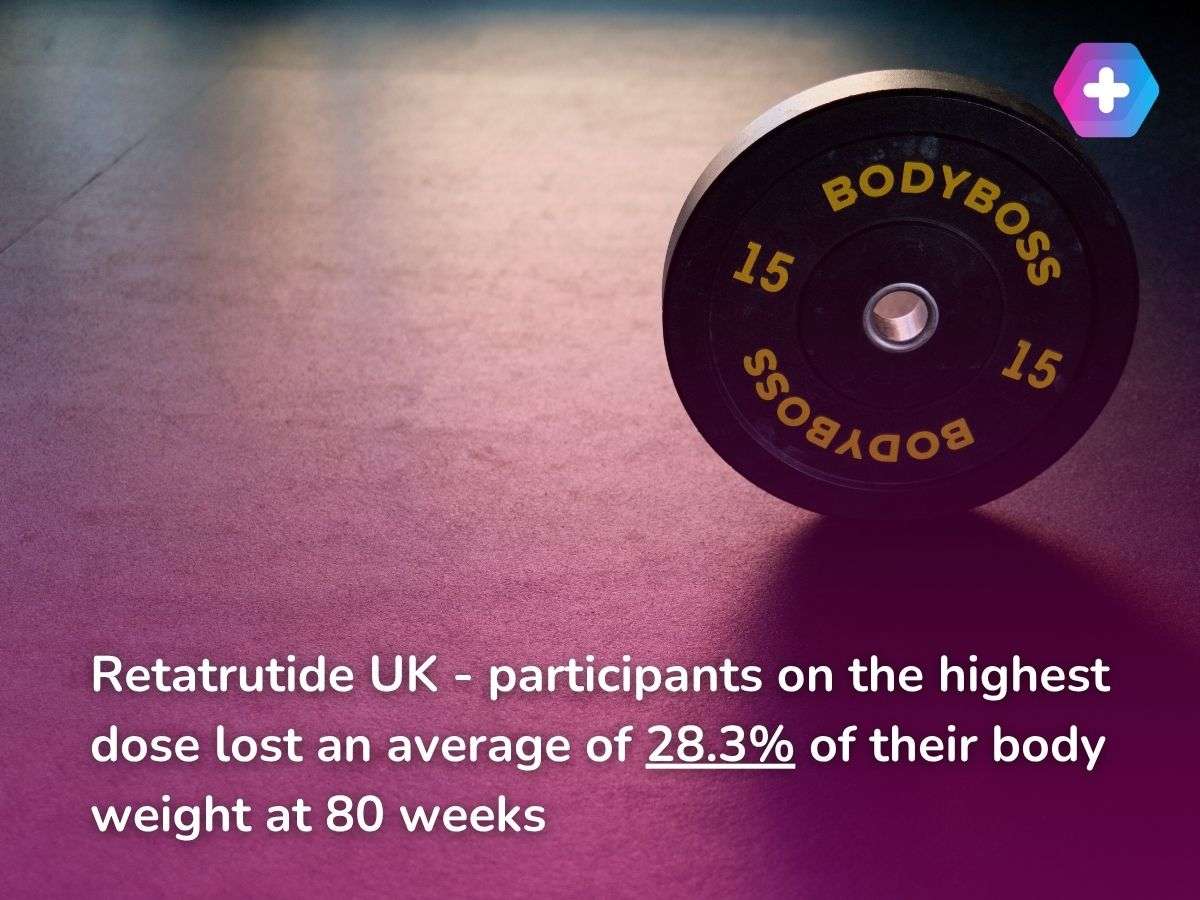
Eli Lilly’s latest development, Retatrutide, is showing extraordinary potential as a groundbreaking treatment for obesity and metabolic health. On 21 May 2026, Lilly published the long-awaited topline results from the TRIUMPH-1 Phase 3 trial, and the data is striking: participants on the highest dose lost an average of 28.3% of their body weight at 80 weeks, with 45.3% of patients losing 30% or more — a threshold previously only achievable with bariatric surgery.
Unlike other weight loss injections, Retatrutide works by targeting three key hormone pathways rather than one or two, offering enhanced effectiveness. Phase 3 clinical trials have now demonstrated weight loss results that surpass anything previously seen in this drug class, positioning Retatrutide as a potentially transformative alternative to existing treatments.
In this fully updated guide, we explore how Retatrutide works, what the new TRIUMPH-1 data tells us, its potential uses, possible side effects, UK availability timelines, and how it compares to well-known treatments such as Wegovy and Mounjaro.
Retatrutide Is Not Yet Available in the UK
Retatrutide remains an investigational medicine. It is not approved by the MHRA and cannot legally be prescribed or dispensed in the UK as of May 2026.
While we await UK regulatory review, we offer the two leading GLP-1 weight loss injections, both MHRA-approved and available now through our UK prescribing service.
What Is Retatrutide?
Retatrutide (also referred to by its development code LY3437943) is an investigational, once-weekly injection developed by Eli Lilly and Company. It belongs to a new generation of weight management medicines known as triple hormone receptor agonists — meaning it acts on three different metabolic pathways simultaneously rather than one or two.
It is being developed primarily as a treatment for obesity and type 2 diabetes, but its potential applications extend to several weight-related conditions including non-alcoholic fatty liver disease (NAFLD), knee osteoarthritis, and obstructive sleep apnoea. Lilly’s broader TRIUMPH clinical programme spans multiple Phase 3 trials investigating these indications in more than 5,800 participants.
What Is Retatrutide Used For?
Retatrutide is being developed to target multiple metabolic conditions, with its primary uses anticipated to be obesity management, type 2 diabetes, fatty liver disease, and weight-related joint conditions.
Obesity Management
Retatrutide is most notably being developed for weight loss. Phase 3 trial data has now demonstrated weight loss outcomes that, in some patient groups, approach those previously only achieved through bariatric surgery. This is a significant breakthrough, particularly for people who have not had success with traditional weight loss methods or other weight loss medications. By targeting multiple metabolic pathways, Retatrutide offers a more comprehensive approach to managing obesity than single- or dual-agonist therapies.
Type 2 Diabetes Treatment
In addition to obesity, Retatrutide is being tested for its effectiveness in type 2 diabetes management. The drug helps regulate blood sugar levels while also promoting weight loss, both of which are critical for people with type 2 diabetes. In March 2026, Retatrutide met its primary endpoints in a Phase 3 diabetes trial (TRANSCEND-T2D-1), with results suggesting superior HbA1c reductions versus comparators. With better control over glucose and weight, patients may experience improved long-term outcomes and easier management of their diabetes.
Fatty Liver Disease (NAFLD)
Another promising area of research for Retatrutide is its potential to treat non-alcoholic fatty liver disease. Earlier-phase studies indicated that the drug may help reduce liver fat in people with obesity, potentially slowing the progression of NAFLD. The dual action on both body weight and liver fat makes Retatrutide a potentially unique option for people at risk of liver complications.
Knee Osteoarthritis
Retatrutide is also being investigated as an adjunctive treatment for adults living with both obesity and knee osteoarthritis. In the TRIUMPH-4 trial, published by Eli Lilly in December 2025, participants taking the 12 mg dose lost an average of 28.7% of their body weight at 68 weeks, and WOMAC pain scores were reduced significantly. More than one in eight patients on retatrutide were completely free of knee pain by the end of the trial — an outcome with meaningful implications for patients whose joint pain is driven or worsened by excess weight.
What Makes Retatrutide Unique?
Retatrutide represents a major step forward in weight loss treatment. Unlike earlier treatments like Wegovy or Mounjaro, which focus on one or two hormone receptors, Retatrutide targets three. This makes it a triple agonist, interacting with the following receptors to promote fat burning, blood sugar control, and appetite reduction:
- GLP-1 (Glucagon-like peptide-1)
- GIP (Glucose-dependent insulinotropic polypeptide)
- GCG (Glucagon)
Weekly Injection with Long-Lasting Effects
Administered as a weekly injection, Retatrutide stays active in the body for approximately six days. This extended half-life supports long-lasting effects, making it a convenient option for patients who struggle with daily medication regimens.
How Does Retatrutide Work?
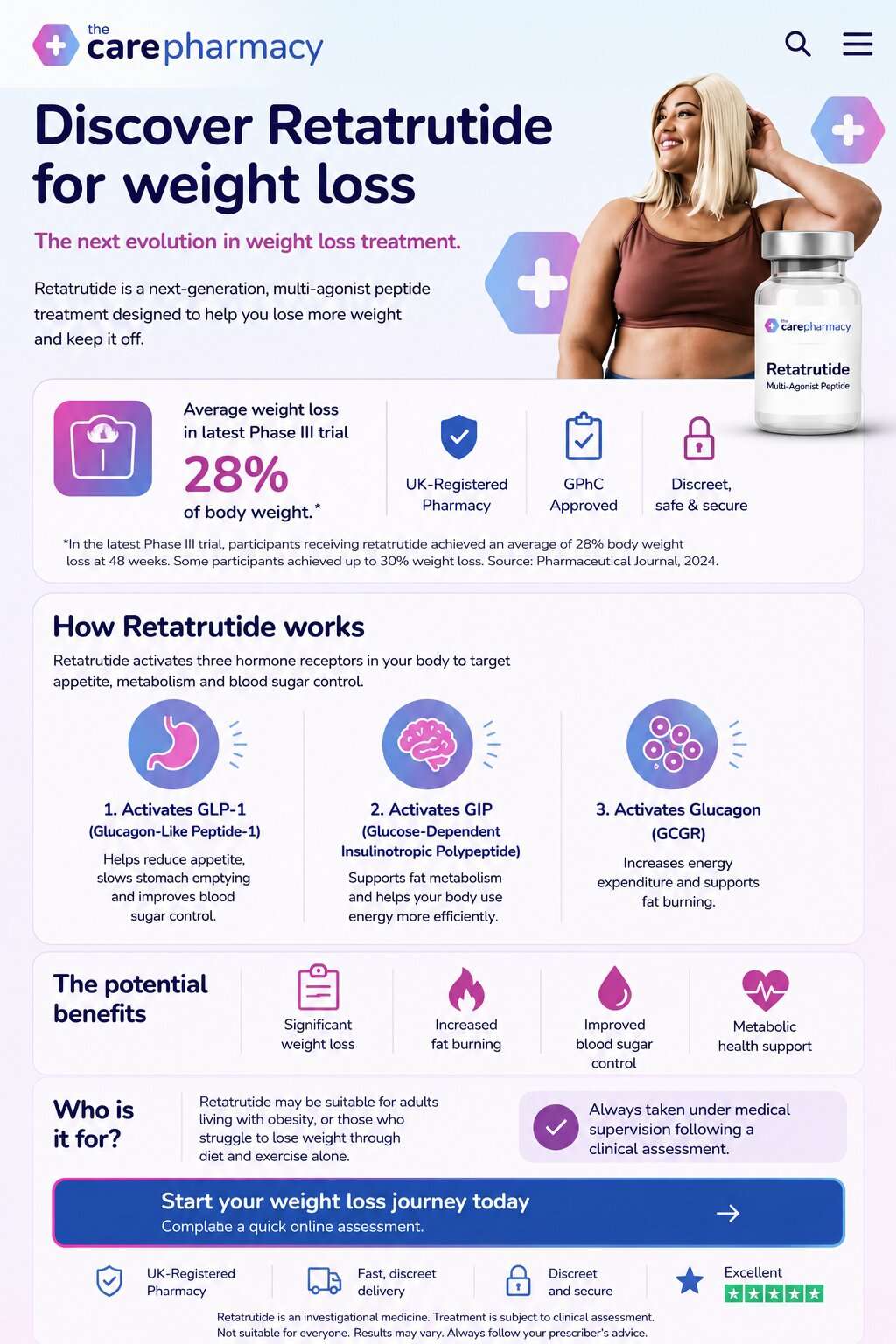
Retatrutide works by mimicking the actions of three important hormones: GLP-1, GIP and GCG. These hormones play a crucial role in regulating hunger, fat metabolism, and blood sugar levels. By targeting multiple receptors, Retatrutide aims to provide more comprehensive effects than medications that focus on only one or two pathways. Here is a detailed look at the specific actions of each hormone receptor involved:
- GLP-1 (Glucagon-like peptide-1): This receptor reduces appetite and slows down digestion. By doing so, it helps people feel fuller for longer, which can lead to reduced calorie intake and promote weight loss.
- GIP (Glucose-dependent insulinotropic polypeptide): This hormone helps lower blood sugar levels, particularly after eating, and contributes to improved fat metabolism — helping the body process and store fat more efficiently.
- GCG (Glucagon): The glucagon receptor encourages the body to burn stored fat for energy and increases energy expenditure. By promoting fat burning, it helps increase calorie use and supports the reduction of body fat. This is the receptor that meaningfully differentiates Retatrutide from existing GLP-1 and dual GLP-1/GIP therapies.
By acting on all three of these receptors, Retatrutide offers a multi-pronged approach to weight loss and metabolic control, making it a promising treatment option for individuals struggling with obesity or metabolic conditions such as type 2 diabetes. Together, these actions not only reduce calorie intake but also promote weight loss by increasing metabolic rate and improving energy use.
Latest Phase 3 Trial Results: TRIUMPH-1 (May 2026)
On 21 May 2026, Eli Lilly announced topline results from TRIUMPH-1, the largest and longest Phase 3 obesity trial conducted for Retatrutide to date. The randomised, double-blind, placebo-controlled study enrolled 2,339 adults with obesity or overweight and at least one weight-related health condition (such as high blood pressure or heart disease) but without diabetes. Participants had a mean baseline BMI of approximately 40 kg/m² and an average starting weight of 112.7 kg — making this a high-severity obesity cohort.
All three studied doses (4 mg, 9 mg, and 12 mg) met the primary and key secondary endpoints. The headline results at 80 weeks were:
- 12 mg dose: average weight loss of 28.3% (approximately 70.3 lbs / 31.9 kg)
- 9 mg dose: average weight loss of 25.9% (approximately 64.4 lbs / 29.2 kg)
- 4 mg dose: average weight loss of 19.0% (approximately 47.2 lbs / 21.4 kg)
- Placebo: average weight loss of just 2.2%
Perhaps most striking was the proportion of patients hitting bariatric-surgery-level outcomes: at the highest dose, 45.3% of participants lost 30% or more of their body weight, and 65.3% reduced their BMI to below 30 kg/m² — meaning they were no longer classified as living with obesity by the end of the trial.
Extension Results to 104 Weeks
A pre-specified blinded extension followed 532 participants with a baseline BMI of 35 or higher who completed the main 80-week study. Those who continued on the 12 mg dose to 104 weeks lost an average of 30.3% of their body weight (approximately 85.0 lbs / 38.6 kg) — and importantly, weight loss continued without an obvious plateau, suggesting that durability over time may be achievable with continued treatment.
Cardiometabolic Improvements
Weight loss was accompanied by clinically meaningful improvements across several cardiovascular risk markers, including reductions in:
- Waist circumference (mean reduction of approximately 24.1 cm at the highest dose)
- Non-HDL cholesterol
- Triglycerides
- Systolic blood pressure
- High-sensitivity C-reactive protein (hsCRP) — a marker of inflammation
These findings are particularly relevant for patients with obesity who also live with cardiometabolic conditions, where systemic risk reduction is as important as the weight loss itself.
Earlier Phase 2 Data and Wider Programme
The new TRIUMPH-1 results build on earlier Phase 2 data published in The New England Journal of Medicine, which showed an average weight loss of around 24.2% at 48 weeks in adults with obesity. The earlier Phase 2 work in adults with type 2 diabetes (published in 2023) similarly demonstrated meaningful reductions in HbA1c and body weight.
Lilly has confirmed that seven additional Phase 3 readouts are anticipated through the rest of 2026, covering further obesity, type 2 diabetes, sleep apnoea, and maintenance dosing studies. Detailed TRIUMPH-1 data is expected to be presented at the 86th American Diabetes Association Scientific Sessions later in 2026.
Comparing Retatrutide with Wegovy and Mounjaro
While Wegovy and Mounjaro are well known for their weight loss effects, Retatrutide’s triple-action mechanism sets it apart on paper. Wegovy (semaglutide) acts only on the GLP-1 receptor, which primarily reduces appetite and slows gastric emptying. Mounjaro (tirzepatide), on the other hand, activates GLP-1 and GIP, which generally produces stronger weight loss outcomes than GLP-1 alone. Retatrutide goes further by targeting GLP-1, GIP, and GCG, with the glucagon component theoretically boosting fat burning and energy expenditure alongside appetite suppression.
In rough trial comparisons, Retatrutide’s TRIUMPH-1 data shows around 28.3% mean weight loss at 80 weeks on the 12 mg dose, with up to 30.3% at 104 weeks in a select extension population. By comparison, Mounjaro’s pivotal SURMOUNT-1 trial reported up to around 22.5% mean weight loss at 72 weeks, and Wegovy’s STEP-1 trial reported around 14.9% at 68 weeks. However, it is important to be cautious here: these are not head-to-head trials, and patient populations, trial durations, and protocols differ. Direct head-to-head data does not yet exist, so any “Retatrutide is better than Mounjaro/Wegovy” claim should be treated as provisional until such trials are conducted.
What Are the Side Effects of Retatrutide?
As with any medication, Retatrutide has potential side effects. The pattern in trials has been broadly consistent with other incretin-based therapies (such as Mounjaro and Wegovy), and most side effects have been mild to moderate and dose-dependent, occurring mainly during the initial dose-escalation period. The most commonly reported side effects include:
- Nausea
- Diarrhoea
- Vomiting
- Mild stomach discomfort
- Constipation
In TRIUMPH-1, treatment discontinuation due to adverse events rose with dose: approximately 4.1% at 4 mg, 6.9% at 9 mg, and 11.3% at 12 mg, compared with 4.9% in the placebo group. A safety signal worth noting is dysesthesia — an abnormal sensation of touch, where normal sensations may feel unusual, tingling, or uncomfortable. This was reported more frequently at the 9 mg and 12 mg doses in TRIUMPH-4 than with placebo. In most cases, dysesthesia events were mild and rarely led to treatment being stopped, but it is something prescribers will continue to monitor closely as further trial data becomes available.
Other observed adverse events in trials have included upper respiratory tract infections, urinary tract infections, and gallbladder-related effects (which are a known class effect of GLP-1 receptor agonists). Importantly, no cases of severe hypoglycaemia or trial-related deaths have been reported, and most side effects resolved without needing to stop the medication. The full safety profile will continue to be characterised as the wider TRIUMPH programme reports out over the remainder of 2026.
As Retatrutide is not yet licensed, full information on contraindications, drug interactions, and use in special populations (such as pregnancy, breastfeeding, severe renal or hepatic impairment) is not yet finalised. When the medicine is eventually approved, prescribers will follow the MHRA-approved Summary of Product Characteristics.
How to Store Retatrutide
Specific storage guidelines for Retatrutide have not yet been officially released, as the medicine is not yet licensed. However, it is reasonable to anticipate storage requirements similar to other injectable incretin-based medicines such as Mounjaro and Wegovy.
Typically, such medications are kept refrigerated between 2°C and 8°C (36°F to 46°F) in their original packaging to protect them from light and contamination. Freezing should be avoided, as extreme temperatures can adversely affect medication stability. Out of sight and reach of children is essential to prevent accidental ingestion or misuse.
For the most accurate and up-to-date storage instructions once Retatrutide is licensed, patients should always follow the medication’s package insert or speak with a healthcare professional or pharmacist. They will be able to provide specific guidance tailored to the product being prescribed.
Is Retatrutide Available in the UK?
As of May 2026, Retatrutide is not available in the UK. It has not been approved by the MHRA (Medicines and Healthcare products Regulatory Agency), so it cannot legally be prescribed or dispensed in the UK — privately or on the NHS — regardless of any claims made online.
Based on the typical UK regulatory pathway, the most realistic timeline is:
- Late 2026 / early 2027: Eli Lilly expected to submit regulatory filings to the FDA and MHRA following completion of the remaining TRIUMPH Phase 3 readouts
- Late 2027 to mid-2028: Possible MHRA marketing authorisation, allowing private UK prescribing
- 2028 to 2029 onwards: Possible NHS availability following a NICE technology appraisal and NHS commissioning decisions
Timelines may differ across the four UK nations, as Scotland, Wales, and Northern Ireland assess medicines separately through the Scottish Medicines Consortium (SMC), All Wales Medicines Strategy Group (AWMSG), and the Department of Health Northern Ireland respectively.
Until Retatrutide is approved, the MHRA-licensed weight-loss injections currently available in the UK through prescription remain Mounjaro (tirzepatide) and Wegovy (semaglutide). Both are available through The Care Pharmacy’s online consultation service for eligible adults.
Warning: Avoid Unlicensed Online Retatrutide
A number of websites claim to sell “Retatrutide” online for the UK market. These are not legitimate pharmaceutical-grade Retatrutide — they are typically unregulated research-grade peptides sold for “laboratory use only”, and using them carries serious risks including contamination, incorrect dosing, severe adverse effects, and no clinical oversight. UK law restricts prescription-only medicines to be supplied only through registered pharmacies after a prescription from a qualified UK prescriber. The Care Pharmacy strongly advises patients not to purchase unlicensed weight loss medications online.
Start Your Weight Loss Journey with a Licensed UK Pharmacy
Retatrutide remains investigational, but you do not need to wait years to begin. The Care Pharmacy is a GPhC-registered UK pharmacy offering Mounjaro and Wegovy through a fully regulated online consultation.
Every prescription is reviewed by our Superintendent Pharmacist team, and treatment is supported with ongoing clinical guidance.
Looking Ahead: The Future of Retatrutide
With the May 2026 TRIUMPH-1 readout now behind it, Retatrutide is one of the most closely watched investigational medicines in metabolic health. Its first registrational Phase 3 obesity trial has confirmed weight loss outcomes that approach those previously achievable only through bariatric surgery, with meaningful cardiometabolic improvements alongside.
If the remaining seven TRIUMPH trials report similarly positive data through the rest of 2026, Retatrutide could become one of the most comprehensive obesity treatments available, thanks to its unique triple-action mechanism. But many questions remain — including its long-term safety profile, effect on lean body mass and bone mineral density, real-world tolerability, and ultimate UK pricing once and if MHRA approval is granted.
For UK patients, the most important point is that nothing has yet changed in terms of what is legally available. Retatrutide is still investigational. The proven, MHRA-approved options for adults seeking medically supported weight loss remain Mounjaro and Wegovy — both available now through The Care Pharmacy.
Frequently Asked Questions About Retatrutide
How does Retatrutide function within the body?
Retatrutide is a triple agonist, meaning it activates three distinct hormone receptors — GLP-1, GIP, and glucagon. This multi-receptor approach is intended to deliver greater weight loss and metabolic benefits than treatments targeting only one or two receptors.
What is the current expected dosage for Retatrutide?
In trials it has been administered as a weekly injection, starting with a low dose and gradually titrating upwards to minimise side effects. The doses studied in TRIUMPH-1 were 4 mg, 9 mg, and 12 mg. Final licensed dosing in the UK will be determined by the MHRA at the point of approval.
How is Retatrutide administered?
Retatrutide is given as a once-weekly subcutaneous injection using a pen injector, typically into the arm, thigh, or abdomen — similar to Mounjaro and Wegovy.
Can alcohol consumption affect the use of Retatrutide?
The interaction between Retatrutide and alcohol is not yet fully characterised. However, alcohol can worsen gastrointestinal side effects common with this drug class and can affect blood sugar control, so once the medicine is licensed, patients should follow the prescriber’s specific guidance.
Will Retatrutide be available through the NHS?
Retatrutide has not yet been approved by the MHRA and is not currently available on the NHS or privately in the UK. If MHRA approval is granted (potentially 2027-2028 based on typical timelines), NHS availability would then require a separate NICE technology appraisal — a process that typically takes a further 12 to 18 months.
How long does it typically take for Retatrutide to show weight loss results?
Based on trial data, weight loss is typically gradual but progressive: results build over months rather than weeks. In TRIUMPH-1, full average weight loss outcomes were reached at 80 weeks (just over 18 months), with continued reductions seen in some patients at 104 weeks. This is similar to the trajectory seen with Mounjaro and Wegovy.
What drugs might interact with Retatrutide?
A complete list of drug interactions for Retatrutide is not yet available. Based on its class, interactions are likely with certain diabetes medications (particularly insulin and sulfonylureas, where there is a hypoglycaemia risk), and gastric emptying effects may alter the absorption of some oral medicines. Detailed interaction information will be provided in the patient information leaflet once Retatrutide is licensed.
Is Retatrutide available for purchase online?
No. Any website claiming to sell Retatrutide for human use in the UK is operating outside UK law. Legitimate Retatrutide cannot be supplied until it has received MHRA marketing authorisation and is prescribed through a registered UK pharmacy. Products marketed as “research peptides” are not safe for human use and should be avoided.
What alternative treatments are available for weight loss?
The two MHRA-approved injectable options currently available through The Care Pharmacy Weight Loss Clinic are Mounjaro (tirzepatide) and Wegovy (semaglutide). Both are evidence-based, regulated, and supported by ongoing clinical care from our pharmacy team. Older options in the same class include liraglutide (Saxenda), although this is less commonly prescribed than the newer weekly injections.
Will I need a prescription to obtain Retatrutide?
Yes. When and if Retatrutide is approved in the UK, it will be a prescription-only medicine, supplied only through registered pharmacies following a clinical consultation with a UK prescriber.
What are the storage requirements for Retatrutide?
Official storage guidance will be released alongside the MHRA-approved product information. Based on other injectable medicines in this class, Retatrutide is expected to require refrigeration at 2°C to 8°C, kept in its original packaging, and out of sight and reach of children.
Is Retatrutide the same as Ozempic?
No. Retatrutide and Ozempic (semaglutide) are different medicines with different mechanisms. Retatrutide acts on three hormone receptors — GLP-1, GIP, and glucagon — whereas Ozempic acts on GLP-1 alone. Ozempic is licensed in the UK only for type 2 diabetes; Retatrutide is being developed for both obesity and type 2 diabetes but is not yet licensed for either indication in the UK.
Does Retatrutide burn fat?
Retatrutide differs from other weight loss medicines partly because the glucagon receptor it activates is thought to increase energy expenditure and promote fat burning — in addition to the appetite-suppressing effects of GLP-1 and GIP. Trial evidence supports significant reductions in body weight and waist circumference, both of which reflect fat loss.
Is Retatrutide better than Semaglutide?
Based on Phase 3 trial data, Retatrutide appears to produce greater average weight loss than semaglutide (the active ingredient in Wegovy and Ozempic). However, the two medicines have not been compared in a direct head-to-head trial, so any comparison is indirect and should be treated with caution. For now, semaglutide remains a proven, licensed treatment with extensive real-world data — Retatrutide is still investigational.
Who developed Retatrutide?
Retatrutide is being developed by Eli Lilly and Company, the same pharmaceutical company behind Mounjaro (tirzepatide) and the oral GLP-1 weight loss medicine Foundayo (orforglipron).
Is Retatrutide an injection?
Yes. Retatrutide is being developed as a once-weekly subcutaneous injection. In its first registrational Phase 3 obesity trial (TRIUMPH-1), average weight loss reached 28.3% at 80 weeks and up to 30.3% at 104 weeks in a select extension cohort. It is also being studied for treating type 2 diabetes, with significant improvements seen in blood sugar control alongside meaningful weight loss.
Speak to The Care Pharmacy About Your Weight Loss Options Today
Retatrutide represents an exciting future for weight management — but it is not a future you have to wait for. If you are ready to start a clinically supported weight loss journey now, The Care Pharmacy offers MHRA-approved Mounjaro and Wegovy with the support of a GPhC-registered UK pharmacy team. Start your online consultation today and a clinician will be in touch to discuss whether treatment is right for you.
This article is for general information only and does not constitute medical advice. Always speak to a qualified healthcare professional before starting any weight loss medication. The Care Pharmacy is registered with the General Pharmaceutical Council. Clinically reviewed by Mohammed Ismail Lakhi, MPharm, MRPharmS, Superintendent Pharmacist (GPhC reg. 2072815).
Medically reviewed by
Mohammed Lakhi
Superintendent Pharmacist