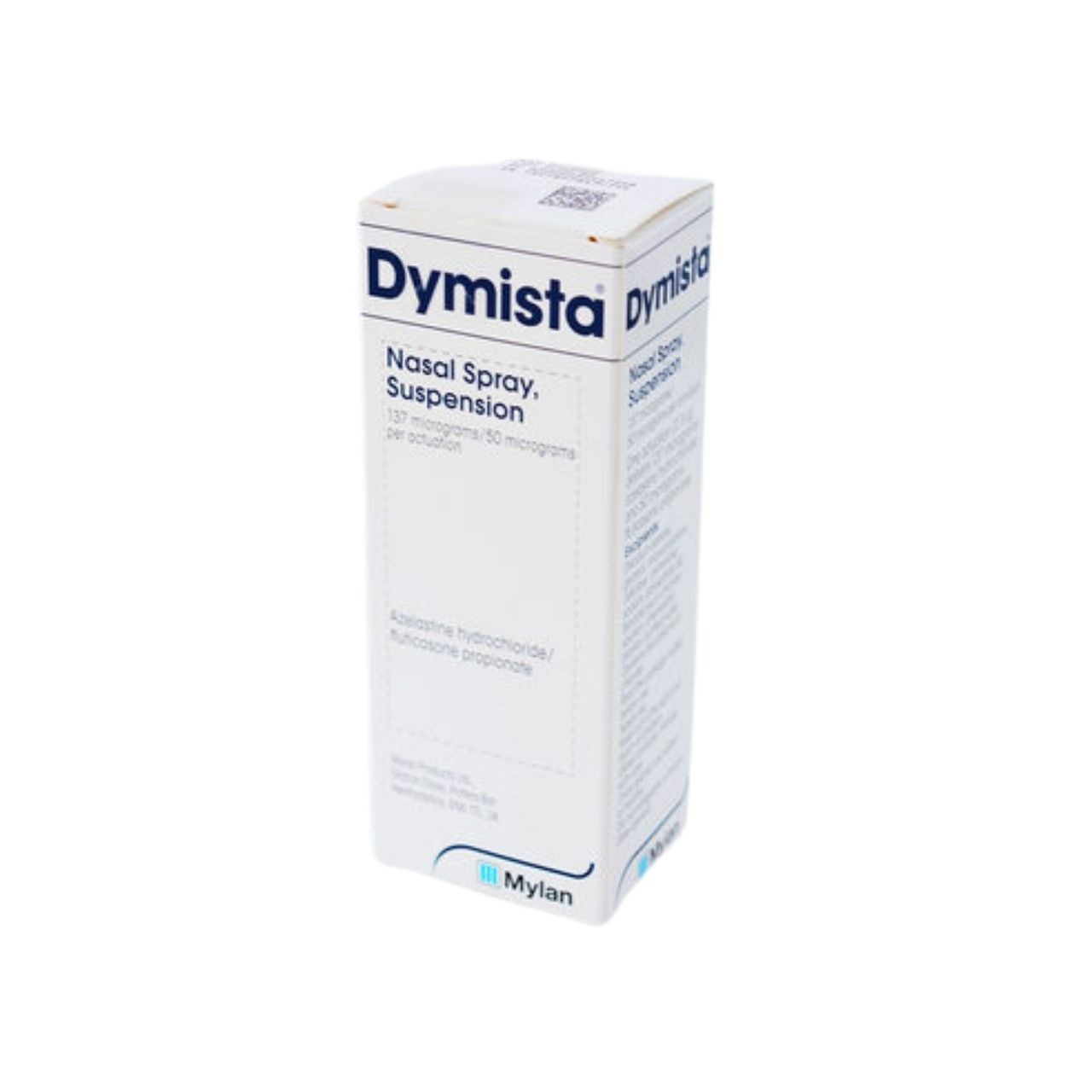
Dymista Nasal Spray

£20.99

Dymista nasal spray combines an antihistamine and a steroid to relieve moderate to severe hay fever or year-round nasal allergies when a single spray is not enough.

✓ Azelastine and fluticasone in one spray
✓ 23g bottle with 120 sprays
✓ Online assessment before supply

Start Consultation

icon-1

Type of medicine

Combination antihistamine and corticosteroid nasal spray used to treat allergic rhinitis, including hay fever and year-round allergies.

icon-2

Active ingredients

Azelastine hydrochloride, an antihistamine that blocks histamine, and fluticasone propionate, a corticosteroid that reduces inflammation in the nasal passages.

icon-3

Effective within

Some symptom relief may begin within 30 minutes, with full benefit developing over several days of regular use.

icon-4

Works by

Blocks the effects of histamine and reduces inflammation in the nasal lining, helping to relieve congestion, sneezing, itching and a runny nose.

icon-5

Side effects

Common side effects may include a bitter taste, nosebleeds, nasal irritation, headache or mild drowsiness.

icon-6

Not suitable for

Not suitable for individuals with a known allergy to azelastine, fluticasone or any of the ingredients, and caution is advised in those with recent nasal surgery, untreated infections or certain eye conditions such as glaucoma.

Dymista for hay fever and year-round allergies

A blocked, runny or itchy nose can disrupt your day beyond the pollen season. Dymista treats seasonal and perennial allergic rhinitis when an antihistamine or steroid nasal spray alone is not considered sufficient.

What is in the bottle?

Each spray delivers azelastine hydrochloride 137 micrograms and fluticasone propionate 50 micrograms. The 23g bottle provides 120 sprays. Check the price above before starting your assessment.

Is Dymista suitable for you?

This prescription formulation is licensed from age 12; eligibility for our online service is checked separately. Tell your prescriber about your symptoms, current medicines and sprays you have already tried.

Ryaltris or Dymista?

Both combine an antihistamine with a steroid, but their ingredients and dosing differ. You can view Ryaltris nasal spray and discuss the choice in your assessment. Do not use both together unless your prescriber specifically advises it.

Getting the most from treatment

Use Dymista regularly as prescribed and follow the leaflet technique. Our hay fever treatment range includes other options to discuss if symptoms remain troublesome.
How should I take Dymista Nasal Spray?

Dymista Nasal Spray should be used exactly as directed by your healthcare professional or according to the instructions in the patient information leaflet. It is usually sprayed into each nostril twice daily, once in the morning and once in the evening, unless advised otherwise.

Before first use, shake the bottle well and prime the spray by pressing down several times until a fine mist appears. Gently blow your nose to clear it, then keep your head slightly tilted forward. Insert the nozzle into one nostril, close the other nostril with your finger and press down to release the spray while breathing in gently. Repeat in the other nostril if required.

Avoid spraying into your eyes. After use, wipe the nozzle clean and replace the cap securely. Use Dymista regularly for best results and do not exceed the recommended dose. If you miss a dose, take it as soon as you remember, but do not double the dose to make up for a missed one.

What ingredients are in Dymista Nasal Spray?

Dymista Nasal Spray contains two active ingredients: azelastine hydrochloride, an antihistamine that helps block the effects of histamine, and fluticasone propionate, a corticosteroid that reduces inflammation in the nasal passages.

In addition to the active ingredients, Dymista contains inactive components that help preserve and stabilise the solution. These may include substances such as microcrystalline cellulose, carboxymethylcellulose sodium, edetate disodium, glycerol, benzalkonium chloride, polysorbate 80 and purified water.

Always check the patient information leaflet supplied with your product for a full and accurate list of ingredients, especially if you have allergies or sensitivities. If you have any concerns, speak to your pharmacist before using Dymista.

The inactive ingredients are Carmellose sodium, Phenylethyl Alcohol, Microcrystalline cellulose, Disodium edetate, Glycerol, Benzalkonium chloride, Purified water Polysorbate 80.

Warnings and precautions

Dymista Nasal Spray may not be suitable for everyone. Speak to a healthcare professional before using it if you have recently had nasal surgery or injury, frequent nosebleeds, untreated nasal infections, or if you are taking other steroid medicines. Caution is also advised if you have tuberculosis, glaucoma, cataracts or any ongoing infection.

Because Dymista contains a corticosteroid, prolonged or excessive use may increase the risk of side effects. Always use the lowest effective dose and follow the instructions provided. If you experience persistent nosebleeds, vision changes, severe nasal pain or signs of an allergic reaction such as swelling or difficulty breathing, seek medical advice promptly.

If you are pregnant, breastfeeding or have any underlying medical conditions, consult your pharmacist or GP before starting treatment.

What are the side effects of Dymista Nasal Spray?

Dymista Nasal Spray may cause side effects, although many people use it without significant problems. Common side effects can include a bitter taste in the mouth, nosebleeds, nasal irritation, headache or mild drowsiness. These effects are usually temporary and improve with continued use.

Less commonly, some people may experience sore throat, dry mouth or changes in smell. Rare but more serious side effects can include severe allergic reactions, persistent nosebleeds or vision changes. If you experience swelling of the face or throat, difficulty breathing, or any severe or unusual symptoms, seek medical advice promptly.

Always use Dymista as directed and consult a healthcare professional before starting or stopping treatment to ensure it is safe and suitable for your individual health needs.

How do I store Dymista Nasal Spray?

Store Dymista Nasal Spray at room temperature and keep it away from direct heat and sunlight. Do not freeze the spray. Always keep the bottle upright and replace the cap securely after each use to maintain cleanliness and protect the nozzle.

Keep Dymista out of sight and reach of children. Do not use it after the expiry date shown on the packaging. If you notice any changes in the appearance of the spray or have questions about storage, speak to your pharmacist for advice.

In many cases, Dymista provides comprehensive relief on its own because it combines an antihistamine and a corticosteroid. You should speak to a pharmacist or GP before adding other antihistamines or steroid treatments.

Because it contains an antihistamine, a small number of people may feel mildly drowsy. If this happens, avoid driving or operating machinery until you know how it affects you.

Some people notice relief within 30 minutes, particularly for sneezing and itching. However, full benefit may take a few days of regular use, especially for congestion. Consistent use is important for best results.

Dymista is usually used as one spray in each nostril twice daily, once in the morning and once in the evening, unless advised otherwise by your healthcare professional. Always follow the instructions provided.

Dymista 137 micrograms/50 micrograms nasal spray is licensed for adults and adolescents aged 12 and over. It is not recommended below age 12. Eligibility for this online service is assessed separately; contact a pharmacist or GP for advice about a child.

If your symptoms do not improve after several days of proper use, or if they worsen, consult your pharmacist or GP. Your treatment plan may need to be reviewed to ensure you are receiving the most appropriate care.