

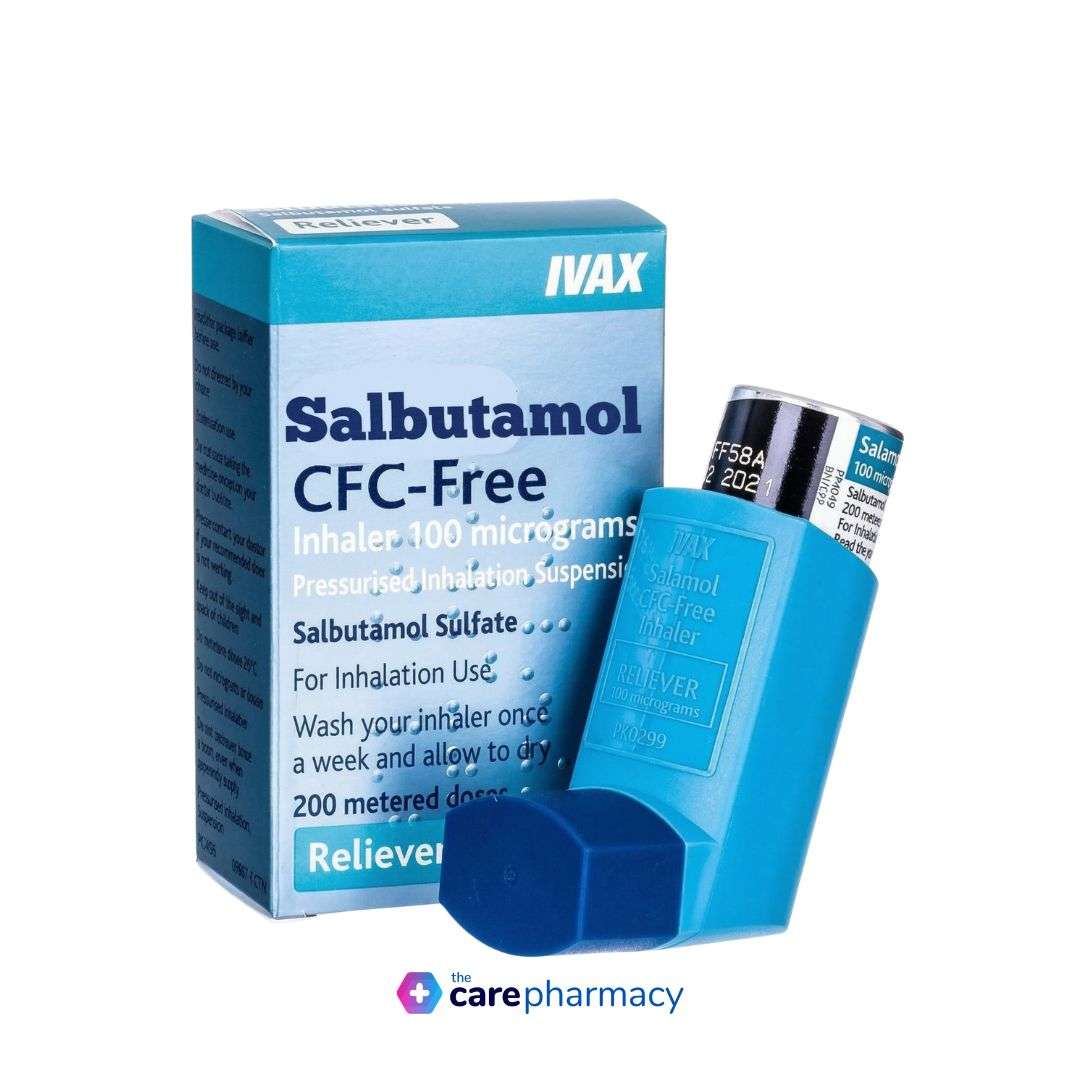
Salbutamol 100 micrograms per dose inhaler

£6.99

Salbutamol is a fast-acting reliever inhaler for wheezing, breathlessness and chest tightness. Each puff delivers 100 micrograms. If you already use salbutamol, a UK prescriber can review your request for a replacement inhaler.

Start Consultation

icon-1

Type of medicine

Reliever inhaler (bronchodilator) used to ease breathing in asthma and other respiratory conditions.

icon-2

Active Ingredient

Salbutamol – a fast-acting beta-2 agonist that relaxes airway muscles.

icon-3

Effective within

Starts working within 5 to 15 minutes to relieve breathing difficulties.

icon-4

Not Suitable For

People allergic to salbutamol or other ingredients in the inhaler; consult a healthcare professional if you have heart problems or high blood pressure.

icon-5

Side effects

Common side effects may include tremors, headache, dizziness, or a fast heartbeat.

icon-6

Works by

Relaxing the muscles in the airways, allowing air to flow more easily in and out of the lungs.

Request a replacement salbutamol inhaler online

Before starting your asthma consultation, check the name, strength and device on your current inhaler. Tell the prescriber when you last needed it, how often you use it in a typical week and which preventer or other inhalers you take. If you need a particular brand or a device that fits your spacer, tell the pharmacy before supply.

What does 100 micrograms per dose mean?

Each puff delivers 100 micrograms of salbutamol. It relaxes the muscles around the airways to relieve symptoms quickly. Follow the number of puffs in your prescription and your asthma action plan. If your device looks different from your previous one, ask a pharmacist to check your inhaler technique with you.

When to arrange an asthma review

If you need your blue reliever for asthma symptoms more than twice a week, contact your GP or asthma nurse for a review. Mention symptoms that wake you at night or relief that wears off sooner than usual. Keep using your prescribed preventer as directed.

If you are having an asthma attack, follow your asthma action plan. Call 999 if you are getting worse or your prescribed reliever is not helping after the maximum dose in your plan. Do not wait for an online order.

Read the NHS asthma advice or visit our asthma service for a routine treatment review.

Reviews

There are no reviews yet.

Be the first to review “Salbutamol 100 micrograms per dose inhaler”

How should I use Salbutamol?

Salbutamol should be used exactly as directed by your healthcare professional or according to the instructions in the patient information leaflet. It is typically used as a reliever inhaler to ease symptoms such as wheezing, shortness of breath, and chest tightness when they occur.

Shake the inhaler well before use, breathe out gently, then place the mouthpiece in your mouth and press down on the canister as you begin to breathe in slowly and deeply. Hold your breath for a few seconds before breathing out. If a second dose is needed, wait about 30 seconds before repeating.

Use Salbutamol as needed for symptom relief, but if you find you need it more frequently than usual, speak to your healthcare provider.

Each metered dose contains 100 micrograms of salbutamol, supplied as salbutamol sulfate. Check the leaflet for the full ingredients of the device dispensed. If you have an allergy or need a particular inhaler to use with a spacer, ask the pharmacy to check before supply.

Warnings and precautions

Salbutamol may not be suitable for everyone. Speak to a healthcare professional before using it if you have heart problems, high blood pressure, diabetes, or an overactive thyroid. Caution is also advised if you are taking other medications, particularly beta-blockers or other asthma treatments.

Using Salbutamol too frequently may indicate that your asthma or respiratory condition is not well controlled. If your symptoms worsen or you need to use your inhaler more often than usual, seek medical advice promptly.

If you experience chest pain, a rapid heartbeat, or worsening breathing difficulties after use, seek medical attention immediately. If you are pregnant or breastfeeding, consult your doctor or pharmacist before use.

What are the side effects of Salbutamol?

Salbutamol may cause side effects, although many people use it without significant problems. Common side effects can include trembling, headache, muscle cramps, or a fast heartbeat, especially shortly after use. These effects are usually mild and temporary.

Less commonly, some people may experience palpitations, anxiety, or dizziness. Rare but more serious side effects can include severe allergic reactions or worsening breathing immediately after use.

If you experience severe or unusual symptoms, such as chest pain or difficulty breathing, seek medical advice promptly. Always use Salbutamol as directed and consult a healthcare professional if you have concerns.

How do I store Salbutamol?

Store your Salbutamol inhaler at room temperature in a cool, dry place, away from direct heat and sunlight. Do not expose it to high temperatures or puncture the canister.

Keep out of sight and reach of children and do not use after the expiry date printed on the packaging. If the inhaler is damaged or not working properly, speak to your pharmacist for advice.

Salbutamol usually starts working within 5 to 10 minutes after use. You should feel your breathing ease and symptoms like wheezing or chest tightness improve quickly.
You can use it when needed to relieve symptoms, but you shouldn’t exceed 4 puffs at one time or 8 puffs in 24 hours. Always follow your doctor's advice on dosage.
It’s intended for occasional relief of sudden symptoms. If you need it more than 3 times a week, speak to your GP—your condition may not be well controlled and a preventer inhaler might be needed.
Yes, Salbutamol is often used alongside preventer inhalers like steroid inhalers or long-acting bronchodilators. However, always check with your GP or pharmacist to make sure your treatment plan is safe and effective.
Yes, Salbutamol is safe for children, but the dosage and type of inhaler may differ. Always use it exactly as prescribed by a healthcare professional.