Skinoren for Acne Marks: Dark Marks, Spots and Scars
Skinoren for acne marks: understand dark marks, spots and scars, and find out when to ask about acne treatment with The Care Pharmacy.
If you have been working your way through every acne cream on the pharmacy shelf without getting the results you need, you are not failing — you are simply using the wrong tools for the job. Over-the-counter acne creams are formulated for mild, surface-level acne, and whilst ingredients like benzoyl peroxide and salicylic acid can be genuinely helpful for minor breakouts, they are simply not strong enough for moderate-to-severe inflammatory acne, deep cystic lesions, or persistent breakouts that have been present for months or years. Prescription acne creams operate on an entirely different clinical level — combining active ingredients at concentrations not available over the counter, targeting multiple mechanisms of acne simultaneously, and delivering results that most patients have never experienced from anything they have tried before. The difference between an OTC acne cream and a prescription-strength treatment is not marginal; for many patients, it is the difference between managed skin and clear skin. Our clinically led prescribing team is here to help patients across the UK access the prescription acne treatments they need through a free, confidential online process that requires no in-person appointment.
Whether you have a question or are ready to get started, we are here. Get in touch with our team, or complete our online consultation to explore which prescription acne treatments may be right for you.
Quick Answer
The most clinically effective prescription acne creams currently available in the UK combine two or more active ingredients to target multiple mechanisms of acne simultaneously. Epiduo (adapalene 0.1% and benzoyl peroxide 2.5%) combines a third-generation retinoid with an antibacterial agent to address comedone formation, bacterial load, and inflammation in a single once-daily application. Duac (clindamycin 1% and benzoyl peroxide 5%) combines a topical antibiotic with benzoyl peroxide to maximise antibacterial efficacy while reducing the risk of antibiotic resistance. Single-ingredient prescription options including topical tretinoin and topical clindamycin also have strong evidence bases, though combination products are generally preferred in current UK clinical guidance. All prescription acne creams require a clinical assessment before they can be dispensed, which is available quickly and confidentially through our online consultation service.
Before exploring what prescription acne creams can do, it is worth understanding why OTC options so frequently disappoint — particularly for patients who have been trying them consistently for months without meaningful improvement.
Over-the-counter acne creams are regulated to contain active ingredients at concentrations that are considered safe for self-administration without clinical supervision. This is a reasonable regulatory framework, but it means that the concentrations available without prescription are necessarily more conservative than those used in clinical practice. Benzoyl peroxide, for example, is available OTC at concentrations up to 10%, but the evidence does not support higher concentrations being more effective than 2.5–5% — the issue with OTC products is not primarily concentration, but mechanism.
The more fundamental limitation of OTC acne creams is that they typically address only one aspect of the acne process. A benzoyl peroxide wash treats bacterial load. A salicylic acid toner addresses comedone formation. But moderate-to-severe acne involves four interconnected mechanisms simultaneously — excess sebum, follicular blockage, bacterial proliferation, and inflammation — and addressing only one while ignoring the others produces, at best, partial improvement.
The patients who get the most from OTC acne products are typically those with:
For everyone else — those with moderate-to-severe inflammatory acne, deep cystic lesions, widespread breakouts, or acne that has been present and unresponsive for more than three months — prescription treatment is not simply a stronger version of the same thing. It is a fundamentally different clinical intervention. Get in touch with our team if you recognise this in your own experience.
Effective prescription acne treatment is built around a thorough understanding of the four core mechanisms that drive acne development. Treatments that address multiple mechanisms simultaneously produce significantly better outcomes than those targeting only one.
The clinical implication of this four-mechanism model is clear: the most effective prescription acne creams are those that address at least two of these processes simultaneously. This is precisely why fixed-dose combination products such as Epiduo and Duac have become the preferred first-line prescription option in current UK clinical guidance.
The following prescription topical treatments represent the most clinically effective options currently available for moderate-to-severe acne in the UK, covering both combination products and single-ingredient options for patients who require a more tailored approach.
Epiduo Gel (adapalene 0.1% + benzoyl peroxide 2.5%)
Epiduo is a fixed-dose combination gel that addresses three of the four core acne mechanisms simultaneously. Adapalene — a third-generation retinoid — normalises follicular cell turnover and prevents comedone formation whilst providing direct anti-inflammatory activity. Benzoyl peroxide provides potent antibacterial activity against C. acnes and critically prevents the antibiotic resistance that can develop with antibiotic monotherapy. Applied once daily in the evening, Epiduo has been shown in clinical trials to be significantly more effective than either adapalene or benzoyl peroxide used alone.
Epiduo is the treatment of choice for patients with mixed acne — both comedonal and inflammatory components — and for those who have previously tried OTC retinols or benzoyl peroxide without adequate improvement. It is well tolerated by most skin types, though an initial period of dryness, peeling, and irritation during the first two to four weeks is common and usually settles as the skin adapts.
Duac Gel (clindamycin 1% + benzoyl peroxide 5%)
Duac is a once-daily combination gel that pairs the topical antibiotic clindamycin with benzoyl peroxide. Clindamycin is highly effective at reducing C. acnes bacterial load and the local inflammation it produces. The inclusion of benzoyl peroxide is clinically essential — without it, topical antibiotic monotherapy carries a significant risk of driving antibiotic resistance in C. acnes over time, which is a recognised and growing concern in UK acne management. Together, the combination is significantly more effective than either ingredient alone and is the most commonly prescribed topical option for predominantly inflammatory acne with papules and pustules.
Duac is particularly well suited to patients who have inflammatory acne without a significant comedonal component, and to those who have found the retinoid component of Epiduo too irritating during the initial adaptation period.
Topical tretinoin (various brands)
Tretinoin is the most potent topical retinoid available on prescription in the UK, significantly more effective than OTC retinol due to its direct action as retinoic acid rather than requiring conversion in the skin. It is highly effective for both comedonal and inflammatory acne, accelerating cell turnover, preventing follicular plugging, and providing meaningful anti-inflammatory activity. It is available in concentrations from 0.01% to 0.1%, with lower concentrations typically recommended as a starting point for patients with sensitive skin.
Tretinoin requires a careful introduction — initial irritation, peeling, and a purging phase during which acne temporarily worsens before improving is expected and does not indicate treatment failure. Results are typically seen at twelve weeks, with significant improvement continuing up to six months of consistent use.
Topical azelaic acid (prescription strength)
Azelaic acid at prescription concentration (20%) offers a clinically meaningful option for patients with acne who also experience post-inflammatory hyperpigmentation, rosacea-like symptoms, or significant skin sensitivity. It has antibacterial activity against C. acnes, normalises follicular cell turnover, and has direct anti-inflammatory and skin-brightening properties — making it particularly valuable for patients with darker skin tones in whom post-acne pigmentation is a primary concern.
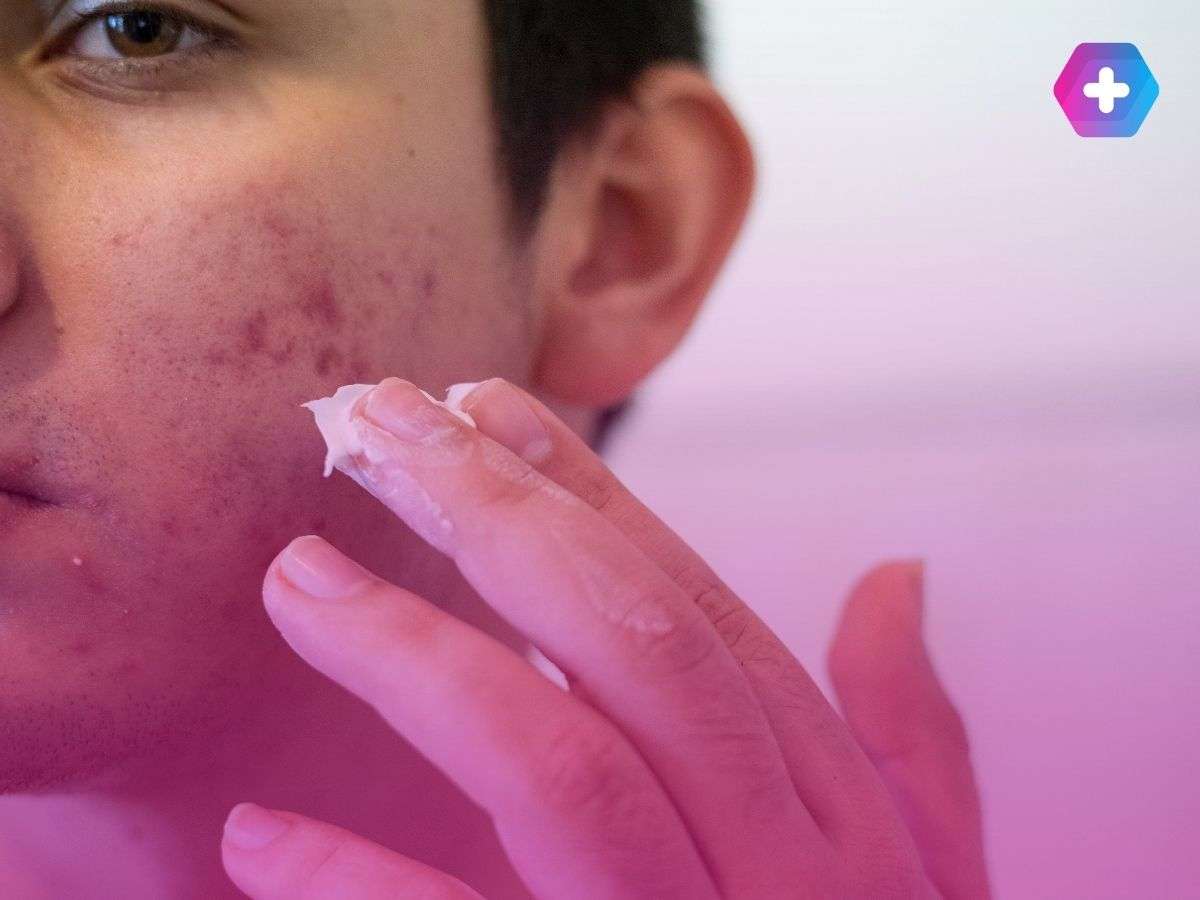
Here is a clear side-by-side overview of the most commonly prescribed topical acne treatments across the key clinical criteria, so you can see exactly how each option measures up:
A prescription acne cream is most effective when it forms part of a well-constructed routine rather than being used in isolation. The following framework reflects how our prescribing team approaches topical acne treatment in clinical practice.
Morning routine:
Evening routine:
What not to layer with your prescription acne cream:
If you need guidance on building the right routine for your specific skin type and acne presentation, our prescribing team can advise as part of your consultation. Complete our online consultation to get started.
One of the most common reasons prescription acne treatments fail is not because they do not work — it is because patients stop using them before they have had the chance to work. Setting realistic expectations at the outset is one of the most clinically important things a prescriber can do, and one of the most valuable things this guide can offer.
The first two weeks: Initial dryness, peeling, and mild irritation are expected with most prescription topical treatments, particularly those containing retinoids or benzoyl peroxide. This is a sign that the treatment is active and the skin is adapting — not a reason to stop. A purging phase — during which existing blocked pores come to the surface more rapidly than usual — may temporarily increase breakout frequency. This is normal and typically resolves within four weeks.
Weeks two to eight: The adaptation phase typically settles within two to four weeks, and most patients begin to notice a reduction in new spot formation during this period. Existing spots continue to resolve, redness begins to reduce, and overall skin texture starts to improve. Results are building during this phase even when day-to-day changes are difficult to see.
Weeks eight to twelve: This is when most patients notice the most significant visible improvement — a meaningful reduction in active spots, less inflammation, and clearer skin overall. This is also the point at which a clinical review is typically scheduled to assess response and adjust treatment if needed.
Beyond twelve weeks: Prescription acne creams are typically continued for as long as clinically appropriate under regular review. Some patients use topical retinoids as part of a long-term maintenance routine even after acne has cleared, due to their additional benefits for skin texture, pore size, and early signs of ageing.
Getting the most from a prescription acne cream is about combining clinical treatment with the right supporting habits. The following ten strategies are grounded in clinical evidence and drawn from our prescribing team’s day-to-day experience with acne patients:
Here are the questions patients most commonly ask our prescribing team about prescription acne creams:
Among topical options, tretinoin at 0.1% is considered the most potent single-ingredient prescription acne cream available in the UK, offering significantly greater efficacy than OTC retinol products. For combination treatments, Epiduo (adapalene 0.1% and benzoyl peroxide 2.5%) is widely regarded as the most clinically effective first-line prescription topical option due to its dual-mechanism action addressing both comedonal and inflammatory acne simultaneously.
Within four to eight weeks of consistent daily use, most patients notice that new breakouts are becoming less frequent, with the clearest and most significant skin improvement typically visible by week twelve. Continuing treatment beyond twelve weeks — rather than stopping when initial improvement is seen — is important for achieving and maintaining the full clinical benefit.
Most prescription topical acne treatments — including retinoids (adapalene, tretinoin) and products containing benzoyl peroxide or clindamycin — are not recommended during pregnancy and should be stopped as soon as pregnancy is confirmed or planned. Azelaic acid is generally considered a lower-risk option during pregnancy, but should only be used under medical supervision and following a clinical assessment of individual circumstances.
Yes — particularly those containing retinoids such as adapalene or tretinoin, which accelerate cell turnover and bring existing blocked pores to the surface more rapidly than usual. This purging phase — during which breakouts may temporarily increase in frequency — typically lasts two to four weeks and is a normal and expected part of treatment, not a sign that the product is not suitable for your skin.
Yes — most prescription topical acne treatments are suitable for use on the back and chest as well as the face, though the consistency of application across large surface areas is a practical challenge that sometimes makes an oral antibiotic a more convenient complementary option for widespread truncal acne. Discuss the most practical approach for your specific presentation with your prescriber during consultation.
No — prescription acne creams are available through a GPhC-registered online pharmacy following a clinical assessment by a qualified independent prescriber, without the need for a GP appointment or referral. Our online consultation process is quick, confidential, and clinically rigorous, and prescriptions are issued and dispatched promptly following assessment.
The path to clearer skin starts with one thing: getting the right diagnosis and matching it with a treatment built for your specific acne type. If you have been working through every OTC acne cream available without the results you deserve, the most likely explanation is not that nothing will work for your skin — it is that you have not yet had access to the treatments that are actually effective for your presentation.
Prescription acne creams are not just stronger versions of what is available over the counter. They operate on a fundamentally different clinical level, targeting multiple acne mechanisms simultaneously and delivering outcomes that OTC products simply cannot match for moderate-to-severe presentations. With the right prescription, the right supporting routine, and consistent use over the recommended treatment period, clear skin is a realistic and achievable goal.
Finding the right clinical approach for your acne is exactly what our prescribing team does every day, supporting patients across the UK through a simple and confidential online process. Accessing the right prescription treatment has never been more straightforward — a confidential online consultation is all it takes to get started.
Reach out to our team today, or complete our online consultation to explore which prescription acne treatments are right for you.
This article was written by Pharmacy Mentor and clinically reviewed by Mohammed Ismail Lakhi, MPharm, MRPharm, Superintendent Pharmacist at The Care Pharmacy. Mohammed is registered with the General Pharmaceutical Council (GPhC registration number 2072815) and leads clinical governance across The Care Pharmacy’s weight management services.
Last reviewed: June 2026
Disclaimer: This article is for general information only and is not a substitute for individual medical advice. Always consult a qualified prescriber before starting any prescription weight loss treatment.

Medically reviewed by
Superintendent Pharmacist


Skinoren for acne marks: understand dark marks, spots and scars, and find out when to ask about acne treatment with The Care Pharmacy.
Back acne treatment: learn when creams or tablets may help, how to manage hard-to-reach spots and when to seek advice with The Care Pharmacy.
Compare Epiduo vs Duac, including ingredients, irritation and treatment reviews. Get help choosing suitable acne care with The Care Pharmacy.
Epiduo vs Differin explained: compare ingredients, irritation and daily use. Explore prescription acne support from The Care Pharmacy.
The terms blemish-prone skin and acne are often used interchangeably, but they are not the same thing — and treating them as if they are is one of the most common reasons people spend months cycling through products that never quite deliver the results they need. Blemish-prone skin is a broad description of skin that […]
Lymecycline is an oral tetracycline antibiotic prescribed for moderate-to-severe acne that has not responded adequately to topical treatments alone, and it is one of the most commonly issued acne prescriptions in the UK. It works by inhibiting the growth of Cutibacterium acnes — the bacteria responsible for inflammatory acne — and by reducing the skin […]