Eczema Behind the Ears: Causes and Treatment Assessment
Itchy, cracked or flaky skin behind the ears needs careful assessment before choosing prescription eczema treatment.
Pollen season is difficult enough with hay fever alone. When you have eczema too, it brings an extra layer of misery that most people around you simply do not understand. This is not a coincidence. Both conditions share the same underlying immune pathway: an overactive IgE-mediated hypersensitivity response that causes the immune system to react disproportionately to harmless environmental triggers, including pollen, dust mites, and pet dander. When pollen levels rise and hay fever symptoms flare, the immune system shifts into a heightened state of alert that directly worsens eczema — producing more frequent, more intense, and harder-to-manage skin flares that can persist throughout the entire spring and summer season. Once you understand the mechanism behind it, managing both conditions more effectively becomes far more achievable and the seasonal flare cycle far less inevitable. Our prescribing team works with patients managing both hay fever and eczema every day, and we are here to help you find a joined-up approach that addresses both conditions effectively.
Before we explore the detail, get in touch with our team if you have questions, or complete our online consultation to find out which treatments may be right for you.
Quick Answer
Yes — hay fever does trigger eczema flare-ups, and the connection is rooted in the shared immune pathway that drives both conditions. People with eczema are significantly more likely to have hay fever, asthma, and food allergies — a cluster known as the atopic triad — because all of these conditions arise from the same underlying predisposition to IgE-mediated hypersensitivity. When pollen enters the body during hay fever season, it triggers an immune response that elevates IgE antibodies, activates mast cells, and promotes systemic inflammation — all of which worsen the skin barrier dysfunction at the heart of eczema. This means that managing hay fever effectively is not just about relieving nasal and eye symptoms; it is also one of the most direct and underappreciated ways to reduce the frequency and severity of eczema flares. Treating both conditions simultaneously, with appropriate clinical support, produces significantly better outcomes than addressing each in isolation.
The question of does hay fever trigger eczema is one that many patients intuitively suspect the answer to — but rarely hear confirmed clearly by clinical content. The answer is yes, and the mechanisms through which it does so are worth understanding in detail.
Direct skin contact with pollen
Pollen particles that land on the skin can directly trigger an inflammatory response in atopic individuals. The outer coating of pollen grains contains proteins and lipids that can penetrate the already-compromised eczema skin barrier, stimulating local IgE-mediated reactions and mast cell activation in the skin. This is why eczema patients often notice that exposed skin — particularly the face, neck, arms, and hands — flares more severely during high pollen periods, even if they are staying indoors for much of the day.
Systemic immune activation
Even without direct skin contact, the systemic immune activation triggered by inhaled pollen raises overall IgE levels and promotes a pro-inflammatory state throughout the body. Elevated levels of circulating inflammatory cytokines — including IL-4 and IL-13 — directly impair filaggrin production, the protein essential for maintaining the skin’s protective barrier. A weakened barrier loses moisture more rapidly and becomes more permeable to further allergens and irritants, creating a self-reinforcing cycle of inflammation and barrier damage.
Histamine release and itch amplification
The histamine released during an allergic response to pollen does not stay localised to the airways and eyes. Circulating histamine directly activates itch receptors (pruriceptors) in the skin, amplifying the itch that eczema patients already experience — sometimes dramatically. For many patients, the itch during hay fever season is qualitatively different from their usual eczema itch: more intense, more widespread, and less responsive to their normal management strategies.
The scratch-barrier damage cycle
Increased itch leads to increased scratching, which directly damages the skin barrier, introduces bacteria, and triggers further inflammation — accelerating the eczema flare cycle at exactly the time of year when the immune system is already under the greatest allergic load. This is one of the key reasons why hay fever eczema flare-ups can be so much more severe and prolonged than flares at other times of year.
If you are experiencing worsening eczema during pollen season that is not responding to your usual management, get in touch with our team for clinical guidance.
Allergic eczema symptoms — meaning eczema that is being triggered or worsened by an allergic response — can overlap significantly with standard eczema, but there are some distinguishing features that suggest an allergic driver is involved.
Signs that your eczema may have a strong allergic component include:
It is worth noting that allergic eczema does not replace standard eczema management — emollients, appropriate topical steroids, and trigger avoidance remain the foundation of treatment. However, recognising the allergic component and addressing it — through antihistamines, hay fever treatment, and allergen reduction strategies — is an important additional layer that can significantly improve outcomes during pollen season.
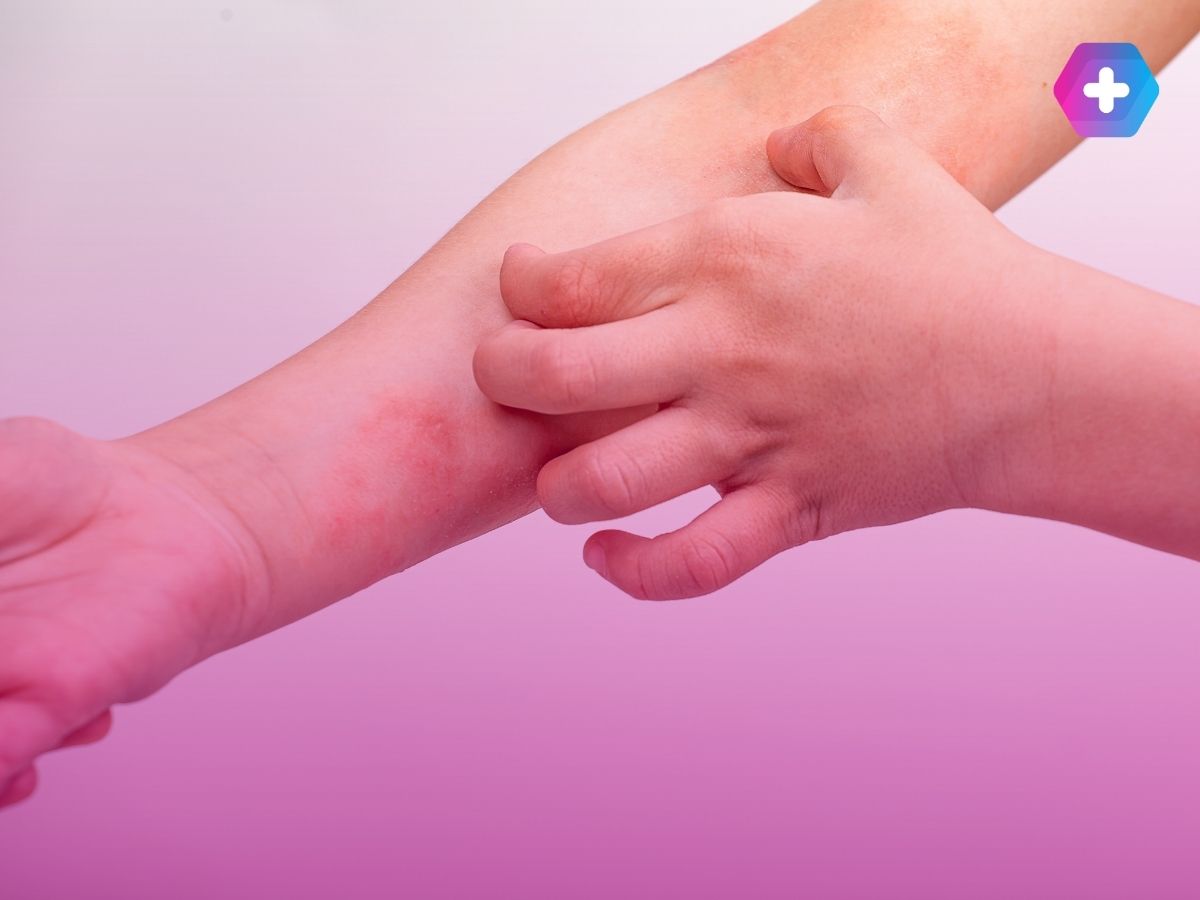
If you have eczema, the pattern of worsening skin every spring is probably something you have noticed for years without ever having it properly explained. The answer is multifactorial, but pollen is at the centre of it.
The UK pollen season broadly runs from late February through to September, with three main phases:
Beyond pollen itself, several other spring and summer factors compound eczema worsening during this period:
The table below shows how hay fever and eczema relate to each other across the most clinically relevant dimensions:
The most effective approach to managing both conditions simultaneously is one that addresses the shared immune pathway from multiple directions — reducing allergen exposure, controlling the systemic allergic response, and maintaining the skin barrier to reduce both eczema flares and further allergen sensitisation.
Reduce your allergen load
During pollen season, reducing your overall exposure to airborne allergens reduces the immune system’s total inflammatory burden — with direct benefits for both hay fever symptoms and eczema severity.
Treat hay fever proactively, not reactively
One of the most consistently overlooked strategies for reducing eczema during pollen season is treating hay fever thoroughly and early. Starting antihistamines and nasal steroid sprays before the pollen season begins — rather than waiting for symptoms to develop — reduces the overall IgE-mediated inflammatory load and can meaningfully reduce the frequency and severity of associated eczema flares.
Non-drowsy antihistamines such as cetirizine, loratadine, and fexofenadine are suitable for daily use throughout pollen season. For patients whose hay fever is not adequately controlled by antihistamines alone, adding an intranasal corticosteroid spray provides significantly better symptom control and is considered the gold-standard first-line treatment for moderate-to-severe allergic rhinitis.
Intensify your emollient routine during pollen season
The skin barrier is under increased pressure during spring and summer. Increasing emollient application frequency during high pollen periods — particularly after showering and after time spent outdoors — provides an additional protective layer that reduces both pollen penetration and moisture loss. Applying emollient before going outdoors can act as a physical barrier against airborne allergens landing directly on the skin.
Have a flare treatment plan ready
Despite best efforts, eczema flares during pollen season are common and should be anticipated rather than caught off guard. Having an appropriate topical corticosteroid prescribed and ready to use at the first sign of a flare allows for rapid treatment before it escalates — shorter, earlier courses of topical steroids are more effective and carry less risk than delayed treatment of a fully established flare.
If you are struggling to manage both conditions effectively during pollen season, complete our online consultation to discuss a comprehensive treatment plan with our prescribing team.
The following treatments are available through our pharmacy and are clinically appropriate for patients managing both hay fever and eczema simultaneously.
For eczema flares — Eumovate Cream (clobetasone butyrate 0.05%)
Eumovate Cream is a mild-to-moderate topical corticosteroid appropriate for managing eczema flares triggered or worsened by pollen season. Having Eumovate available and prescribed in advance of pollen season means you can begin treatment at the first sign of a flare — reducing the severity and duration of each episode. Eumovate is well tolerated on most body areas including sensitive skin zones, and is suitable for short-term use under clinical guidance.
For hay fever — antihistamines and nasal sprays
Effective hay fever treatment is one of the most direct routes to reducing eczema severity during pollen season. Our pharmacy offers access to prescription-strength hay fever treatments following a clinical consultation, including:
For patients whose hay fever and eczema both require clinical management, our prescribing team can address both conditions through a single confidential online consultation.
Managing two conditions simultaneously during the most challenging time of year requires a proactive and layered approach. Use the ten steps below to build a proactive pollen season plan that reduces flare frequency and keeps both conditions better managed:

From seasonal triggers to treatment timing, here are the questions our prescribing team hears most often from patients managing both hay fever and eczema:
Yes — even if you are spending most of your time indoors during pollen season, the systemic immune activation triggered by any pollen exposure can worsen eczema. Indoor pollen levels can also be surprisingly significant, particularly if windows are open or if pollen is brought indoors on clothing, hair, and pets.
A predictable annual pattern of eczema worsening — particularly in spring and early summer — is a strong indicator of pollen-driven allergic exacerbation, as the pollen season follows a consistent calendar each year. Identifying which pollen type is responsible for your seasonal flares (tree, grass, or weed) can help you time your hay fever treatment more precisely to get ahead of the trigger.
Non-sedating antihistamines taken daily during pollen season can help manage hay fever symptoms and reduce the histamine-driven itch component of eczema, making them a useful part of a combined management strategy. However, antihistamines alone are not sufficient for managing eczema — they should be used alongside, not instead of, emollients and appropriate topical treatments.
The relationship is bidirectional — eczema and hay fever worsen each other. The impaired skin barrier in eczema allows allergens to penetrate the skin more readily, driving further sensitisation and potentially increasing the severity of allergic responses to airborne allergens such as pollen. This is one of the reasons why maintaining a strong skin barrier with regular emollient use has benefits that extend beyond skin comfort alone.
Yes — co-occurrence of hay fever and eczema in children is very common, and the two conditions frequently develop together as part of the atopic march, where eczema in infancy is followed by the development of food allergies, hay fever, and asthma as the child grows. Children with both conditions benefit from integrated management that addresses both the skin barrier and the allergic response simultaneously.
Allergen immunotherapy — also known as desensitisation — is a treatment that gradually reduces the immune system’s sensitivity to specific allergens through repeated controlled exposure, and is available via specialist referral on the NHS for patients with severe allergic rhinitis. While the primary evidence base is for hay fever symptom reduction, some studies suggest that successful immunotherapy may also have beneficial effects on atopic eczema in sensitised individuals, though this remains an area of ongoing research.
The path to better skin during pollen season starts with one thing: understanding that hay fever and eczema are not two separate problems requiring two separate strategies. They are two expressions of the same immune dysregulation, and treating them together — with a proactive, clinically informed plan that addresses allergen exposure, controls the systemic inflammatory response, and maintains the skin barrier — produces significantly better outcomes than managing each in isolation.
You do not have to accept that every spring and summer means months of uncomfortable, reactive, difficult-to-manage skin. With the right clinical support and the right treatment plan in place before the season begins, it is entirely possible to move through pollen season with greater control and fewer flares.
At The Care Pharmacy, our pharmacist-led prescribing team supports patients managing both hay fever and eczema across the UK — with access to clinically appropriate treatments for both conditions through a single, confidential online process. Reach out to our team today, or complete our online consultation to explore which treatments for eczema and dermatitis and hay fever are right for you.
A mild-to-moderate topical corticosteroid for managing eczema flares triggered or worsened by pollen season. Having Eumovate prescribed and ready before the season begins allows for rapid treatment at the first sign of a flare.
Available following an online consultation at The Care Pharmacy.
Effective hay fever management is one of the most direct and underappreciated ways to reduce eczema severity during pollen season. Our prescribing team offers access to non-sedating antihistamines and intranasal corticosteroid sprays following a clinical consultation.
Available following an online consultation at The Care Pharmacy.
This article was written by Pharmacy Mentor and clinically reviewed by Mohammed Ismail Lakhi, MPharm, MRPharm, Superintendent Pharmacist at The Care Pharmacy. Mohammed is registered with the General Pharmaceutical Council (GPhC registration number 2072815) and leads clinical governance across The Care Pharmacy’s weight management services.
Last reviewed: May 2026
Disclaimer: This article is for general information only and is not a substitute for individual medical advice. Always consult a qualified prescriber before starting any prescription weight loss treatment.

Medically reviewed by
Superintendent Pharmacist


Itchy, cracked or flaky skin behind the ears needs careful assessment before choosing prescription eczema treatment.
Compare Betnovate prices for 0.1% cream. Our 30g tubes start at £15.99, plus delivery. Start consultation with The Care Pharmacy.
Compare Elocon prices for 0.1% cream. Our 30g tubes start at £14.48, plus delivery. Start consultation with The Care Pharmacy.
Compare Trimovate prices for 30g cream. Tubes at The Care Pharmacy start at £26.99, plus delivery. Start consultation to check suitability.
Trimovate for intertrigo: understand when this prescription cream may fit a skin-fold rash and start an eczema consultation with The Care Pharmacy.
Worried about infected eczema? Learn when to seek urgent care and ask The Care Pharmacy about suitable treatment.