
Quviviq Price Comparison UK (2026): Costs and Providers
Compare UK Quviviq 25mg and 50mg prices for 30 tablets, delivery charges, review costs and NHS versus private treatment.
Quviviq side effects guide
Most Quviviq side effects are described as mild to moderate. They still matter, because this is a prescription sleep medicine you take at night and have to live with the next morning. This guide explains what can happen, what it feels like, who needs extra care, and when to stop and ask for help.
Quviviq contains daridorexant. The UK Summary of Product Characteristics (SmPC) lists these as common side effects:
Less common effects include sleep paralysis, hallucinations, abnormal dreams, nightmares, sleepwalking and allergic reactions such as rash or hives.
Listed does not mean likely. Most people will not get most of these. It means the possibility should be discussed before you start, watched for once you do, and acted on if something interferes with your day. Because you take Quviviq at bedtime, morning alertness, driving, alcohol, other sedating medicines and your mental health history all come into the decision.
Care Pharmacy treats Quviviq as an assessment led option, not an automatic order. Start with the insomnia treatment pathway, read the Quviviq information page, and use the insomnia consultation when you can answer the health questions accurately.
A headache may be manageable. Dizziness or sleepiness is a different matter if you drive, work shifts or care for someone overnight.
The SmPC says to avoid driving and other risky activities unless you feel fully alert, especially early in treatment.
NICE recommends checking within three months and stopping if it is not helping.
The SmPC uses clinical words. In plain English:
A mild headache on night one is different from a headache that keeps coming back. Feeling a bit slow first thing is different from being too drowsy to drive or look after someone. If a side effect changes what you can safely do, that is your cue to ask for advice.
Do not change the dose, take extra tablets, add another sleep aid or use alcohol to get through it. If treatment feels wrong, pause and ask a clinician. The UK SmPC says treatment should be as short as possible, with a check within three months and regularly after that.
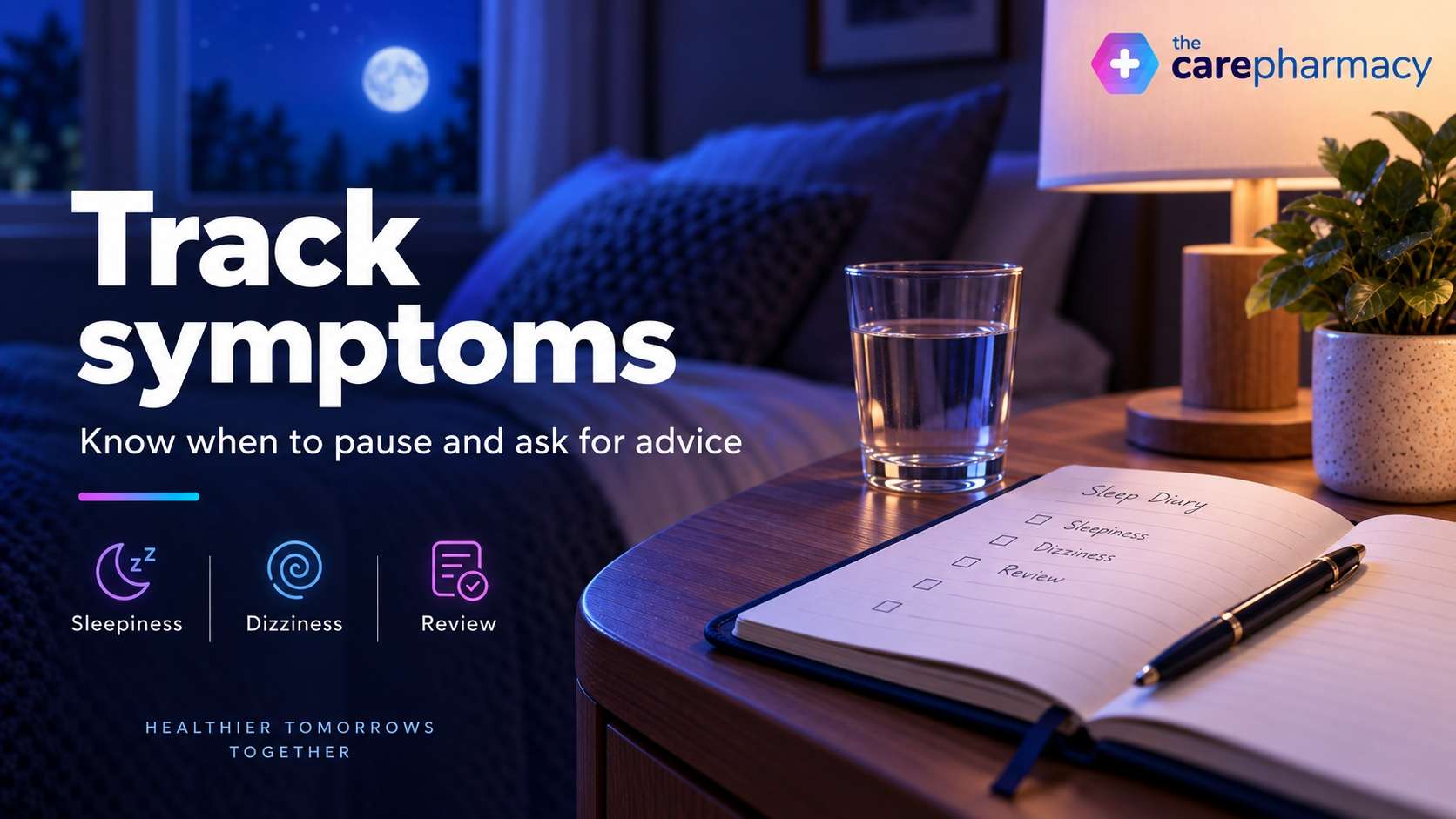
Each morning, jot down: when you took the tablet, when you went to bed, when the symptom started, how long it lasted, and whether it affected what you could do. That beats a vague memory at review. It also shows whether the real cause was alcohol, a late meal, another medicine, a disrupted routine or a separate illness rather than Quviviq.
The SmPC lists these as uncommon. They mostly happen in the first few weeks:
These can be frightening even though they are uncommon. If they happen, seek medical advice rather than waiting for your next routine review.
A rash or hives is a reason to contact a clinician promptly. Swelling of the face or throat, wheezing, collapse or severe breathing difficulty needs emergency help. Call 999.
That includes behaviour you cannot remember, injury during the night, worsening low mood, thoughts of harming yourself, breathing difficulty, collapse, or anything that makes someone close to you worried about your safety. Use urgent medical support, not an online message thread.
Quviviq is not a stronger version of a pharmacy sleep aid. It is a prescription only medicine for adults with long term insomnia. NICE recommends it where symptoms happen at least three nights a week, have lasted at least three months, considerably affect your days, and CBT for insomnia has not worked, is not available or is not suitable.
It is also not recommended in severe liver impairment. The SmPC includes cautions around depression and suicidal thoughts, symptoms similar to mild cataplexy (brief muscle weakness), and driving or operating machinery unless fully alert.
If those questions feel detailed, good. That is what safe prescribing looks like.
Older adults and anyone with overnight caring duties need a more careful conversation about falls, alertness and morning responsibilities. A medicine that looks fine on paper can still be a poor fit if you cannot get seven hours in bed, need to drive early, or get woken unpredictably in the night.
This table is a practical signpost. It does not replace the patient leaflet, your prescriber’s advice, or urgent care when symptoms are severe.
| What you notice | Why it matters | What to do |
|---|---|---|
| Mild headache, nausea or tiredness | Common and often settles, but severity and persistence matter. | Note the timing. Ask for advice if it persists, worsens or affects your day. |
| Next day sleepiness or dizziness | Affects driving, machinery, work, falls risk and caring. | Do not drive until fully alert. Contact a clinician if it keeps happening. Suitability may need review. |
| Sleep paralysis, hallucinations or sleepwalking | Uncommon but important, especially early on. | Seek prompt medical advice. Do not dismiss repeated episodes. The prescriber may reassess treatment. |
| Severe allergic reaction or thoughts of self harm | Urgent safety issues. | Use emergency or crisis services now. Do not wait for an online reply. |
At review, bring the detail rather than a yes or no. Mention missed doses, alcohol, other medicines, naps, night shifts, morning driving, and whether symptoms left you less steady, less alert or less able to function. Small details change the advice.
Not every symptom needs emergency care. Some should make you stop and ask before the next dose. The test is simple: does the symptom change your safety, your mood, your breathing, your behaviour at night, or your ability to function the next day?
Sleepy, dizzy, slow to react or unsteady in the morning? Do not drive or use machinery until you feel fully alert. Tell the prescriber if it happens more than once, if you cannot leave enough time between the tablet and driving, or if your job involves safety critical work.
Low mood, worsening anxiety, unusual thoughts or thoughts of self harm should be taken seriously. The SmPC includes cautions around depression and suicidal thoughts with hypnotic medicines. If you feel at risk of harming yourself, get urgent help now rather than waiting for a pharmacy reply.
Sleepwalking, hallucinations, sleep paralysis or behaviour you cannot remember should be discussed promptly. Ask whoever shares your home whether they noticed anything. People often do not remember night time events accurately.
You should know how to contact the service, what to include, when to use urgent care instead, and whether a symptom means treatment should be reviewed before you continue. If any of that is unclear, ask before taking another dose.
Insomnia can have more than one cause. NICE committee discussion notes that sleep apnoea and restless legs can look like insomnia. A prescriber also needs to understand pain, anxiety, depression, menopause symptoms, alcohol, shift work, current medicines and previous sleep treatment before deciding whether Quviviq is appropriate.
This is not admin. It stops someone with an untreated condition being given a sleep medicine that does not fix the real problem. It also picks out people who need GP review, CBT for insomnia, a medicine review, urgent support or a different route.
The GPhC advises anyone using an online service to check registration, answer health questions honestly, understand options and side effects, and check aftercare. For Quviviq, aftercare means knowing who to contact, when to stop and seek advice, how review will happen, and how to report a suspected side effect through the MHRA Yellow Card scheme.
Before using any online service, check the pharmacy and its clinicians are registered, and that the site explains side effects, aftercare and what happens if treatment is not suitable. The MHRA authorised online seller register shows whether a website is allowed to sell medicines online.
Avoid any service that:
Proper assessment is part of the treatment, not a barrier to it.
The UK SmPC lists headache, sleepiness, dizziness, nausea and fatigue as common. Not everyone gets them, and severity varies.
It can. The SmPC advises against driving, operating machinery or other risky activities unless you feel fully alert, especially in the first few days.
Yes. They are listed as uncommon and mostly happen in the first weeks. Seek medical advice if they occur, especially if episodes repeat, feel severe or affect your safety.
Ask your prescriber or pharmacist unless symptoms are urgent. Do not change the dose, combine sleep medicines, or drive if you are not fully alert.
Many early effects, including sleep paralysis and hallucinations, are reported mainly in the first weeks. If a symptom persists or affects daily life, it needs review rather than waiting it out.
Yes, through the MHRA Yellow Card scheme. Tell your prescriber or pharmacist as well.
If long term insomnia is affecting your daily life, The Care Pharmacy can review whether its insomnia pathway may be suitable for you. Any prescription decision depends on clinical assessment.

Medically reviewed by
Superintendent Pharmacist


Compare UK Quviviq 25mg and 50mg prices for 30 tablets, delivery charges, review costs and NHS versus private treatment.
Menopause insomnia disrupting your sleep? Explore treatment options and seek personalised help from The Care Pharmacy.
Quviviq reviews explained: explore sleep benefits, side effects and what to ask at an insomnia consultation with The Care Pharmacy.
Compare Quviviq vs melatonin, including suitability, safety and sleep reviews. Explore an insomnia assessment with The Care Pharmacy.
A UK guide to Quviviq dosage, explaining 25mg and 50mg strengths, dose selection, review and safe assessment.
A UK guide comparing Quviviq and zopiclone for insomnia, including treatment role, safety checks, review and assessment.