Eczema on Feet: Blisters, Footwear and Treatment Advice
An itchy foot rash may be eczema, fungal infection or contact dermatitis. Learn what to report and when diagnosis should come before a steroid cream.
Eczema and psoriasis can both leave skin itchy and scaly. Psoriasis often causes patches with a clearer edge. Eczema can leave skin dry, cracked or thickened. Because they can look alike, ask a clinician to check a new rash before choosing a treatment.
Eczema and psoriasis can both cause dry, itchy or scaly skin. Psoriasis often forms more clearly defined patches with scale, while eczema can be dry, cracked, thickened or inflamed. These are general patterns, not a reliable home diagnosis. An unfamiliar rash, changing symptoms or treatment that is not helping should be checked by a clinician.
You cannot catch either condition from another person. If your rash comes and goes, tell the clinician where it first appeared, how long each flare lasts and whether the skin changes between flares. A photograph from a bad day can help if the rash has settled by your appointment.
Where a rash appears, its surface and the symptoms around it can help a clinician. No single feature proves the diagnosis. In particular, itch does not rule psoriasis out, and scale does not rule eczema out. Previous treatment can also change what the skin looks like at an appointment.
| Feature | Eczema | Psoriasis |
|---|---|---|
| Skin changes | Dryness, cracks, inflammation or thickened skin | Often defined scaly patches; some types look different |
| Common areas | Hands and bends around elbows or knees, among other areas | Elbows, knees and scalp, among other areas |
| Itch and discomfort | Often itchy; sore or cracked skin can hurt | Can also itch, crack or feel painful |
| Nails and joints | Tell the clinician about any separate symptoms | Nail changes or recurring joint symptoms need discussion |
| Choosing treatment | Depends on the eczema type, site and severity | Depends on the psoriasis type, site, extent and impact |
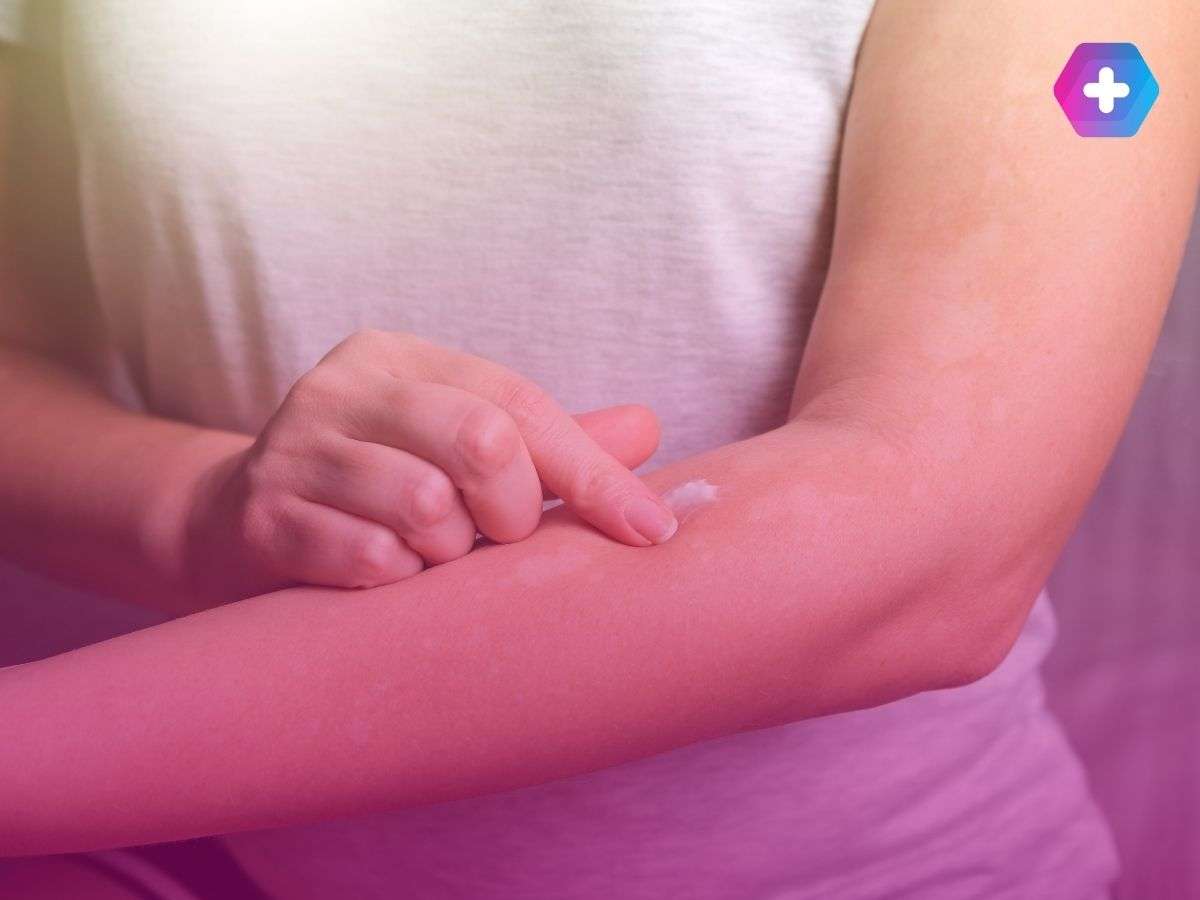
On brown or black skin, redness may be harder to see. A patch can look purple, grey, lighter or darker than nearby skin. The NHS atopic eczema guide and NHS psoriasis guide show examples across different skin tones. A photo can help you describe a patch when you speak to a clinician.
Psoriasis can affect folds of skin and may not have the thick scale people expect. Eczema can also appear in different patterns, including coin-shaped patches or hand dermatitis. Fungal infection and other skin conditions can resemble either. A photograph of one elbow or one patch may leave out information needed for the diagnosis.
The British Association of Dermatologists psoriasis overview describes several forms of psoriasis. A clinician considers the appearance and distribution alongside your history. Tell them if there are patches on the scalp, behind the ears or elsewhere, even if those areas feel unrelated to the rash you first noticed.
For coin-shaped eczema, our discoid eczema guide covers that particular pattern. It should not be used to label every round rash. If you were previously told you had eczema but the pattern has changed, mention the original diagnosis and what is new.
A short history is more useful than trying to decide which diagnosis fits an online image. Note when the rash first appeared and whether it has come and gone. Explain discomfort as well as appearance: itch, pain, sleep loss, difficulty using your hands or problems wearing clothes can all matter.
If you take photographs, use clear light and avoid filters. Tell the clinician if a recent treatment changed the rash before the photograph was taken. If the diagnosis remains uncertain, they may advise an examination or specialist review. That is more useful than continuing to try unrelated creams.
Ask what the clinician thinks the condition is, whether any test is needed and what should happen if the first treatment does not help. You should leave with the name of the medicine, where to apply it, how long to use it and when to seek another review.
Moisturisers can ease dry skin in both conditions. A clinician may prescribe a steroid cream for either, but the strength and length of the course depend on where the rash is and how severe it is. Some people with psoriasis also need a vitamin D treatment.
Elocon cream is a strong prescription steroid. Its prescribing information covers atopic eczema and some forms of psoriasis, but excludes widespread plaque psoriasis. A clinician should supervise potent steroid use for psoriasis. If you think your rash could be psoriasis, ask your GP to check it before using an eczema treatment.
Do not copy someone else’s course, use an old tube on a new rash or extend treatment because a patch has not cleared. Ask the prescriber to review the diagnosis, application and response. Tell them if you are pregnant, planning pregnancy or breastfeeding, because treatment advice may need to change.
If a medicine helps at first and then the problem quickly returns, describe that sequence. It does not by itself tell you whether the diagnosis was eczema or psoriasis. Treatment may need a different application plan, a check for another problem or specialist input rather than simply increasing the amount.
Psoriasis can be associated with psoriatic arthritis. Recurring joint pain, stiffness or swelling should be assessed, especially alongside a scaly rash or nail changes. Symptoms can be worse in the morning, but that pattern is not enough to diagnose the cause yourself. A skin cream will not assess or treat an underlying joint condition.
The NHS psoriatic arthritis guide recommends seeing a GP for joint symptoms that keep returning, even without a psoriasis diagnosis. Tell the GP if a whole finger or toe becomes swollen or your nails develop pits or other changes. These details should not be left for a routine cream reorder.
Ask a pharmacist about an emollient that suits the affected skin. Use gentle washing and avoid scrubbing or picking scale. If a product causes persistent irritation, ask for advice. Keep a simple record of the treatments used so you can explain the response at follow-up.
Follow advice on spacing moisturiser and prescribed medicines. Emollient residue on bedding, clothing or dressings can make fabric catch fire more easily, so avoid cigarettes and naked flames. Washing may reduce residue but does not remove all the risk. Take care on slippery floors after using greasy products.
Get urgent GP or NHS 111 advice if affected skin becomes increasingly painful, warm or swollen, leaks fluid or pus, suddenly worsens, or you feel feverish or unwell. These changes may signal infection or another condition needing prompt treatment. Do not wait for a routine online consultation.
Rapid widespread skin inflammation with pus-filled spots can be a medical emergency, particularly with psoriasis. Call 999 or go to A&E for this pattern, especially if you feel unwell or shivery or have a fast heartbeat. Follow urgent advice rather than applying more cream while waiting to see whether it settles.
Both can itch, and the amount of itch varies from person to person. Tell the clinician where the rash is and whether it keeps you awake or interferes with your day. Those details help them assess the rash alongside what they can see.
No. Steroids may be used for several inflammatory skin conditions and can change how a rash appears. Tell the clinician what you used and how the skin responded instead of using improvement as a diagnostic test.
If the diagnosis is uncertain or you suspect psoriasis, arrange a GP assessment first. The Care Pharmacy’s eczema consultation is for suitable adult eczema treatment requests, and the prescriber may still advise examination.
If you already have an eczema diagnosis, tell The Care Pharmacy where the rash is, what you have used and what has changed. The prescriber can review your treatment and say if you need an examination. If you think you may have psoriasis, arrange a GP appointment before choosing a cream.
Mohammed Ismail Lakhi MPharm
Superintendent Pharmacist at The Care Pharmacy
GPhC Registration Number: 2072815
The Care Pharmacy is led by Superintendent Pharmacist Mohammed Ismail Lakhi MPharm. The pharmacy assesses individual suitability before prescribing or supplying prescription treatment. Your own clinician can explain how general guidance applies to your health, medicines and treatment plan.

Medically reviewed by
Superintendent Pharmacist


An itchy foot rash may be eczema, fungal infection or contact dermatitis. Learn what to report and when diagnosis should come before a steroid cream.
A practical guide to treating hand eczema, protecting sore skin at work and knowing when persistent symptoms need testing or medical review.
Itchy, cracked or flaky skin behind the ears needs careful assessment before choosing prescription eczema treatment.
Compare Betnovate prices for 0.1% cream. Our 30g tubes start at £15.99, plus delivery. Start consultation with The Care Pharmacy.
Compare Elocon prices for 0.1% cream. Our 30g tubes start at £14.48, plus delivery. Start consultation with The Care Pharmacy.
Compare Trimovate prices for 30g cream. Tubes at The Care Pharmacy start at £26.99, plus delivery. Start consultation to check suitability.