
Eczema Behind the Ears: Causes and Treatment Assessment
Itchy, cracked or flaky skin behind the ears needs careful assessment before choosing prescription eczema treatment.
Discoid eczema — also known as nummular eczema or discoid dermatitis — is a distinct form of eczema characterised by clearly defined, coin-shaped patches of inflamed, itchy skin that can appear on the arms, legs, trunk, and occasionally the hands and face. Unlike atopic eczema, which tends to appear in characteristic skin fold locations and is closely linked to a personal or family history of allergic conditions, discoid eczema typically presents in adults with no prior eczema history and can be triggered by skin injury, dry skin, certain medications, and contact with irritants or allergens. It is one of the more distressing forms of eczema because the patches are often intensely itchy, can weep and crust, and are prone to secondary bacterial infection — and because many patients have never heard of it before their diagnosis, finding clear and clinically accurate information can feel frustrating. Effective treatment exists and the condition is entirely manageable with the right clinical approach, though it does require prompt and consistent treatment to prevent spreading, secondary infection, and post-inflammatory pigmentation changes. At The Care Pharmacy, our prescribing team supports patients across the UK with access to clinically appropriate treatments for discoid eczema through a straightforward, confidential online consultation.
Do not let discoid eczema go untreated while you search for answers. Get in touch if you would like to discuss your symptoms, or complete our online consultation and our prescribing team will help you find the right treatment.
Quick Answer
Discoid eczema is a chronic inflammatory skin condition that produces distinctive coin-shaped patches of red, itchy, crusting skin, most commonly on the limbs and trunk. It is not fully understood but is associated with dry skin, skin injury, contact with irritants or allergens, and in some cases certain medications including interferon, ribavirin, and some statins. Treatment is based on the same principles as other forms of eczema: consistent emollient use to maintain the skin barrier, topical corticosteroids to reduce inflammation during active patches, and antibiotic treatment when secondary bacterial infection is present. Potent topical steroids are typically required for discoid eczema patches on the body, as the plaques are often thick and resistant to milder treatments. With appropriate treatment, most patches resolve within weeks to months, though some patients experience recurrent episodes that require ongoing management.
Discoid eczema is one of several distinct subtypes of eczema, characterised by its highly recognisable round or oval patches — the word “discoid” refers to their disc or coin-like shape, while “nummular” (the alternative name) derives from the Latin word for coin. The patches are typically two to ten centimetres in diameter, clearly demarcated from the surrounding skin, and intensely itchy.
Unlike atopic eczema — which is the most common form and tends to run in families alongside asthma and hay fever — discoid eczema does not have the same clear genetic basis. It can develop in people with no personal or family history of any form of eczema, and it most commonly affects adults between the ages of 50 and 70, though it can occur at any age and in both sexes. Women tend to develop it earlier in life than men, with a secondary peak in young women, but overall prevalence is higher in middle-aged and older men.
The condition is chronic in many cases, meaning that while individual patches can be treated and resolved, new patches may continue to appear for months or years, particularly if underlying triggers are not identified and addressed. Understanding the nature of the condition — that it is inflammatory, trigger-driven, and highly treatable — is the foundation of effective management.
The exact cause of discoid eczema is not fully established, and for many patients no single identifiable cause is found. However, several factors are consistently associated with both the development and exacerbation of the condition.
Dry skin is one of the most consistently identified predisposing factors for discoid eczema. Patients with naturally dry skin — or whose skin becomes dry due to environmental factors such as cold weather, low humidity, or frequent washing — have a compromised skin barrier that is more susceptible to the inflammatory process that produces discoid patches. This is why the condition is more common in older adults, whose skin tends to be drier and produces less sebum.
Discoid eczema patches frequently develop at sites of prior skin injury — a phenomenon known as the Koebner response, where skin trauma provokes an inflammatory reaction in susceptible individuals. Common injury triggers include:
Contact with irritating substances — soaps, detergents, solvents, and metals — can trigger or exacerbate discoid eczema. Nickel sensitisation is a particularly well-documented trigger, and patch testing to identify contact allergens is recommended for patients with persistent or recurrent discoid eczema, as identifying and eliminating a contact allergen can produce dramatic improvement in otherwise treatment-resistant cases.
Several medications have been associated with triggering or worsening discoid eczema, including:
If you have recently started a new medication and noticed the development of discoid eczema patches, this is clinically relevant information that should be discussed with your prescriber before making any changes to your medication.
If you are struggling to identify your triggers, get in touch with our team for clinical guidance.
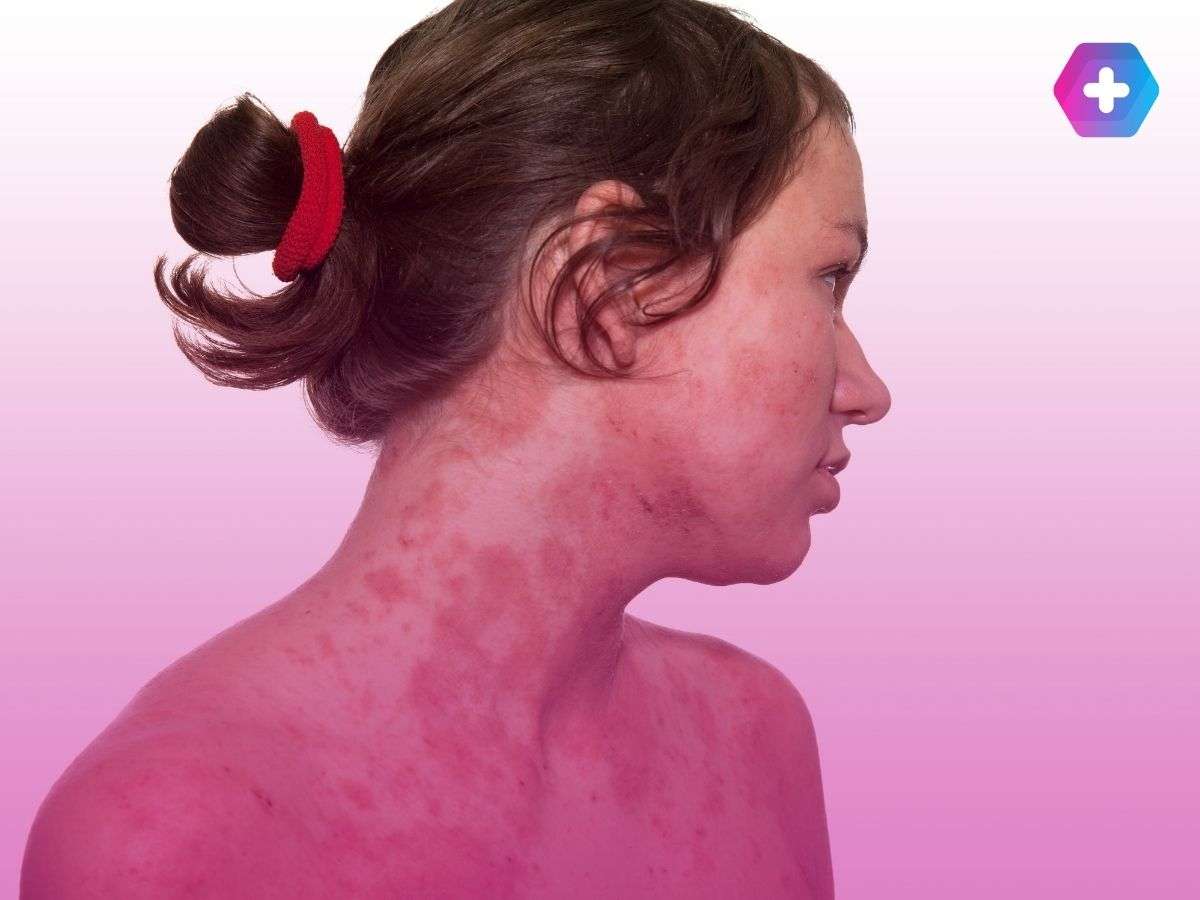
Discoid eczema has a distinctive presentation that, once seen, is relatively straightforward to recognise — though it can be confused with other skin conditions, particularly in its early stages.
Typical presentation:
Discoid eczema is frequently misdiagnosed because its appearance overlaps with several other common skin conditions. The table below summarises the key distinguishing features:
Getting the diagnosis right matters enormously because the treatments for these three conditions are different — and applying a topical steroid to ringworm, for example, will worsen the fungal infection significantly. If you are uncertain about your diagnosis, a clinical assessment is the appropriate next step before starting any treatment. Complete our online consultation and our prescribing team will review your symptoms.
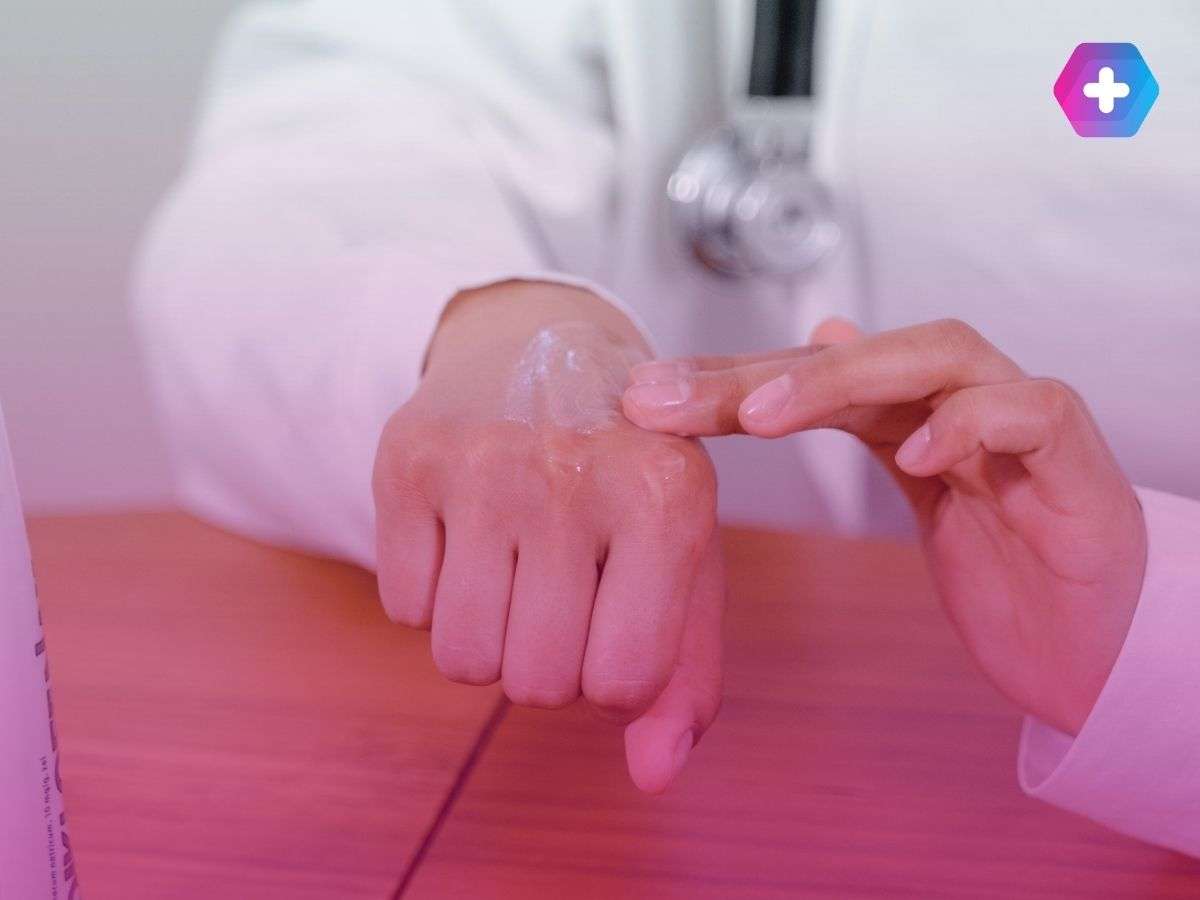
Effective treatment of discoid eczema requires a multi-pronged approach that addresses the active inflammation in existing patches, maintains the skin barrier to prevent new patch formation, and manages any secondary infection promptly. The following framework reflects current UK clinical practice for discoid eczema management.
Consistent, generous emollient use is the foundation of all eczema management and is particularly important in discoid eczema, where dry skin is both a trigger and a consequence of the condition. Emollients should be applied liberally at least twice daily to all skin — not just affected patches — and used as a soap substitute for all washing and bathing. Choosing a fragrance-free, preservative-minimal emollient reduces the risk of contact sensitisation, which is a recognised complicating factor in discoid eczema.
Discoid eczema patches typically require a potent topical corticosteroid for effective treatment — mild options such as hydrocortisone 1% are generally insufficient for the thick, established plaques characteristic of this condition. Betnovate (betamethasone valerate 0.1%) or Elocon (mometasone furoate 0.1%) applied once daily to affected patches under clinical supervision is the standard UK first-line prescription approach for discoid eczema on the body.
Treatment should continue for as long as the patch remains active, typically one to three weeks, followed by gradual reduction rather than abrupt cessation. Patches that have been present for a long time before treatment begins may require longer courses to resolve fully.
Discoid eczema patches are highly susceptible to secondary infection with Staphylococcus aureus, which worsens inflammation and makes topical steroid treatment less effective. Signs of secondary infection — increased redness, warmth, yellow or green crusting, and weeping — require antibiotic treatment alongside the topical steroid. Oral antibiotics (flucloxacillin or erythromycin) are typically preferred for infected eczema over topical antibiotics alone, to ensure adequate tissue penetration.
Recurrent or persistent discoid eczema warrants a thorough clinical review of potential triggers, covering contact allergens, current medications, alcohol intake, and environmental exposures that may be driving the ongoing pattern of flares. Patch testing should be considered for patients who have not achieved satisfactory control with standard treatment, as an unidentified contact allergen is a frequent explanation for treatment-resistant discoid eczema.
The following treatments are available through our pharmacy following a clinical consultation and represent the most appropriate options for discoid eczema management.
Betnovate Cream is a potent topical corticosteroid that is the standard first-line prescription treatment for discoid eczema patches on the body. Applied once daily to affected patches as directed, it reduces the inflammation, itch, and skin thickening that characterise active discoid eczema plaques. It should be used for defined short courses under clinical supervision, with emollient continued throughout and after the treatment course. Not suitable for use on the face without specific clinical guidance.
Eumovate Cream is a mild-to-moderate topical corticosteroid that may be appropriate for milder discoid eczema patches, for maintenance between courses of potent steroid, or for patches affecting more sensitive skin areas. It offers anti-inflammatory relief with a lower risk profile than potent steroids and is available following a clinical consultation with our prescribing team.
All three treatments are available following a confidential online consultation with our prescribing team. Get in touch if you have questions about which option is most appropriate for your skin.
Managing discoid eczema effectively requires a proactive and consistent approach. Here are ten evidence-informed tips to help you reduce the frequency of new patches, treat existing ones more effectively, and protect your skin over the long term:
From contagion concerns to treatment timelines, here are the questions our prescribing team hears most often from patients managing discoid eczema:
No — discoid eczema is not contagious and cannot be passed from person to person. It is an inflammatory skin condition driven by immune dysfunction and skin barrier disruption, not by an infectious agent, and there is no risk of transmission through skin contact, sharing towels, or any other form of contact.
With appropriate treatment — consistent emollient use and a potent topical corticosteroid applied as directed — most active discoid eczema patches begin to improve within two to four weeks and resolve fully within one to three months. Patches that have been present for a long time before treatment begins, or that are particularly thick and lichenified, may take longer to resolve completely.
Discoid eczema does not typically cause permanent scarring, but it frequently leaves behind post-inflammatory hyperpigmentation — areas of darkened skin where active patches have resolved — particularly in patients with darker skin tones. These pigmentation changes usually fade gradually over months with consistent sun protection and emollient use, though they can be persistent in some patients.
Both conditions produce round or oval patches on the skin, but they are caused by entirely different processes and require different treatments. Discoid eczema is an inflammatory condition treated with topical steroids, whereas ringworm is a fungal infection treated with antifungal products — and applying a topical steroid to ringworm will worsen the infection significantly, making accurate diagnosis before treatment essential.
No — discoid eczema and atopic eczema are distinct conditions with different presentations, triggers, and patient profiles, though both are inflammatory skin conditions involving skin barrier dysfunction. Atopic eczema is closely linked to genetics and the atopic triad (eczema, asthma, and hay fever), tends to appear in childhood, and affects characteristic skin fold locations, whereas discoid eczema more commonly affects adults with no prior eczema history and produces its distinctive coin-shaped patches.
Psychological stress is a well-recognised trigger for eczema flares across all subtypes, including discoid eczema, through its effects on cortisol levels and the immune system. While stress alone is unlikely to cause discoid eczema in someone with no predisposition, it can reliably worsen existing patches and trigger new ones in susceptible individuals — making stress management a clinically relevant component of overall discoid eczema management.
Discoid eczema is one of the more distressing forms of eczema — intensely itchy, visually prominent, and prone to secondary infection — but it is also one of the most treatable when the right clinical approach is taken promptly. The combination of consistent emollient use, appropriate topical corticosteroids for active patches, prompt antibiotic treatment for secondary infection, and systematic trigger identification gives most patients the tools they need to achieve and maintain clear skin.
The key is not waiting for patches to become large and entrenched before treating them, and not stopping emollient use as soon as the skin looks better. Discoid eczema is a condition that rewards consistency and clinical support — and with the right treatment plan in place, it does not have to define your skin or your quality of life.
At The Care Pharmacy, our pharmacist-led prescribing team is here to support patients with discoid eczema across the UK, providing access to clinically appropriate treatments through a straightforward and confidential online process. Whether you are managing a new diagnosis or looking for a more effective approach to a condition that has been difficult to control, our team is here to help.
Reach out to our team today, or complete our online consultation to explore which eczema and dermatitis treatments are right for you.
This article was written by Pharmacy Mentor and clinically reviewed by Mohammed Ismail Lakhi, MPharm, MRPharm, Superintendent Pharmacist at The Care Pharmacy. Mohammed is registered with the General Pharmaceutical Council (GPhC registration number 2072815) and leads clinical governance across The Care Pharmacy’s weight management services.
Last reviewed: June 2026
Disclaimer: This article is for general information only and is not a substitute for individual medical advice. Always consult a qualified prescriber before starting any prescription weight loss treatment.

Medically reviewed by
Superintendent Pharmacist


Itchy, cracked or flaky skin behind the ears needs careful assessment before choosing prescription eczema treatment.
Compare Betnovate prices for 0.1% cream. Our 30g tubes start at £15.99, plus delivery. Start consultation with The Care Pharmacy.
Compare Elocon prices for 0.1% cream. Our 30g tubes start at £14.48, plus delivery. Start consultation with The Care Pharmacy.
Compare Trimovate prices for 30g cream. Tubes at The Care Pharmacy start at £26.99, plus delivery. Start consultation to check suitability.
Trimovate for intertrigo: understand when this prescription cream may fit a skin-fold rash and start an eczema consultation with The Care Pharmacy.
Worried about infected eczema? Learn when to seek urgent care and ask The Care Pharmacy about suitable treatment.